Asean Business logo
SPONSORED BYUOB logo

Johor’s investment boom is real, but actual contribution from JS-SEZ unclear

Investment activity seems dominated by bigger firms so far, while spillover action for SMEs is not even

Summarise
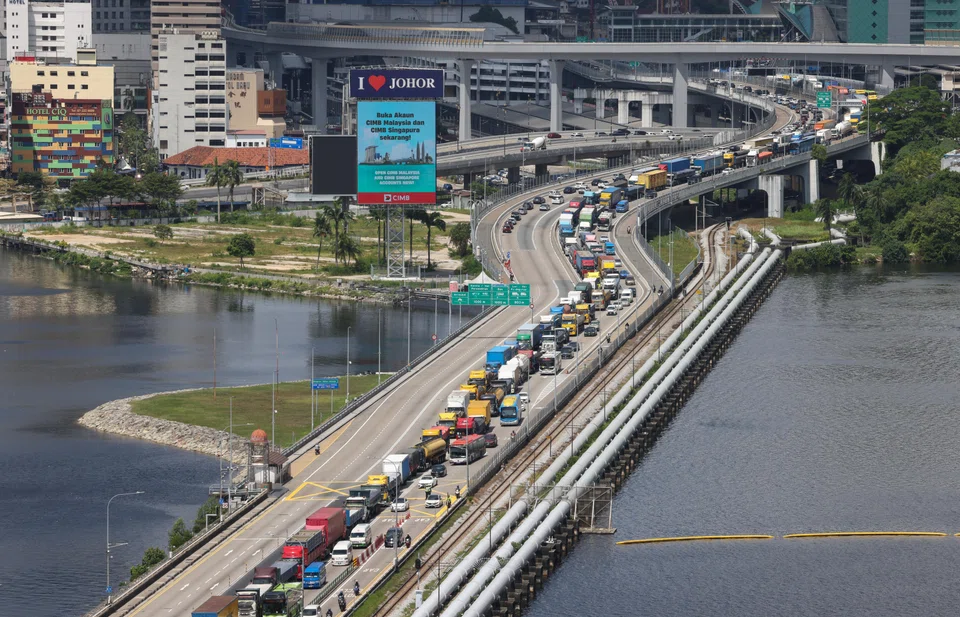
    • Singapore and Malaysia signed a memorandum of understanding to set up the JS-SEZ in January 2024, and a formal agreement a year later.
    • Singapore and Malaysia signed a memorandum of understanding to set up the JS-SEZ in January 2024, and a formal agreement a year later. PHOTO: TAY CHU YI, BT
    Chuah Bee Kim
    Published Fri, Sep 25, 2026 · 10:53 AM

    [JOHOR BAHRU] Billions of ringgit in projects within the Johor-Singapore Special Economic Zone (JS-SEZ) have been approved, but it remains unclear how much of these new investments the zone has actually brought to Johor that would have otherwise not gone ahead. 

    Johor recorded RM59.4 billion (US$14.6 billion) in total approved investments in the first half of 2026, the Malaysian Investment Development Authority (MIDA) told The Business Times.

    The figure draws on data from sources beyond MIDA, so it is unclear how much of that total was  located within the zone. Of the RM15.32 billion in investments approved under MIDA’s purview over that period, RM11.85 billion from 200 projects are located in the JS-SEZ.

    But the authority said it has been tracking these investments by project location and cannot determine the amount generated specifically by the initiative.

    MIDA said the concentration of approved projects in the JS-SEZ reflects strong investor interest in the zone’s emerging cross-border ecosystem and strategic advantages.

    Economy Minister Akmal Nasrullah Mohd Nasir said in July that the JS-SEZ recorded RM76.98 billion in approved investments in 2025, and that more than half (57 per cent) of the cumulative approved investments have already moved on to the implementation stage.

    Asean Intelligence

    Get insights into businesses across South-east Asia

    Get the free report

    The Iskandar Regional Development Authority (IRDA) told BT that it could not establish whether investment figures cited by the various agencies and companies overlapped, given differences in how and when they were reported.  

    Singapore and Malaysia signed a memorandum of understanding to set up the JS-SEZ in January 2024, followed by the formal agreement a year later.

    The master plan was scheduled for launch on Mar 30 this year, but was postponed. It is now expected to be jointly launched by Malaysia and Singapore at the Annual Leaders’ Retreat in December.

    While the JS-SEZ has raised awareness of Johor as an investment hub, the initiative merely built on economic ties that were already well established, said Singapore Business Federation (SBF) chairman Mark Lee.

    An SBF survey among more than 160 Singaporean businesses conducted in 2024 found that half already had operations in Johor. The zone’s greater test therefore lies in persuading interested companies that have yet to invest to take the step to do so, he told BT. 

    These businesses are looking for incentives that could materially improve the risk-adjusted returns from setting up across the Causeway, he said. 

    Mohd Sedek Jantan, director, investment strategist and country economist at IPPFA – a Malaysian financial advisory firm linked to the IPP Financial Planning Group – said the implementation rate suggested that investment commitments were translating into physical projects rather than remaining on paper.

    Capital moves ahead

    Among the projects under way, Blackstone-backed AirTrunk, which builds hyperscale data centres in the Asia-Pacific and the Middle East, said in April that it would invest RM12 billion to develop two additional data centre campuses in Iskandar Puteri.

    An artist’s rendering of one of AirTrunk’s two additional hyperscale data centre campuses in Iskandar Puteri in Johor. PHOTO: AIRTRUNK

    Property development company IJM Land has formed a joint venture with Southern Catalyst for a RM1.96 billion industrial park in Sedenak; AME Elite Consortium, an integrated industrial-space solutions provider and investment holding company, is developing an aerospace and medical-device facility in Iskandar Puteri for Shanghai-listed Wuxi Hyatech.

    Separately, Johor Menteri Besar Onn Hafiz Ghazi said meetings held over a three-day visit to Singapore in August yielded more than RM5 billion in potential investments in areas ranging from high-speed optical technology, health technology to semiconductor manufacturing equipment.

    Where are the SME spillovers?

    William Ng of the Small and Medium Enterprises Association (SAMENTA) of Malaysia said: “The narrative so far has been dominated by large companies, data centres and mega real estate developments.

    “Most SMEs are still wondering how they can be part of the framework,” he told BT, adding that the spillovers to Johor’s businesses remain uneven.

    While the qualification thresholds for the main JS-SEZ incentives appear to be geared towards larger investors, market players say SMEs can find opportunities further along the value chain.

    Ng said while firms in construction, building materials, logistics and facilities management have picked up work generated by development activity, higher-value spillovers have been limited.

    Local companies in precision engineering, electronics and technology are getting few direct subcontracting opportunities, because many multinational companies continue to rely on established international suppliers, he said.

    Ng called for an institutionalised vendor-matching platform, grants to help SMEs upgrade their automation and ESG capabilities, and stronger SME representation in policy discussions.

    Ryan Lee, executive director of metal fabrication specialist Kejuruteraan Fong Hong, said the expanding industrial ecosystem could bring opportunities in sectors such as data centres and semiconductors closer to Johor SMEs.

    However, MNCs now assess suppliers not merely on capacity and price, but also on their engineering, automation, quality systems, delivery reliability and ESG standards, he told BT.

    “The opportunities are coming closer to us through the JS-SEZ, but whether we can secure them depends on how ready and competitive we are.”

    Decoding Asia newsletter: your guide to navigating Asia in a new global order. Sign up here to get Decoding Asia newsletter. Delivered to your inbox. Free.

    Share with us your feedback on BT's products and services