



Keppel revives S$433.6 million Saigon Centre Phase 3 after decades-long setback
Construction of the project in one of Vietnam’s most sought-after addresses is set to begin in late 2026

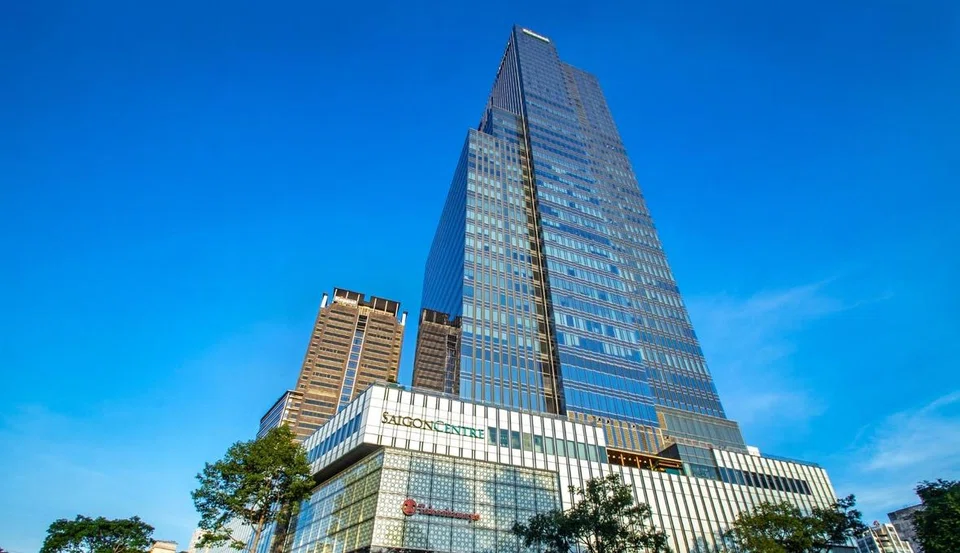
[HO CHI MINH CITY] After more than three decades since it snagged an investment licence for Vietnam’s iconic project Saigon Centre, global asset manager and operator Keppel is set to revive the third phase of its flagship mixed-use development at the heart of Ho Chi Minh City’s central business district.
For decades, 8,632 square metres of prime land in one of Vietnam’s most sought-after locations could not be developed as planned, due to delays caused by the complex process of transferring the land from several state-owned entities.
Based on the announcement of Keppel’s partial divestment of the project that was made alongside the release of its first-quarter results, Saigon Centre Phase 3 was estimated to have a S$433.6 million valuation at the time.
In an e-mail response to The Business Times, Keppel said that the land handover was completed in June 2025.
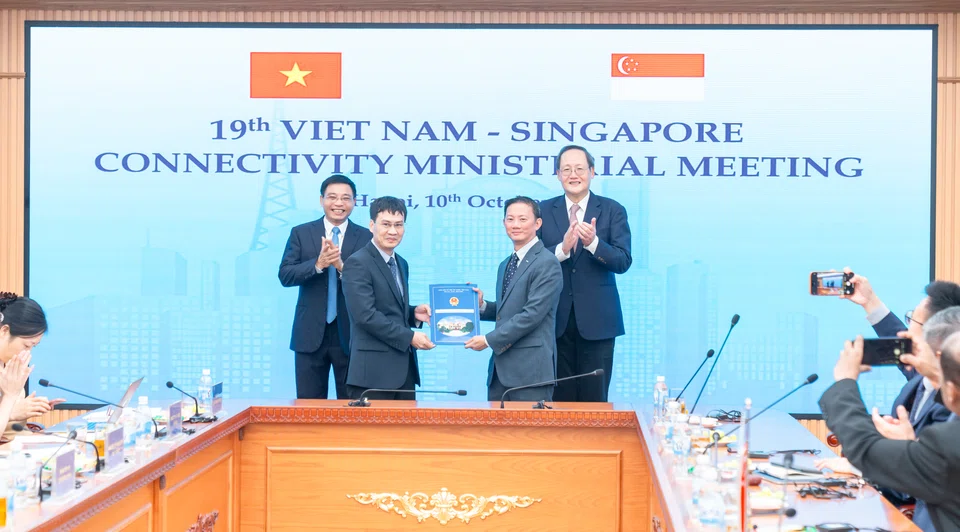
A new investment certificate, presented at the Singapore-Vietnam ministerial meeting on Oct 10, gives the project’s third phase a renewed 50-year operational term until mid-2075.
The previous investment certificate that it was granted for Phase 3 in 1993 left it with under 20 years of operational time, significantly eroding the project’s long-term value realisation.
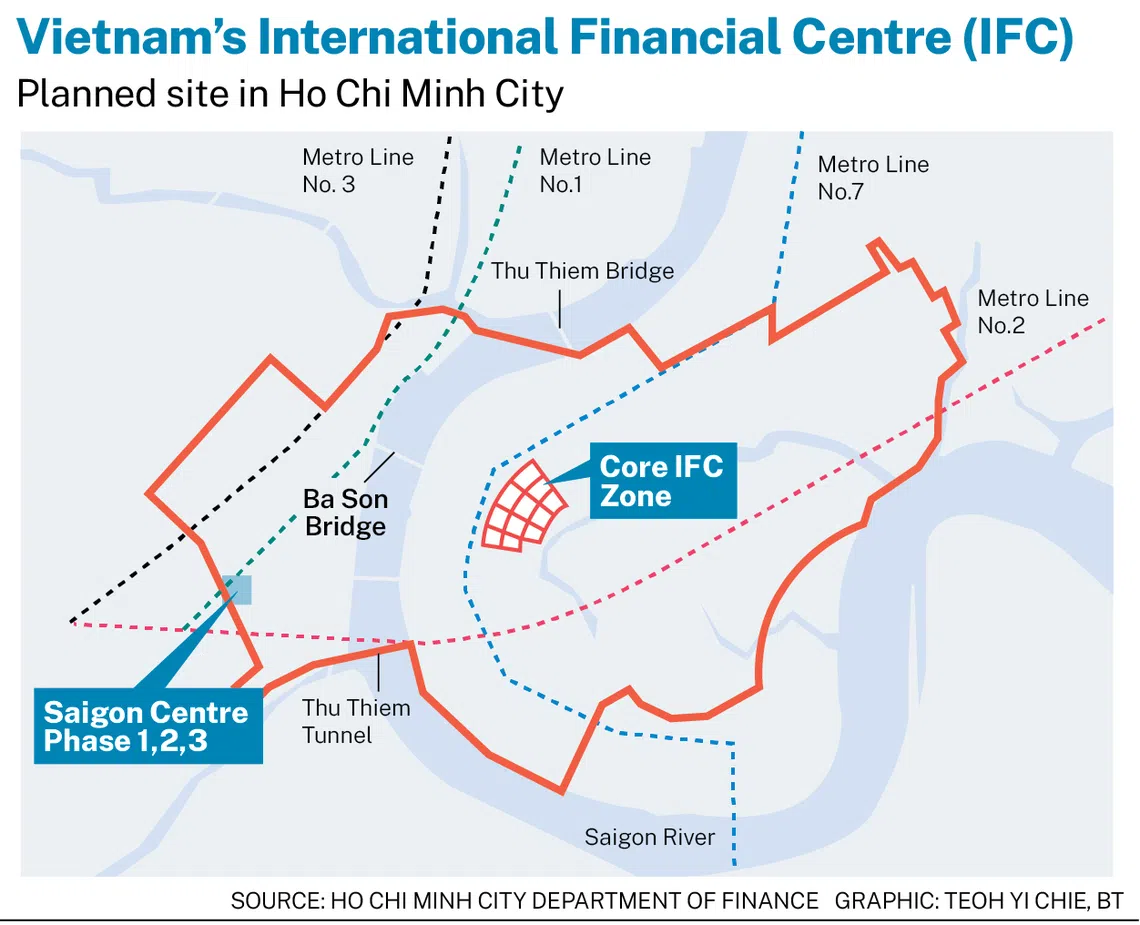
The entire Saigon Centre complex offers prime office, retail and hotel spaces – now located within the city’s planned International Finance Centre.
The first two phases have been operational since 1996 and 2016.
Keppel plans to start construction of Phase 3 by the end of 2026, with completion expected within the following four to five years.
It has not revealed an estimated investment value at this stage, noting that the development plans are still being finalised.
Designed as a 42-storey sustainable tower, Phase 3 will integrate a five-star hotel, Grade A office spaces, and a curated retail segment that complements the current offerings in Phases 1 and 2.
Keppel has recently made strategic divestments in the project through subsidiaries, having sold a 16 per cent stake in late 2024 and an additional 22.6 per cent earlier this year, generating a total of S$160.2 million.
The company now holds a 45.4 per cent stake in Saigon Centre Phase 3, and said that it has no current plans to further divest from the project.
Focus on high-potential markets
These moves highlight Keppel’s ongoing shift towards an asset-light, recurring-income-driven strategy, where the company seeks to balance investments with strategic divestments, while preserving its focus on high-potential markets such as Vietnam.
Keppel’s continued investment in Vietnam, despite the challenges it faced during the land clearance process for Phase 3, underscores the country’s strategic importance to the company’s real estate portfolio.
Its residential land bank in Vietnam includes nearly 7,000 units, while its commercial portfolio spans more than 400,000 sq m. These accounted for 23 per cent and 25 per cent, respectively, of the company’s global footprint, which also spans markets such as China, Indonesia, India and Singapore.
In addition to Saigon Centre, Keppel has also invested in other key developments in Ho Chi Minh City, including Empire City and Estella Place. The company is working with partners to develop Saigon Sports City – a 64-hectare integrated township in which it holds a 30 per cent stake.
The asset manager is expanding its presence in the Hanoi retail market as the master lessor of the Hanoi Centre retail mall, which is scheduled for a soft opening later this year.
As at June 2025, Keppel’s global funds under management expanded to S$91 billion, while asset management fees in the first half of this year amounted to S$195 million.
The firm has identified non-core assets worth S$17.5 billion for monetisation, including through sales, according to its plan unveiled on Sep 30.
Including the effects of the non-core portfolio, the company’s overall net profit for H1 2025 rose 24.2 per cent to S$377.7 million, up from S$304.1 million in the same period last year.
TRENDING NOW

Once staunchly pro-China, Malaysian Chinese businesses are now distancing themselves from Beijing

Looking beyond looming CEO succession, should UOB potentially pursue a transformative merger?

Could stablecoins be the future of money?

Grab CEO’s wife Chloe Tong on life with Anthony Tan and finding her purpose

