



Little-known Purbaya now faces Indonesia’s biggest fiscal test
The country’s new finance minister is more recognised as a macroeconomist than a fiscal hawk
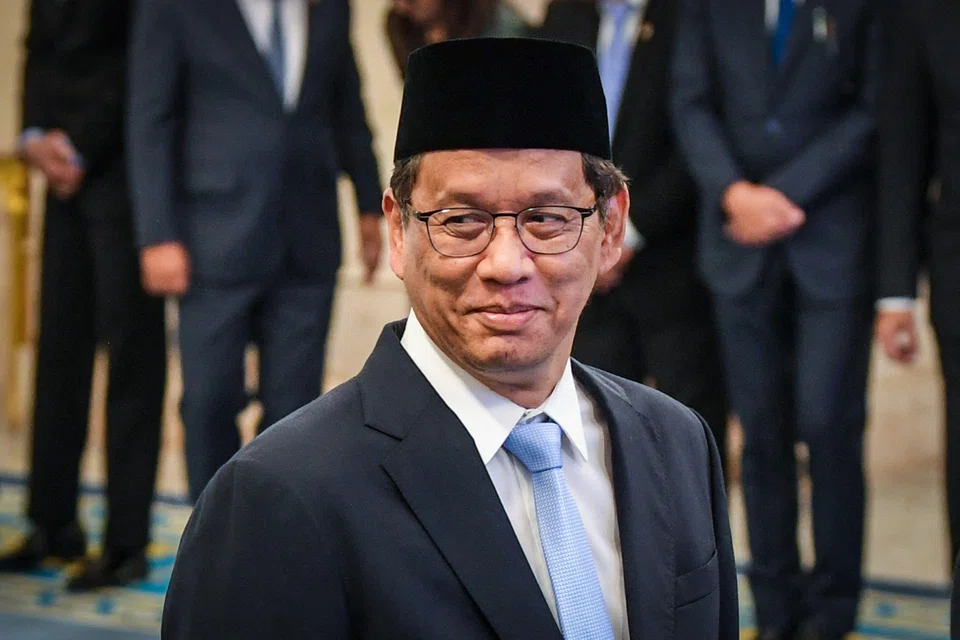
[JAKARTA] As the dust settles on a tumultuous two weeks, Indonesian President Prabowo Subianto has undertaken his first Cabinet reshuffle to restore public trust and investor confidence, appointing veteran economist Purbaya Yudhi Sadewa as his new finance minister.
In a move that surprised foreign investors but was relatively widely expected in Jakarta circles, Dr Purbaya replaced Dr Sri Mulyani Indrawati, one of Indonesia’s longest-serving and most trusted policymakers.
His appointment marks both continuity and uncertainty for South-east Asia’s largest economy, which is grappling with social unrest, surging living costs and mounting fiscal woes.
Dr Purbaya, 61, who previously chaired the Indonesia Deposit Insurance Corporation (LPS) and worked under former coordinating minister Luhut Pandjaitan, is known more as a macroeconomist than a fiscal hawk.
“Purbaya is not a new name in the market as he had previously worked in asset management companies,” said Wijayanto Samirin, senior economist at Paramadina University. “He has also worked very closely with former coordinating minister Luhut; so he understands how government works.”
Mounting concerns
His appointment comes at a highly strung period. Mass protests over political perks and rising living costs have shaken public confidence, while concerns are mounting over a rising debt service burden, sluggish tax revenues given the drag of de-industrialisation, and a growing informal sector.
“Chairing LPS and being finance minister are totally different ball games, and it’s like playing futsal and soccer,” Wijayanto added. “His biggest challenge will be to manage the country’s deteriorating fiscal position and boost government revenues to close the debt service ratio.”
In his first news conference since being sworn in as finance minister, Dr Purbaya admitted that achieving the 8 per cent gross domestic product growth target set out by Prabowo will be difficult this year. “However, there is a chance this growth can be achieved in the next two to three years,” he noted.
Harry Su, managing director of research at Samuel Sekuritas Indonesia, also echoed the concerns over the country’s fiscal situation. “The new minister’s biggest challenge will be to manage the fiscal debt, as some of the president’s populist policies will apply greater pressure on government spending going forward.”
Helmi Arman, Citi Research chief economist for Indonesia, said: “The magnitude of budget reallocations being done by the Prabowo administration is unprecedented in the history of post-1998 Indonesia.” He was referring to the free-meals programme and the diversion of state-owned enterprises’ dividends to furnish sovereign wealth fund Danantara’s capital base.
These, he said, will divert resources equal to about 1.5 percentage points of GDP – far larger than cuts seen under former president Joko Widodo – putting pressure on ministries and regional governments to do more with less.
Dr Purbaya will need to resist political pressure to spend on social programmes that do not directly stimulate investment and economic growth.
“Every leadership transition writes a new chapter – not just for policies, but for the nation’s trajectory. Indonesia welcomes a new finance minister, and with that comes both hope and expectations,” he noted.
Initial market reaction to the reshuffle has been negative, with the rupiah tumbling 1 per cent on Tuesday (Sep 9), while the Jakarta Composite Index closed about 1.8 per cent lower at 7,628.6 points.
Global investors have viewed Dr Sri Mulyani, one of Indonesia’s longest-serving finance ministers under three presidents, as a safe hand in managing the country’s fiscal policy and rising debt levels. With her removal, uncertainty has been injected into the country’s fiscal policy as it faces debt financing of 1,400 trillion rupiah (S$109 billion) in 2025 and 2026.
Samuel Sekuritas noted: “Markets anxiously await continuity in fiscal discipline and potential fresh momentum on structural reforms.
“The key challenge ahead lies in shifting Indonesia’s growth engine from demand-driven consumption towards supply-side productivity – a transition that could define the next decade of economic transformation.”
Sustaining growth
Indonesia’s economy has long relied on robust domestic consumption as its growth pillar, it added. But to sustain longer-term trajectory, a stronger supply-side strategy is required – one that builds capacity rather than merely fuels spending.
This means accelerating industrial downstreaming, strengthening manufacturing competitiveness, attracting quality investments in technology-driven sectors, and upgrading human capital to enhance productivity.
For now, the reshuffle marks one of Prabowo’s biggest tests since taking office. Dr Purbaya’s ability to steady markets and restore investor trust will define the credibility of Prabowo’s economic agenda, and set the tone for his administration’s early policy trajectory.
The new finance minister seems to have hit the ground running. In a hearing on Wednesday, Dr Purbaya told lawmakers about a plan to inject about 200 trillion rupiah into the economy to bolster growth.






