



Malaysia holds interest rate at 2.75%, flags geopolitical risk
Bank Negara says the current rate is appropriate and supportive of the economy amid price stability

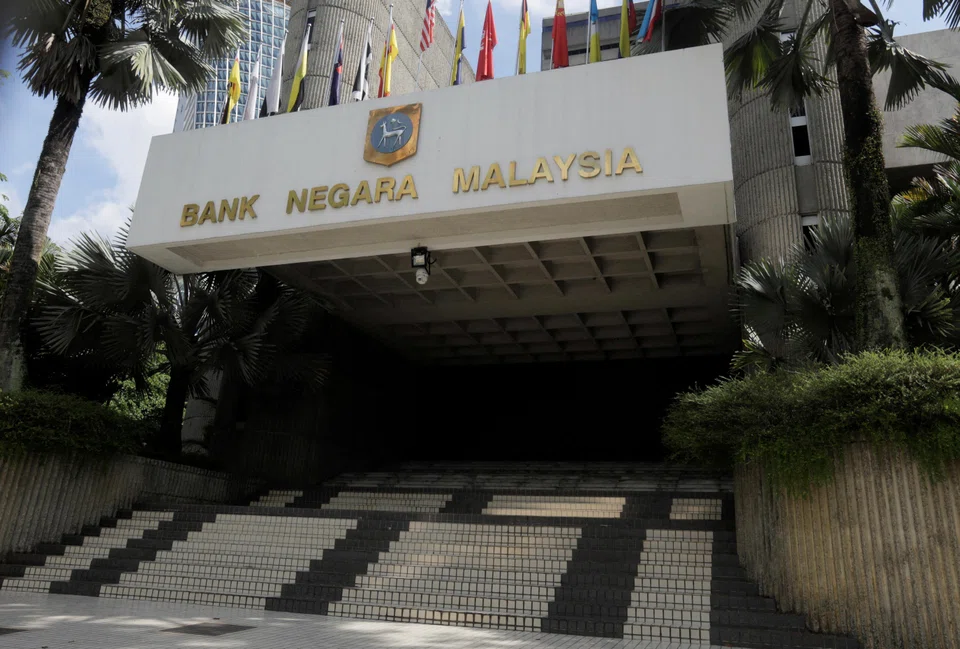
[KUALA LUMPUR] Bank Negara Malaysia kept its benchmark overnight policy rate (OPR) steady at 2.75 per cent on Thursday (Mar 5), cautioning that global economic stability remains under pressure due to heightened geopolitical tensions in the Middle East.
The OPR, the interest rate for overnight interbank lending, has remained at this level since a 25-basis-point cut in July 2025. The central bank maintained that the current rate is “appropriate and supportive of the economy amid price stability”.
While expressing confidence on domestic economic growth, Bank Negara highlighted rising downside risks stemming from geopolitical tensions and uncertainties surrounding trade tariffs, which could dampen global trade and commodity production.
“The impact on the global economy will depend on the length and severity of the conflict… Additionally, there are continued concerns over potentially higher tariffs and elevated valuations in financial markets,” the central bank said in a statement.
Still, upside risks remain. These include stronger technology spending, a milder-than-expected impact from tariffs and pro-growth policy measures in key economies.
Bank Negara said Malaysia’s economy expanded 5.2 per cent in 2025, fuelled by robust domestic demand, stronger electrical and electronics exports and firm inbound tourism.
“This growth momentum is expected to continue in 2026, anchored by resilient domestic demand,” said the central bank.
Inflation remains moderate
Headline and core inflation stood at 1.6 per cent and 2.3 per cent, respectively, in January 2026.
“Overall, headline inflation in 2026 is expected to remain moderate. While global commodity prices may be subject to greater volatility given recent developments, the impact on domestic inflation is expected to be contained,” said Bank Negara.
Core inflation is also expected to remain stable and close to its long-term average, reflecting continued economic expansion and the absence of excessive demand pressure.
Mohd Afzanizam Abdul Rashid, chief economist at Bank Muamalat Malaysia, said the central bank is likely to keep the OPR steady for as long as possible.
He noted that elevated global growth risks, driven by logistics bottlenecks and rising fuel costs, warrant a cautious approach.
“Maintaining a steady OPR is the best course of action, with the potential for easing should these shocks begin to materially impact growth momentum,” he added.
Citi’s head of Asean economics, Kit Wei Zheng, said near-term strength in tech exports is gradually offset by higher tariffs, which have started to weigh on volumes despite a reprieve from the US’ International Emergency Economic Powers Act.
On the central bank’s monetary policy stance, he noted that Malaysia’s fiscal policy remains expansionary with a buffer for oil subsidies.
Stronger ringgit
“Despite lingering risks of an OPR hike, benign inflation and heightened geopolitical risks should keep Bank Negara on hold, with the central bank likely preferring a stronger currency to manage overall monetary conditions,” Kit added.
The Malaysian ringgit traded at 3.9409 per US dollar as at 5 pm on Thursday, gaining nearly 12 per cent over the past year and about 3 per cent since the start of 2026 (up from 4.0586).
Against the Singapore dollar, the ringgit was at 3.0898, about 7.3 per cent higher than its level of 3.3342 a year earlier.
UOB senior economist Julia Goh and economist Loke Siew Ting said Bank Negara has adopted a more cautious tone compared with its January monetary policy statement, citing escalating Middle East tensions and heightened global market volatility.
While the situation remains fluid, they said any potential price effects are currently viewed as supply driven. “Current developments have not yet materially altered global or domestic growth and inflation dynamics,” they said.
Goh and Loke added that the language in the latest statement signals a preference for policy continuity – unless geopolitical risks worsen dramatically or demand-driven inflation unexpectedly re-accelerates.
“We reiterate our call for the OPR to remain at 2.75 per cent throughout this year,” they said in a note on Thursday.
MBSB Research shared a similar view, projecting Malaysia’s economy to grow 4.6 per cent in 2026, supported by resilient domestic demand.
The research house expects inflation to rise to 1.8 per cent in 2026, from 1.4 per cent in 2025, driven by fiscal reforms and targeted subsidy rationalisation.
However, it cautioned that volatile global commodity prices remain a key upside risk that could push inflation beyond current projections.
TRENDING NOW
Prima to move out of historic Keppel Road flour mill building in 2028

Temasek-related Azalea, SeaTown, Seviora Capital to merge in 2027

Family offices see more tailored products, leverage ‘collective firepower’ for direct deal access

Singapore room rates soar, but hotels seeing mixed demand from F1 race and events

