



Malaysia cuts RON95 petrol price to RM1.99 a litre ahead of Sabah state election, Budget 2026
Non-Malaysians are allowed to purchase RON95 petrol at RM2.60 per litre

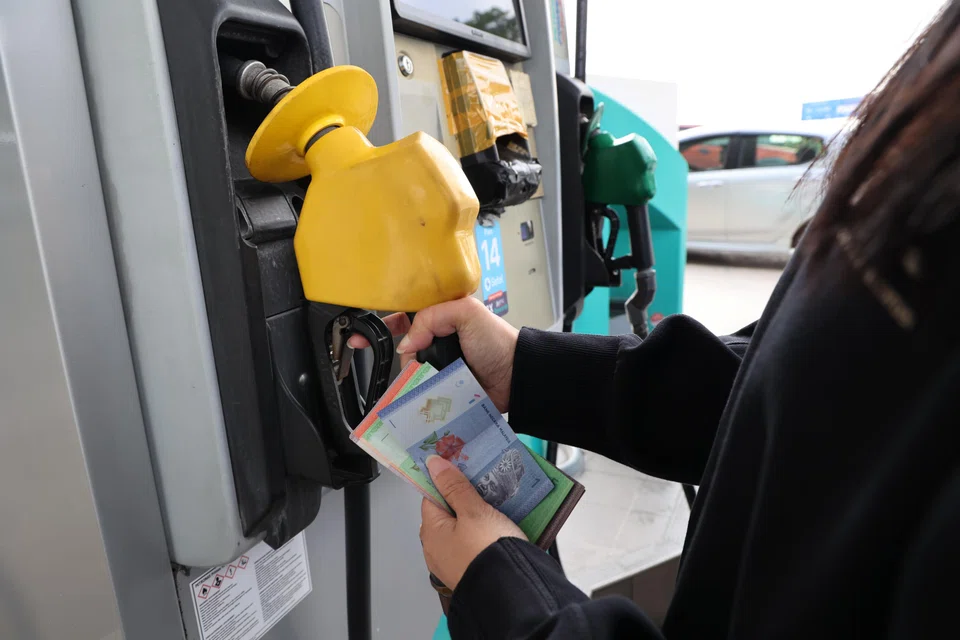
[KUALA LUMPUR] Malaysians will soon pay less at the pump than before, after Prime Minister Anwar Ibrahim cut the price of RON95 petrol to RM1.99 (S$0.61) a litre from Sep 30 – just a few weeks before he tables Budget 2026 in Parliament.
The move marks the first adjustment to the capped price of RM2.05 since February 2021, said Anwar in a statement on Monday.
The government said more than 16 million citizens will benefit from the cheaper fuel, which remains heavily subsidised compared with regional peers.
Foreigners and large companies, who are not eligible for the subsidised petrol, will have to pay RM2.60 per litre for RON95 petrol.
The scheme begins rolling out earlier for members of the police and military on Sep 27, followed by cash-aid recipients the next day, before being extended to all Malaysians from Sep 30.
Upon implementation, Anwar said RON95 petrol will now cost less than in Saudi Arabia, one of the world’s largest oil producers, where the equivalent price is RM2.61.
Prices of this grade of fuel are far higher in neighbouring countries: RM3.22 in Indonesia, RM4.22 in the Philippines, RM5.68 in Thailand, and RM9.02 in Singapore, he added.
Anwar emphasised that no registration will be required. Malaysians need only present their national identity card (MyKad) alongside an active driving licence at the pump.
“Please don’t all rush to the pumps on Sep 30 as it will only cause congestion and long queues,” he cautioned.
He also announced a 300 litre monthly cap per person, with e-hailing drivers exempt from the quota but subject to approvals. The government has yet to release the details for this application process.
Analysts warn of contradictions
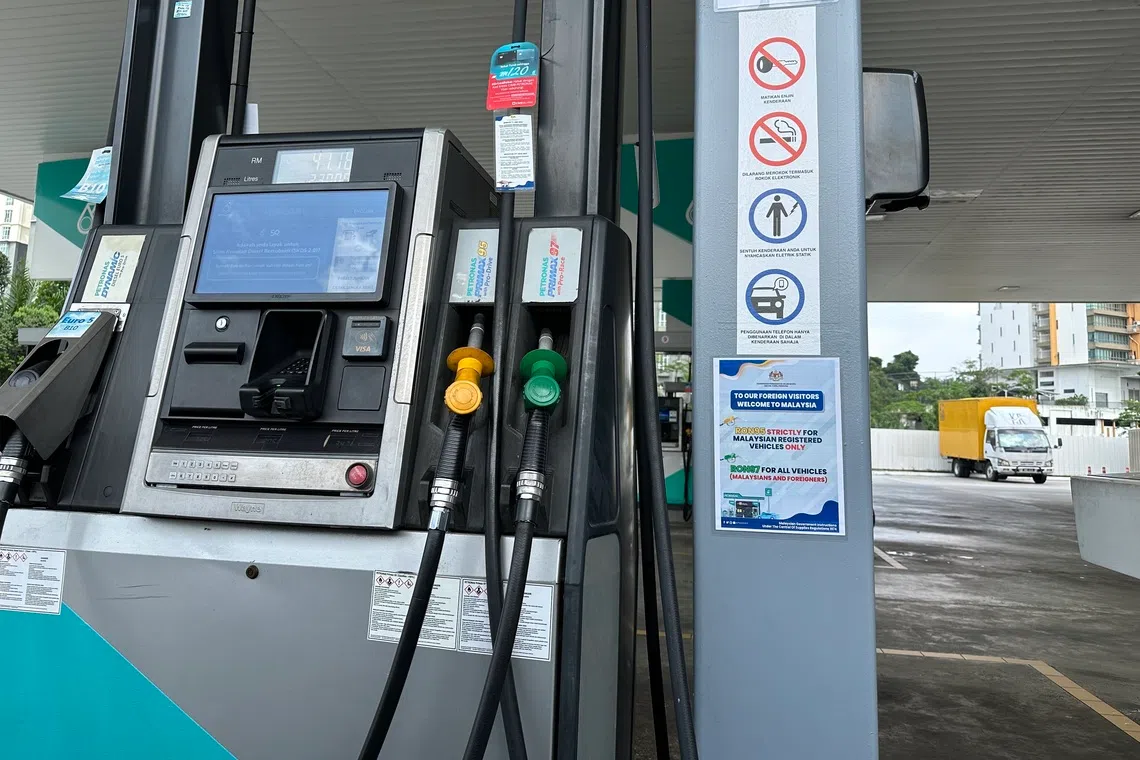
While Malaysia’s subsidised pump prices are politically popular, economists argued that they are fiscally burdensome and distort market behaviour.
“The main idea behind rationalisation is to move fuel prices closer to market levels while providing targeted support to those in need,” said Carmelo Ferlito, the chief executive officer of the Center for Market Education, a Kuala Lumpur-based consulting firm.
By lowering prices instead, the government risks prolonging the structural distortions that subsidies create, he added.
Ferlito suggested that vouchers for low-income groups should be considered as a more efficient option. Allowing fuel prices to reflect market levels, even gradually, would help Malaysia restructure its economy more rationally, he said.
He noted that it remains unclear whether foreign residents who live and work in Malaysia – and pay local taxes – will be excluded from the subsidy or treated on parity with Malaysian citizens.
Despite being a net oil and gas exporter, Malaysia spends heavily to shield consumers from rising fuel costs. The government's RON95 subsidy bill amounted to RM20 billion in 2023.
The timing of the announcement – just weeks before the Budget is tabled on Oct 10 – underscores its dual role as both an economic and political tool, said Dr Liew Wui Chern, a policy analyst and lecturer at Universiti Tunku Abdul Rahman.
“By partially fulfilling Pakatan Harapan’s (the coalition government) electoral promise to cut fuel costs, this may shore up support ahead of a Budget expected to include further cost-of-living measures,” he added.
Fiscal trade-offs
For the government, the fiscal burden remains the central concern. The RON95 subsidy joins other costly commitments, including support for rice, cooking oil and liquefied petroleum gas.
UOB senior economist Julia Goh said the petrol announcement was widely expected and unlikely to shift fiscal projections. “Fuel subsidy rationalisation is expected to generate significant savings,” she added. While the government has not disclosed estimates for the new RON95 scheme, rationalising diesel subsidies since June 2024 has already saved RM7.2 billion to RM7.5 billion annually.
Those savings are earmarked for cash assistance and programmes to ease living costs. Yet overall subsidies in 2026 are still expected to remain substantial. UOB forecasts a fiscal deficit narrowing to 3.6 per cent of gross domestic product, signalling gradual consolidation.
Political undertones
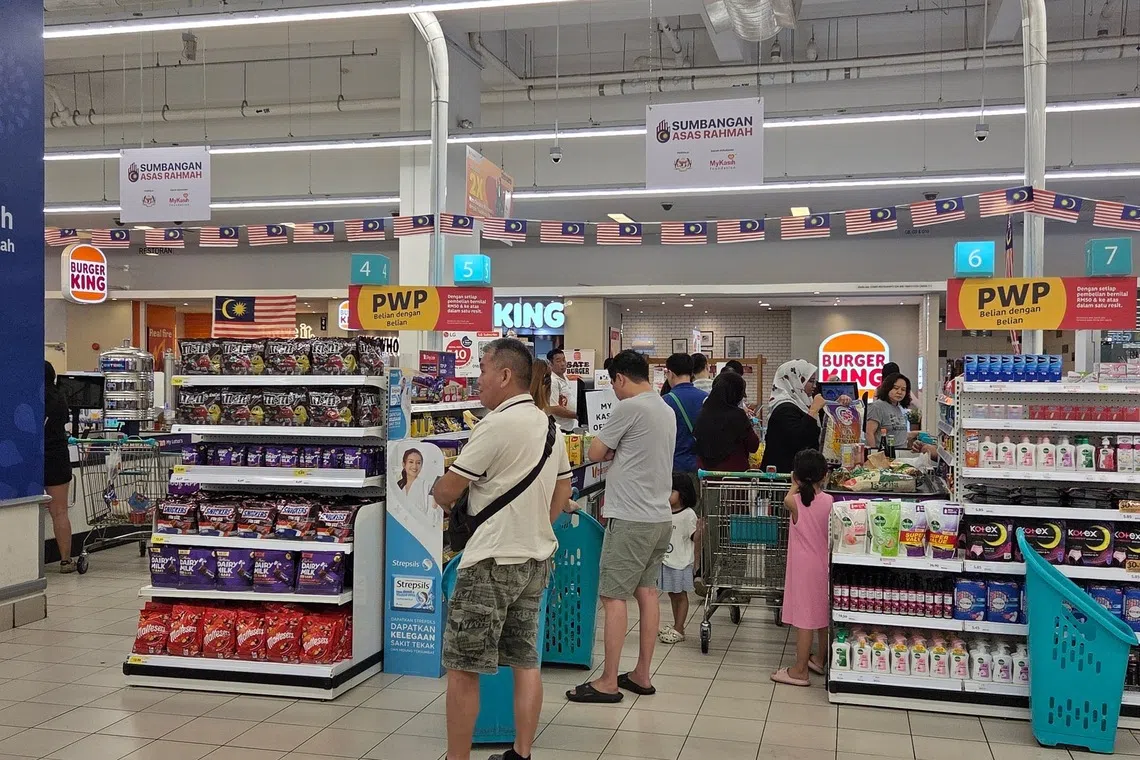
Analysts also see the fuel price cut less as an economic reform and more as a political buffer. Dr Liew described the government’s latest fuel subsidy decision as a pragmatic compromise of balancing political realities and economic necessities.
With the Sabah state election approaching on Dec 9, any misstep could cost the Pakatan Harapan government crucial support in Sabah and potentially affect its standing in the next general election, due by 2028.
Although Anwar’s administration has consistently advocated for targeted subsidies, Malaysia currently lacks the infrastructure for effective implementation. Past efforts, including the Padu database and MyDigital platform, failed to capture reliable demographic and income data essential for subsidy targeting.
By maintaining blanket coverage, albeit with a modest price reduction, analysts suggest authorities are buying time to enhance data systems and pilot MyKad-based verification, which could eventually enable targeted support.
The recent Merdeka cash aid programme, which provided RM100 to every adult Malaysian, was intended as a trial for targeted distribution but was plagued by technical glitches that undermined public confidence.
“Without reliable income classification data, the government cannot implement a targeted subsidy mechanism effectively,” Liew said.
He expects that targeted subsidies could debut as early as the second quarter of 2026, after the Chinese New Year and Hari Raya festive periods.
Marginal impact to consumers
For ordinary households, the impact is marginal. “I am quite neutral on this as the savings are not really significant,” said Eunice Tan, a mother of two who estimated that her family’s two cars consume about 300 litres of petrol monthly.
The cut trims her fuel bill by just RM18 from around RM615.
Ride-hailing drivers, who often spend upwards of RM1,500 a month on fuel, are hoping for more flexibility. “Every month, I use around 750 litres,” said Patrick Goh, a Grab driver in Kuala Lumpur.
“If the government allows us to lift the monthly cap, I expect to save about RM45. It’s still not so significant, but it would help.”
TRENDING NOW

If Europe goes to war, the fallout will be felt in East Asia
Shanmugam says firms linked to haze probe pledge cooperation; government to table changes to haze law

Indonesia stocks suffer worst plunge in nearly 30 years as MSCI proposes standalone status
Keppel seeks US$1 billion for Vietnam investments as it joins country’s international financial centre

