Malaysia raises 2026 growth outlook, sees war impact contained
The country’s central bank expects inflation to remain moderate between 1.5% and 2.5%

[KUALA LUMPUR] Malaysia lifted its economic growth forecast for 2026, expecting strong domestic demand and investment to cushion the impact of the escalating war in the Middle East.
The economy is seen expanding between 4 and 5 per cent this year, Bank Negara Malaysia (BNM) said in its annual economic and monetary review released on Tuesday (Mar 31).
That compares with the government’s forecast of 4 to 4.5 per cent, which was set in October 2025. The central bank’s forecast reflects more recent developments, including the fallout from the Iran war.
“Malaysia’s domestic resilience and diversified export structure (provide) us with a solid foundation to navigate current external headwinds,” BNM governor Abdul Rasheed Ghaffour said in a foreword of the annual report.
Malaysia surpassed its own economic growth estimates last year, overcoming challenges posed by US tariffs to emerge as one of the most resilient economies in Asia and the newfound darling of global investors. Gross domestic product rose 5.2 per cent as the nation attracted record-high investments.
The central bank expects sustained global demand for Malaysia’s technology exports, steady tourism and its status as a net energy exporter to help buffer the economy against risks from the war.
The outlook now faces a new test, with the US-Israeli war against Iran showing little sign of abating.
“Developments in the Middle East have added another layer of uncertainty with potentially far-reaching spillovers, given implications on commodity prices and financial market conditions,” Rasheed said. “The extent of impact on growth and inflation is highly contingent on the duration, intensity and severity of the conflict.”
For now, the central bank expects inflation to remain moderate between 1.5 and 2.5 per cent this year, higher than the government’s forecast of 1.3 to 2 per cent. The consumer price index averaged 1.4 per cent in 2025, the lowest in five years.

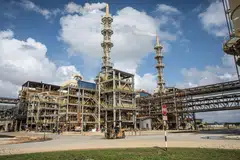

The economic forecasts incorporate Brent crude averaging above US$90 a barrel in 2026, exceeding BNM’s baseline range of US$70 to US$90, Rasheed said at a media briefing on Tuesday. Brent has averaged about US$78 so far this year.
An extreme scenario would see oil exceed US$110 a barrel on average for the year, with a prolonged conflict and infrastructure damage, he said, adding that BNM stands ready to revise its forecasts if needed.
BNM will “remain vigilant”, Rasheed added, and the central bank is committed to keeping inflation low while supporting the economy.
Jeff Ng, head of Asia macro strategy at Sumitomo Mitsui Banking Corp, said the “downside risks are now rising, especially if the war continues and reduces trade activity and demand”.
“We are calling for a 25-basis-point rate hike in the fourth quarter,” he added.
Domestic demand will continue to be a key engine of growth, as it did in 2025, with better employment, wage growth and measures that supported household spending.
Prime Minister Anwar Ibrahim’s government has kept the subsidised price of Malaysia’s most widely used petrol at RM1.99 (S$0.63) a litre. It has, however, cut the monthly quota by about a third to 200 litres per citizen as higher crude prices lift subsidy costs.
“We expect the global environment to remain uncertain, with many moving parts shaping domestic economic conditions,” Rasheed said. “Despite this, Malaysia’s economy is projected to remain on a firm footing, supported by resilient domestic demand.”
That is reflected in the Malaysian ringgit, which remains the top-performing currency across Asia in the past 12 months, even after weakening since the war began on Feb 28.
Despite bouts of volatility in the currency market, policymakers will continue to preserve stability, said the central bank chief.
“The Monetary Policy Committee will continue to closely monitor developments and assess the balance of risks to the growth and inflation outlook,” Rasheed said. “We also stand ready – as we have through successive periods of heightened uncertainty – to ensure orderly markets and manage risks of excessive volatility.”
BNM last lowered the overnight policy rate in July – the first cut in five years – in a pre-emptive move to support growth. Before that, in May, it reduced banks’ statutory reserve requirement to 1 per cent from 2 per cent, giving lenders greater flexibility to manage liquidity amid financial market volatility.
“The transmission of monetary policy has remained orderly and in line with expectations,” Rasheed said. “This adjustment is expected to provide additional support to the economy into 2026.” BLOOMBERG
Decoding Asia newsletter: your guide to navigating Asia in a new global order. Sign up here to get Decoding Asia newsletter. Delivered to your inbox. Free.
Share with us your feedback on BT's products and services