



Malaysia’s Anwar on defensive as ally turns into major rival
Pakatan Harapan’s defeat in Negeri Sembilan comes on the heels of its loss in Johor last month
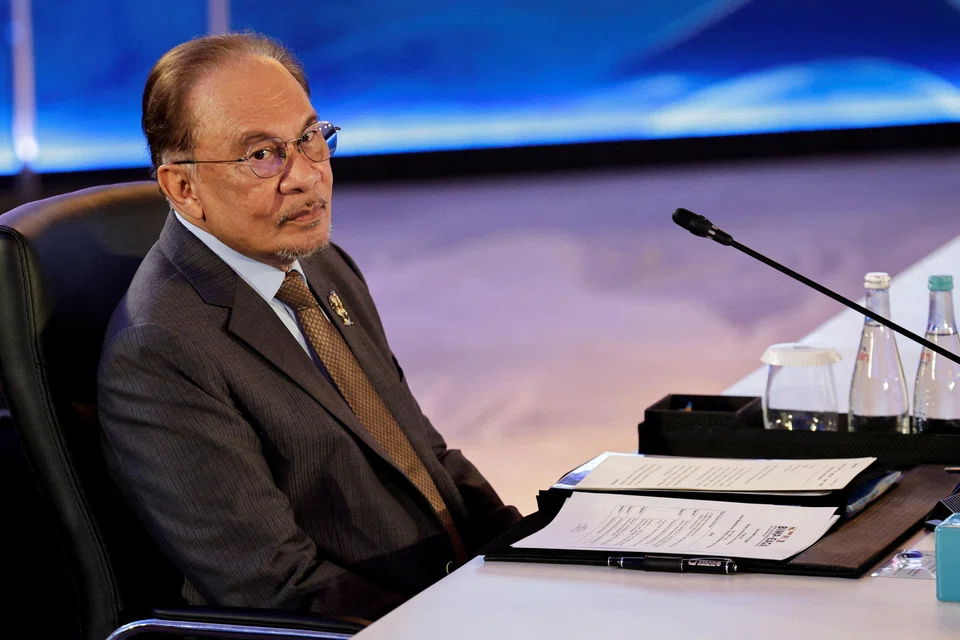
MALAYSIA’S balance of power is tilting away from Prime Minister Anwar Ibrahim, as his erstwhile ally Barisan Nasional emerges as the biggest threat to his bid for a second term in office.
Barisan Nasional’s recent success in two state elections built on a sentiment of unity among the country’s ethnic Malay majority has left Anwar’s multiracial Pakatan Harapan coalition with a narrow path to victory at the next national elections.
Meanwhile, his own supporters are becoming increasingly disillusioned by the slow pace of reforms and the sense that the benefits of Malaysia’s strong economy aren’t being evenly distributed.
“Anwar is no longer setting the political tempo,” said Asrul Sani, an associate vice-president at The Asia Group. “Rather than benefiting from incumbency, Anwar appears to be experiencing the reverse, with dissatisfaction toward the government increasingly reflected in the ballot box.”
In an election over the weekend, Pakatan lost control of the Negeri Sembilan state after eight years in charge, winning only 11 out of 36 seats it contested. That effectively allowed Barisan and national opposition party Perikatan Nasional to form a supermajority.
The defeat comes on the heels of its loss last month in Johor, where Pakatan won only eight of 56 seats contested, and Sabah last year, where it won a single seat.
In both Johor and Negeri Sembilan, Barisan and Perikatan loosely collaborated, effectively consolidating Malaysia’s two biggest Malay Muslim parties — former ruling party United Malays National Organisation and Islamist party Parti Islam Se-Malaysia. Malay Muslims make up nearly two-thirds of the country’s population.
“The threat to Pakatan is that Malay voters consolidate behind Barisan and Perikatan, while its traditional supporters become less enthusiastic and stay home,” Asrul said. “Malay unity will remain a running theme.”
Barisan and Perikatan leaders have both spoken about continuing their cooperation, including possibly at the next national vote, which could severely dent Pakatan’s prospects in mixed race constituencies.


Anwar, who came to power in 2022 after cobbling together various coalitions, has faced criticism for not delivering as a reformer. His government was also marred by several corruption scandals and was also slow in implementing long-promised legislative reforms.
As well, cost-of-living concerns contrast with Malaysia’s AI-driven economic growth, especially after his government reduced the monthly quota of fuel subsidies following the rise in energy costs from the war in Iran.
“Anwar has a trust deficit among large sections of the population, and that really hurts him,” said Bridget Welsh, a researcher of Malaysian politics with the University of Nottingham Asia Research Institute Malaysia, adding that “there’s not enough trickle down from foreign investment to improve ordinary people’s lives.”
This has created an opportunity for his opponents to appeal to identity politics. Barisan and Perikatan have framed elections as questions of Malay political consolidation and representation, Asrul said.
“It’s not all about race,” Welsh said. “But those conditions do become opportunities to feed insecurities, be it ethnic or otherwise.”
The biggest party in Anwar’s Pakatan coalition — the Democratic Action Party — is dominated by ethnic Chinese. Pakatan’s opponents have played up anti-DAP sentiments during the recent campaigns in an attempt to frame DAP’s dominance as a direct threat to Malay political power.
DAP’s future in Anwar’s government is also in question. The party lost several incumbent seats across the three latest state polls. That includes Malaysia’s Transport Minister Anthony Loke Siew Fook, also the party’s secretary-general, who lost his state seat in Negeri Sembilan over the weekend. Loke quit as DAP’s Negeri Sembilan chief on Monday after 22 years at the helm following the defeat, according to a report by the The Edge.
The immediate future does not look promising for Anwar. His coalition will next face state polls in Malacca by January, where Barisan are strong favourites as incumbents.
An extension of Barisan’s winning streak could raise pressure on the party’s chief, Deputy Prime Minister Ahmad Zahid Hamidi, to withdraw support for Anwar, said The Asia Group’s Asrul.
Anwar would still have a slim majority should Barisan leave his national government, but any further exits would effectively force a snap poll. Anwar currently still holds the power to dissolve Parliament, although that’s subject to approval of Malaysia’s king, Sultan Ibrahim Iskandar.
Anwar is due to unveil Malaysia’s next budget on Oct 9, likely his final spending plan before an election. His term ends in February 2028.
“Anwar came into power campaigning for political and institutional reforms,” said Ong Kian Ming, a former deputy trade minister and now an adjunct professor at Taylor’s University in Selangor state. But “he has delivered very little on this front.”
“The balance of power is slowly but surely shifting,” he said. BLOOMBERG
Decoding Asia newsletter: your guide to navigating Asia in a new global order. Sign up here to get Decoding Asia newsletter. Delivered to your inbox. Free.
Share with us your feedback on BT's products and services
TRENDING NOW

Once staunchly pro-China, Malaysian Chinese businesses are now distancing themselves from Beijing

Looking beyond looming CEO succession, should UOB potentially pursue a transformative merger?

Could stablecoins be the future of money?

Grab CEO’s wife Chloe Tong on life with Anthony Tan and finding her purpose

