Johor election: Barisan Nasional’s landslide win cements continuity, but raises pressure on delivery
Strong mandate raises expectations for investment boom to translate to better jobs and broader gains

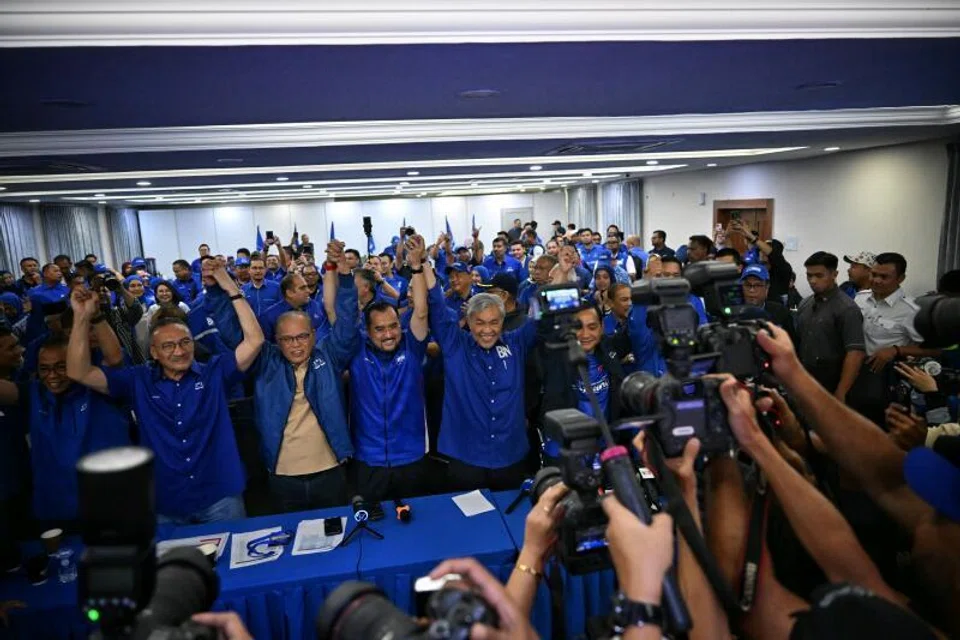
[KUALA LUMPUR] Johor’s 16th state election delivered much of what investors may have wanted: a decisive mandate, policy continuity, and little immediate risk of disruption to flagship projects such as the Johor-Singapore Special Economic Zone (JS-SEZ) in one of Malaysia’s fastest-growing economies.
Barisan Nasional’s (BN) sweeping victory in Saturday’s (Jul 11) election, winning 48 of Johor’s 56 seats in one of the strongest mandates in the state’s recent history, may be read as a strong endorsement of continuity.
It also raises the bar for caretaker Menteri Besar Onn Hafiz Ghazi, leaving the next state government with fewer political excuses if Johor’s investment boom fails to deliver more jobs, affordable housing, better public services and broader gains for Johoreans.
Julia Goh, senior economist at UOB Malaysia, said Johor had largely succeeded in attracting investments. Approved investments reached RM110 billion (US$27 billion) in 2025, with Singapore accounting for a significant share of the total investment. “The challenge has shifted from winning investment to executing consistently,” she said.
The decisive election outcome also reinforces economists’ view that Johor itself presents little political uncertainty for investors.
“There is no political risk in Johor. The political risk is whether there is a general election (soon),” said Dr Geoffrey Williams, an economist and the founder of Williams Business Consultancy.
Pakatan Harapan (PH), the reformist multi-ethnic coalition led nationally by Prime Minister Anwar Ibrahim’s Parti Keadilan Rakyat, won only eight seats out of 56 contested seats. Other parties – including Perikatan Nasional, led by former prime minister Muhyiddin Yassin, and Bersama, led by former economy minister Rafizi Ramli – failed to secure any of the seats they contested.
Teh Kee Sin, adviser and founding president of the SME Association of South Johor, said businesses welcome BN’s strong mandate for its policy continuity and pro-business stability.
“Businesses are worried about policy flip-flops. They hope the government can accelerate the JS-SEZ, strengthen ties with Singapore and continue attracting foreign direct investment,” he added.
SEE ALSO






What the votes say
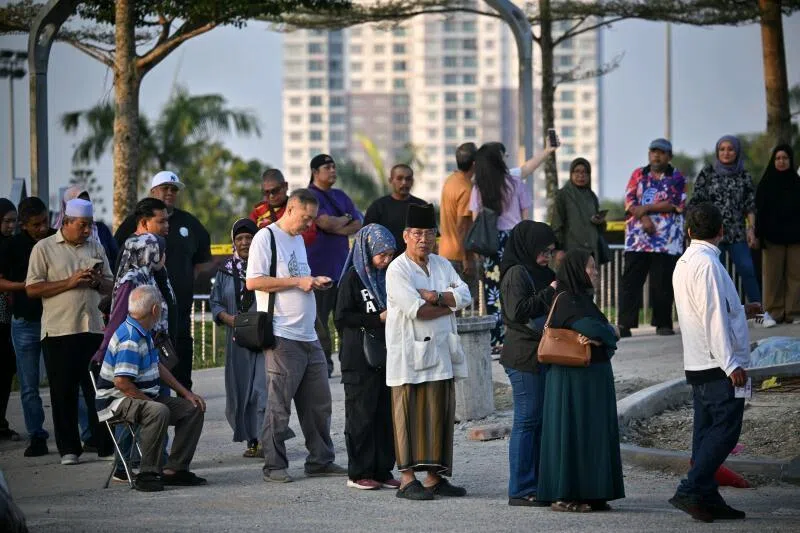
For Anna Sulaiman, who returned to Johor Jaya over the weekend from Singapore to cast her ballot, the election’s outcome is deeply personal. She hopes the new state government will create high-paying local jobs that will allow her to return home permanently.
“We seldom have a say in government decisions, but I believe our vote matters because it tells the government what people need,” she told The Business Times.
She and her husband live and work in Singapore, while their two children stay with her mother in Johor. The couple returns home only on their rest days.
Anna noted that both BN and PH spoke to issues that mattered most to her: better-paying jobs and relief from the rising cost of living. “If there’s a job near my home that pays enough to support my family, I don’t mind coming back as I can spend more time with my children,” she added.
Another Singapore-based Johorean, who returned to vote but declined to be named, said his priorities were similarly centered on lower living costs, affordable housing, career opportunities and improved public transport infrastructure.
Their aspirations mirror the broader challenge confronting Johor as it enters the next phase of its economic transformation.
Malaysia’s southernmost state led national growth with an 8 per cent gross domestic product expansion in the first quarter of 2026, while securing RM16.9 billion in cross-border foreign direct investment.
Bread-and-butter issues dominate manifestos

Throughout the campaign, both BN and PH broadly agreed on Johor’s long-term economic direction, backing the JS-SEZ, continued industrialisation and deeper economic integration with Singapore.
BN emphasised stability and the execution of Johor’s existing growth strategy, while PH focused more on ensuring that growth translated into stronger household incomes, more affordable housing and better living standards.
Speaking after the victory late on Saturday night, Onn Hafiz urged newly elected assemblymen to serve all citizens. “Our responsibility now is to build the Johor that we all aspire to achieve together,” he said.
BN chairman Ahmad Zahid Hamidi said the Johor government will work closely with the federal unity government to accelerate development and boost economic benefits.
Onwards with the big projects
Johor Bahru Chinese Chamber of Commerce and Industry president Jeffrey Lai said businesses were now looking beyond the election outcome towards the implementation of major projects such as the JS-SEZ and the Rapid Transit System (RTS) Link.
He said investor sentiment had remained generally positive throughout the campaign, while the business community hoped the strong mandate would accelerate infrastructure developments and draw more high-quality investments.
At the same time, he said Johoreans had become more discerning in their assessment of government, placing greater weight on delivery and track record than on campaign rhetoric. “People want to see what you have done for them. That’s more important,” he added.
Shared prosperity challenge
Wong Chin Yoong, professor of economics at Universiti Tunku Abdul Rahman, said Johoreans were experiencing “a mix of macroeconomic euphoria and pragmatic anxiety”.
“While there are hundreds of billions of ringgit in promised and realised foreign direct investments, numbers on a spreadsheet don’t automatically translate into prosperity for the person on the street,” he said.
While sustaining Johor’s investment momentum remains important, Prof Wong said the state’s next challenge is to “turn the investment hype into realised local wealth” by integrating more local micro, small and medium-sized enterprises into the supply chains of multinational manufacturers.
Prof Wong called for the faster roll-out of the JS-SEZ framework, particularly the proposed 15 per cent flat personal income tax rate for eligible knowledge workers, saying the measure could help narrow the wage gap with Singapore, retain graduates and strengthen Johor’s talent pool.
According to UOB’s Goh, the next administration should prioritise four areas: developing talent, strengthening power and water infrastructure, improving housing affordability and expanding logistics capacity.
She said Johor’s higher-value industries require specialised skills that take years to develop, while Singapore’s higher wages continue to exert a structural pull on skilled workers.
“Reliable utilities are essential to support data centres and advanced manufacturing, affordable housing must keep pace with investment, and cargo capacity at the Causeway and Second Link remains a bottleneck for manufacturers,” she added.
Political certainty
Johor’s ambitions remain substantial. Under the Johor Economic Transformation Plan, the state aims to raise GDP to RM260 billion by 2030, create more than 200,000 new jobs and lift GDP per capita above RM69,000, surpassing the World Bank’s threshold for a high-income economy.
However, Teh of the SME Association of South Johor cautioned that the investment boom strains smaller businesses through rising rents, labour costs and operating expenses. This surge threatens local competitiveness despite heavy inflows.
While SMEs expect to support incoming multinational corporations, he emphasised that they urgently require increased government grants and funding programmes to survive.
”For businesses, the focus has already shifted beyond polling day. What is more important for us is after the election – who can make the state better. This is what the business community is hoping to see.”
Decoding Asia newsletter: your guide to navigating Asia in a new global order. Sign up here to get Decoding Asia newsletter. Delivered to your inbox. Free.
Copyright SPH Media. All rights reserved.