Malaysia’s co-working operator Worq is confident it can keep up its 40% growth rate
Success stems from strategic sites around metro hubs, say founders

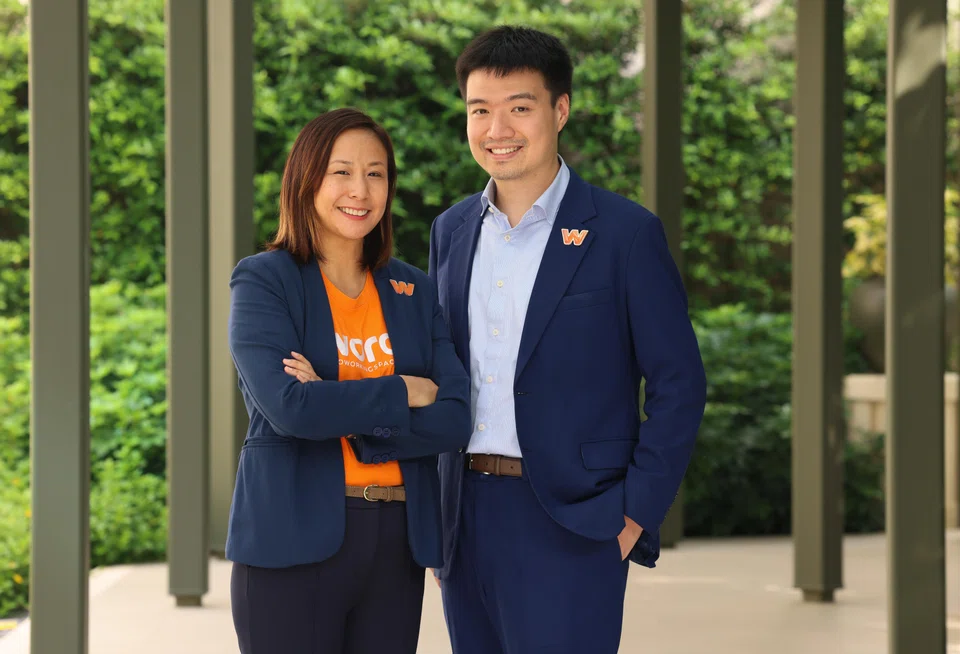
[SINGAPORE] Worq, a Kuala Lumpur-headquartered co-working operator, said it expects revenue for its fiscal year 2026 to reach RM50 million (US$12.2 million), up 41 per cent from a year earlier, and that its profit should treble.
“I think more than just the revenues itself, we have been consistently growing at approximately 40 per cent per year for the past three to four years... and I think we will probably keep that kind of pace of expansion,” said Worq’s chief financial officer and co-founder Andrew Yeow in a recent interview with The Business Times.
His bullishness stems from several factors, including the financial performance of its 12 co-working locations in the Klang Valley, which is situated around Kuala Lumpur.
He added that all of the company’s co-working spaces are profitable “on a standalone basis” due to a prudent approach and the strategy for new co-working office openings.
Worq took 60 days for its first outlet to turn profitable; its subsequent co-working office openings have often followed the same trend.
In an earlier interview with BT on the sidelines of the Asean Conference 2026 organised by the Singapore Business Federation, Worq’s co-founder and chief executive officer Stephanie Ping explained that part of the company’s success is driven by how it chooses to expand.
“We are on all the train lines and we are in Kuala Lumpur. So it’s a network of office spaces that people can use instead of having one real estate,” she said.
“This transit-oriented co-working differentiates us a lot because our closest competitor maybe has only four outlets on train lines.”
Car-lite salarymen
Ping, who has a background in real estate and spent about three years at a major Malaysian real estate investment trust, co-founded Worq in 2017 to capture what she and Yeow saw as changing trends on the part of both companies and employees in Malaysia’s urban centres.


“In the past we worked nine to five. Workers go downtown to the office HQ and everyone congregates there,” she said.
But she pointed out that the trend now is moving towards flexibility. Companies still want real estate space, but many increasingly prefer the space to be spread across a city or country to facilitate easier meetings with clients, or for better access to talent.
As far as the employees are concerned, there is also an increasing desire from those who work in cities to be able to work closer to their homes.
“When you have 20 to 40 outlets in a given city, and then wherever you need to work, you can drop in there,” Ping said. “Your employer can also give you this benefit of working from anywhere instead of just in HQ.”
So far, all of Worq’s co-working spaces in the Klang Valley are accessible by metro. The company said that future expansions in states such as Johor or Penang will also hinge on transport accessibility.
“A lot of the population is moving away from driving,” Ping said.
“When we started, only 20 per cent of our customers were using trains as the main form of transportation to work. Now 50 per cent of our customers use trains as a main form of transportation.”
Domestic potential
Despite her optimism, there are still concerns over the long-term viability of the co-working sector.
While Yeow believes that the industry has since looked past WeWork’s bankruptcy, co-working companies often operate on thin margins and have little room for error. Some landlords in prime locations also tend to see co-working operators as more volatile tenants.
In his subsequent conversation with BT, Yeow cited Singapore co-working operator JustCo being profitable in its latest results.
In August, JustCo reported a revenue of US$80.8 million for the six months ended Jun 30, up 24 per cent year on year. The increase was driven by higher revenue per workstation and an expanded network.
The group recorded a net loss of about US$800,000 for H1, but barring a one-off initial public offering expense, it would have recorded a US$100,000 net profit after tax.
Yeow said that, because many co-working operators are still private, there is “a lack of sample size” of publicly available data to shift sentiment on the industry.
“I do know a lot of operators that run pretty profitably like ourselves,” he added.
For now, Worq is still focused on the Malaysia market and sees tailwinds that would help it maintain its 40 per cent top-line growth.
The company, whose investors include the family office of Mah Sing Group – one of Malaysia’s top developers – has a steady pool of anchor clients that are multinational corporations (MNCs).
Both co-founders also said that the continued diversification trend is expected to provide opportunities for Worq, as European and Chinese firms look towards Malaysia as a potential Asean base.
That, coupled with what Ping sees as an increasing trend for more flexibility around workspaces, would arguably give Worq an opportunity to leverage what they see as their selling point: to be an infrastructure manager and free companies up to concentrate on their core operations.
“If you are an MNC or a big firm and you’re going in (to a new market), you don’t want to deal with challenging infrastructure, so you go to a service provider who gives you a quality space and you can just deploy,” said Yeow.
Decoding Asia newsletter: your guide to navigating Asia in a new global order. Sign up here to get Decoding Asia newsletter. Delivered to your inbox. Free.
Copyright SPH Media. All rights reserved.