



Malaysia’s IOI Properties makes Reit listing a springboard for next wave of growth
The group is tapping a US$1.9 billion portfolio to fund local projects and will retain a 60% stake in the trust

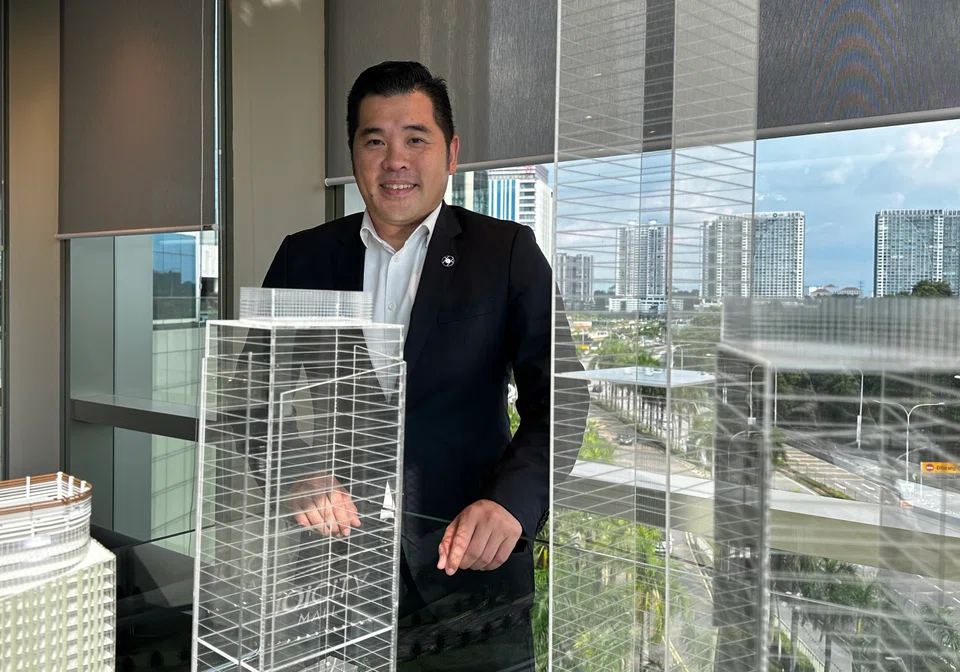
[KUALA LUMPUR] Malaysia’s IOI Properties is turning its portfolio of shopping malls, offices, and hotels into a capital engine for its next wave of growth, leveraging a real estate investment trust (Reit) listing to unlock liquidity while retaining control.
Backed by nine commercial assets worth nearly RM7.66 billion (US$1.9 billion), IOIPG Malaysia Reit launched its prospectus on Tuesday (Nov 3) ahead of its debut on Bursa Malaysia’s Main Market on Nov 25.
IOI Properties will retain a 60 per cent stake in the Reit.
Chris Chong, CEO of IOIPG Reit Management, described the set-up as a structural tool to drive long-term expansion without resorting to frequent rights issues or excessive bank borrowings.
“It’s a capital allocation strategy,” he told The Business Times.
Recycling capital
Drawing on more than two decades of commercial property experience, Chong, who is also the chief operating officer of IOI Properties, noted that commercial assets demand heavy upfront capital years before their income streams stabilise.
He added that planning, construction and tenant stabilisation can easily stretch over a decade, while retaining mature assets permanently traps critical liquidity.
Selling cash-flowing properties into a Reit structure allows the parent group to unlock capital and trim debt while maintaining majority upside through its retained stake.
“In exchange, IOI Properties recovers capital to reduce gearing while continuing to fund growth for shareholders,” Chong added.
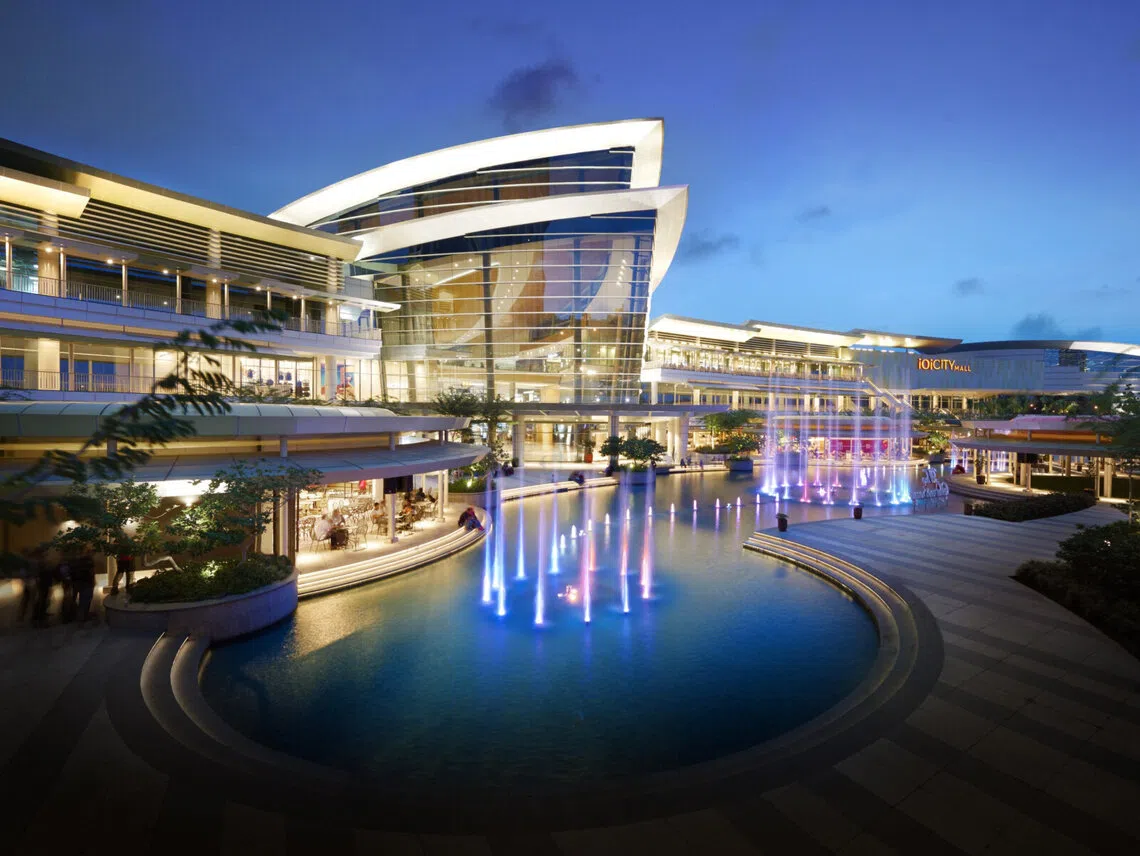
The initial portfolio is anchored by IOI City Mall, which has an appraised value of RM5.15 billion or about 67 per cent of the total portfolio valuation. It is Malaysia’s largest retail mall with more than 2.5 million square feet of net lettable area.
The portfolio also includes IOI City Towers and PFCC Towers, as well as six hotels:
- Putrajaya Marriott Hotel;
- Le Meridien Putrajaya;
- Moxy Putrajaya;
- Four Points by Sheraton Puchong;
- W Kuala Lumpur; and
- Courtyard by Marriott Penang.
The IPO
IOI Properties will offer 2.2 billion units, representing 40 per cent of the trust’s 5.5 billion units, to institutional and retail investors.
At an illustrative offer price of RM0.90 to RM0.91 per unit, that would raise about RM2 billion for the sponsor. Existing shareholders will be entitled to subscribe for one restricted offer unit for every 10 IOI Properties shares held.
The trust will acquire the properties for about RM7.58 billion, distinct from their appraised value, through Reit units and RM2.65 billion in cash funded through sukuk.
About RM3.07 billion of the overall net cash proceeds from the exercise will support ongoing developments, while RM1.53 billion will go towards debt repayment.
Chong described the offering as Malaysia’s largest Reit IPO, although he estimated that the trust itself would rank around fourth or fifth by market capitalisation and assets under management.
The country’s current largest listed Reit vehicle, KLCC Stapled Group, held a market capitalisation of around RM15 billion as at Oct 30, backed by a property portfolio valued at RM16.7 billion.
Funding Malaysian growth
While IOI Properties has drawn regional attention for its bold moves in Singapore, including a joint bid for One Raffles Place and plans to redevelop Shenton House, Chong clarified that the Malaysian Reit exercise is meant to support domestic projects.
He noted that the group’s established Singapore assets are expected to self-fund their growth.
“What we are doing here now is mainly to fund our upcoming projects in Malaysia,” he added. Those projects include IOI City Mall’s third phase, comprising about one million sq ft of retail space, as well as a 10,000-seat arena for medium-sized concerts and performances targeted for completion in 2030.
An office and hotel tower is expected to follow in 2031, with The Ritz-Carlton occupying its upper floors.
Plans are also under way for five Malaysian hotels, including The Westin Puchong and Aloft locations in Johor Bahru and Sepang.
The developments could provide future acquisitions for the Reit once completed and stabilised, alongside operating properties retained by the sponsor.
The trust could also buy assets from third parties, although Chong favours mature properties with established income over those requiring lengthy turnarounds.
Acquiring an underperforming mall requires capital-intensive renovations and tenant re-curation, with no guarantee of success, he added. He noted that borrowing to finance a lengthy turnaround risks depressing distributable income – an execution risk better suited to the developer sponsor.
“A Reit is an income-generating vehicle, not a development arm,” he explained, emphasising that assets should only be injected once stabilised at valuations supported by independent appraisers.
Borrowing room for acquisitions
To fund future growth while committing to a 90 per cent payout ratio, Chong said that the trust will leverage its balance-sheet headroom.
With an initial gearing ratio of about 34 per cent, the trust retains ample headroom below the Securities Commission’s 50 per cent leverage cap, he noted.
At an average borrowing cost of roughly 3.8 per cent, acquiring yields in the 6 to 7 per cent range would be yield-accretive while keeping leverage within safe bounds, he added.
For its hotel assets, the trust has secured master-lease agreements with IOI Properties subsidiaries. Rent will be structured as the higher of a fixed guaranteed base or a variable 90 per cent share of net operating profit, providing both a secure rental floor and upside exposure to hospitality performance.
Combined with the sponsor’s capital recycling strategy, the mechanism enables IOI Properties to continuously monetise mature assets and re-fund its development pipeline without diluting equity or stretching group gearing.
“We can continue to do the same thing without going to our shareholders or to the banks to increase our gearing,” Chong said.






