Malaysia’s ports muscle up – outpacing Rotterdam but still trailing Singapore
What’s driving Malaysia’s port growth, and how it stacks up globally

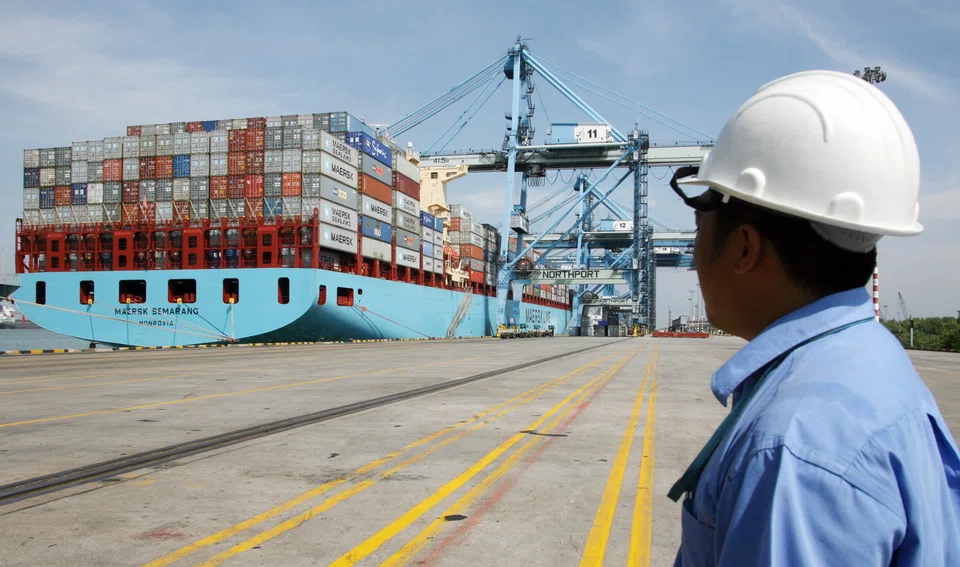
[KUALA LUMPUR] With two ports ranked among the world’s top 15 and container volumes surging, Malaysia is fast becoming a key maritime transit hub in global trade.
In 2024, Port Klang’s throughput grew by 4.2 per cent year on year, while the Port of Tanjung Pelepas (PTP) recorded nearly 17 per cent growth – its fastest in recent years – as both ports together handled 26.9 million twenty-foot equivalent units (TEUs).
PTP also made history as the first Malaysian port to process more than one million TEUs in a single month.
Fuelled not just by global demand for electronics and palm oil, Malaysia’s port gains also reflect supply chain shifts, a rush to export ahead of new tariffs, and rising China-Asean trade flows – echoing the “China Plus One” wave that lifted volumes during Trade War 1.0 (post 2018).
The ports’ position along the Strait of Malacca – one of the world’s busiest maritime routes – has also long offered a strategic edge.
Malaysia has eight federal ports, with Port Klang and PTP leading the charge as major transhipment powerhouses in South-east Asia. Collectively, they made up the lion’s share of Malaysia’s total container throughput, which rose 9 per cent year on year to 30.7 million TEUs in 2024.
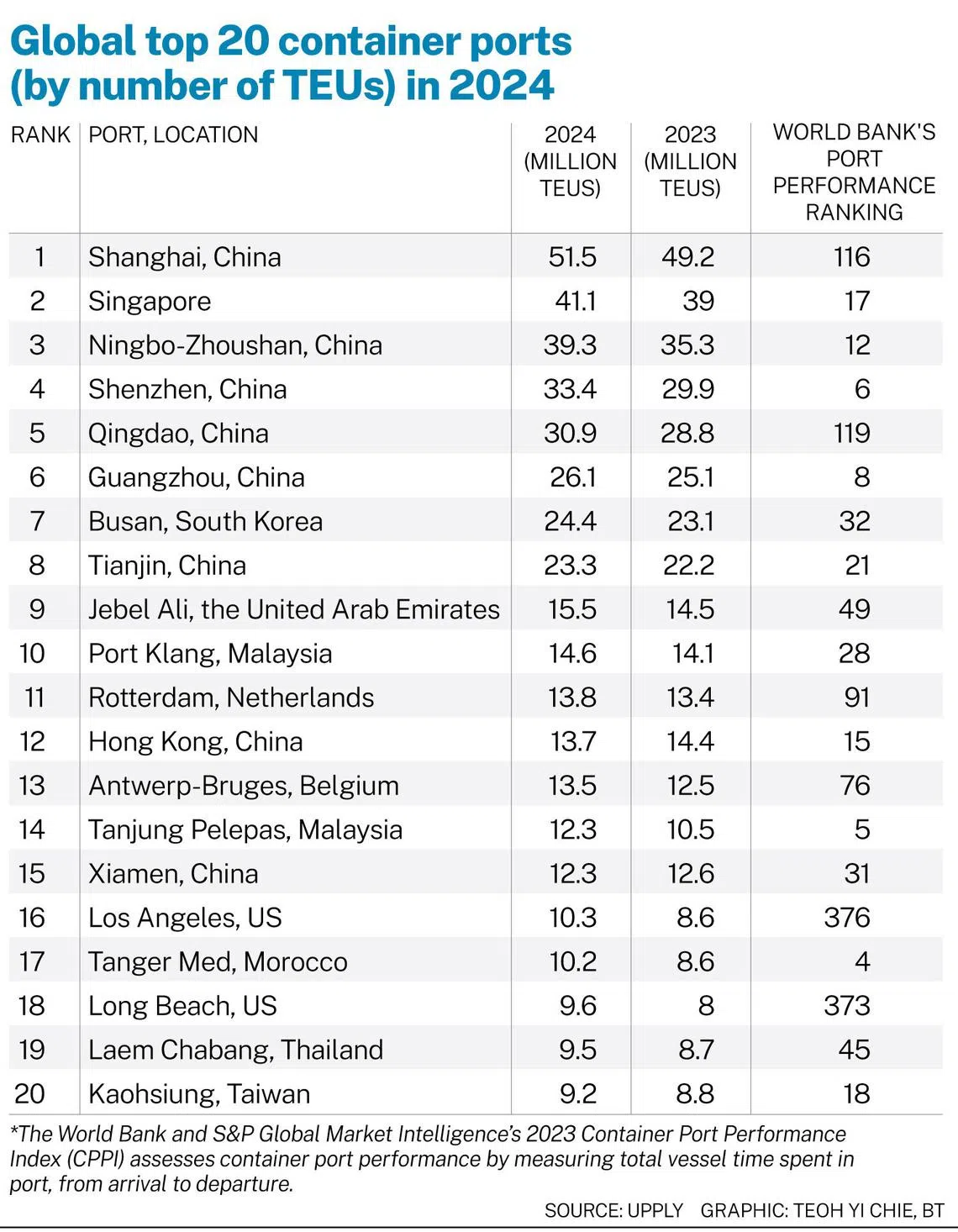
Notably, Port Klang ranked 10th globally last year with over 14.6 million TEUs, edging past Europe’s heavyweight Rotterdam for the first time – a milestone after years of trailing the global top 10 mainstay.
PTP ranked 14th globally in 2024 with a record 12.3 million TEUs, according to Upply.
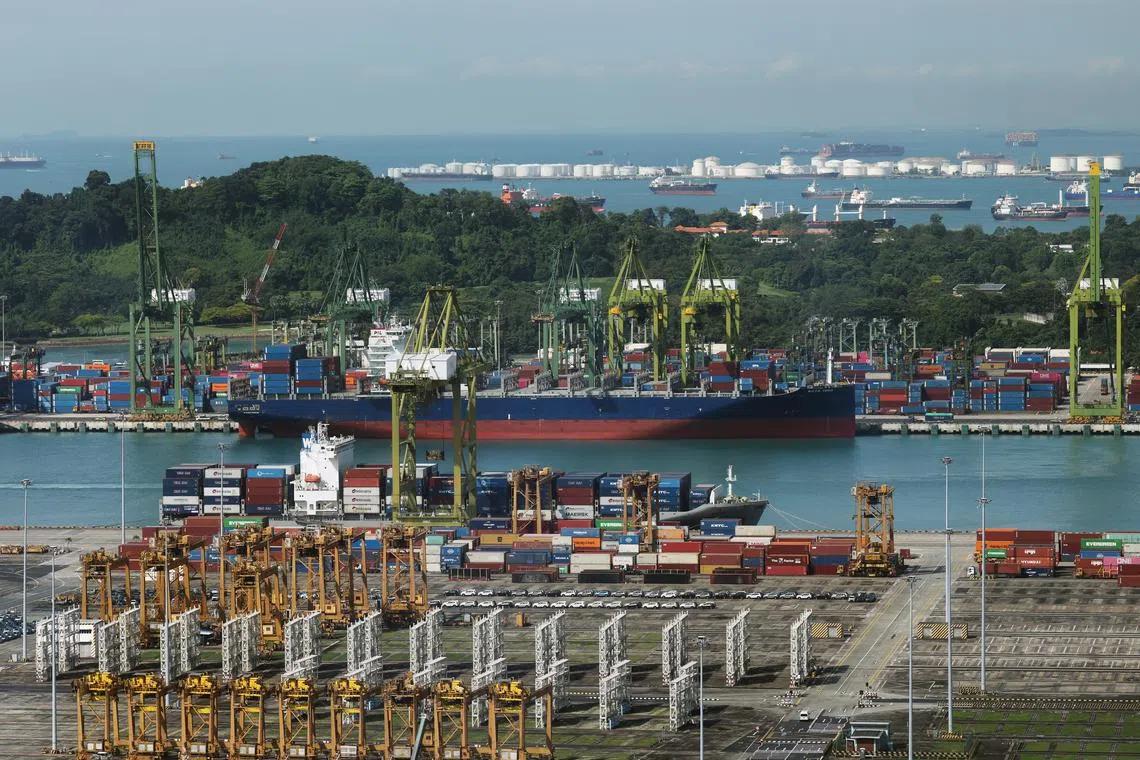
In terms of efficiency, PTP has gained ground on regional rival, the Port of Singapore, ranking fifth globally in the World Bank’s 2023 Container Port Performance Index – well ahead of Singapore at 17th.
Like Singapore, it sits along key east-west shipping lanes at the southern tip of Peninsular Malaysia, but offers lower operating costs and more space for expansion.
Still, Singapore remains well ahead in scale, having handled 41.1 million TEUs in 2024 and ranking as the world’s second-busiest container port after Shanghai’s 51.5 million, according to Upply.
While Malaysia’s port outlook remains upbeat, the current shipment surge may be short-lived as exporters race to frontload orders ahead of looming US tariffs. RHB Research warns that escalating trade tensions pose downside risks to long-term growth, with export-reliant sectors – especially those tied to both China and the US – vulnerable to direct tariffs.
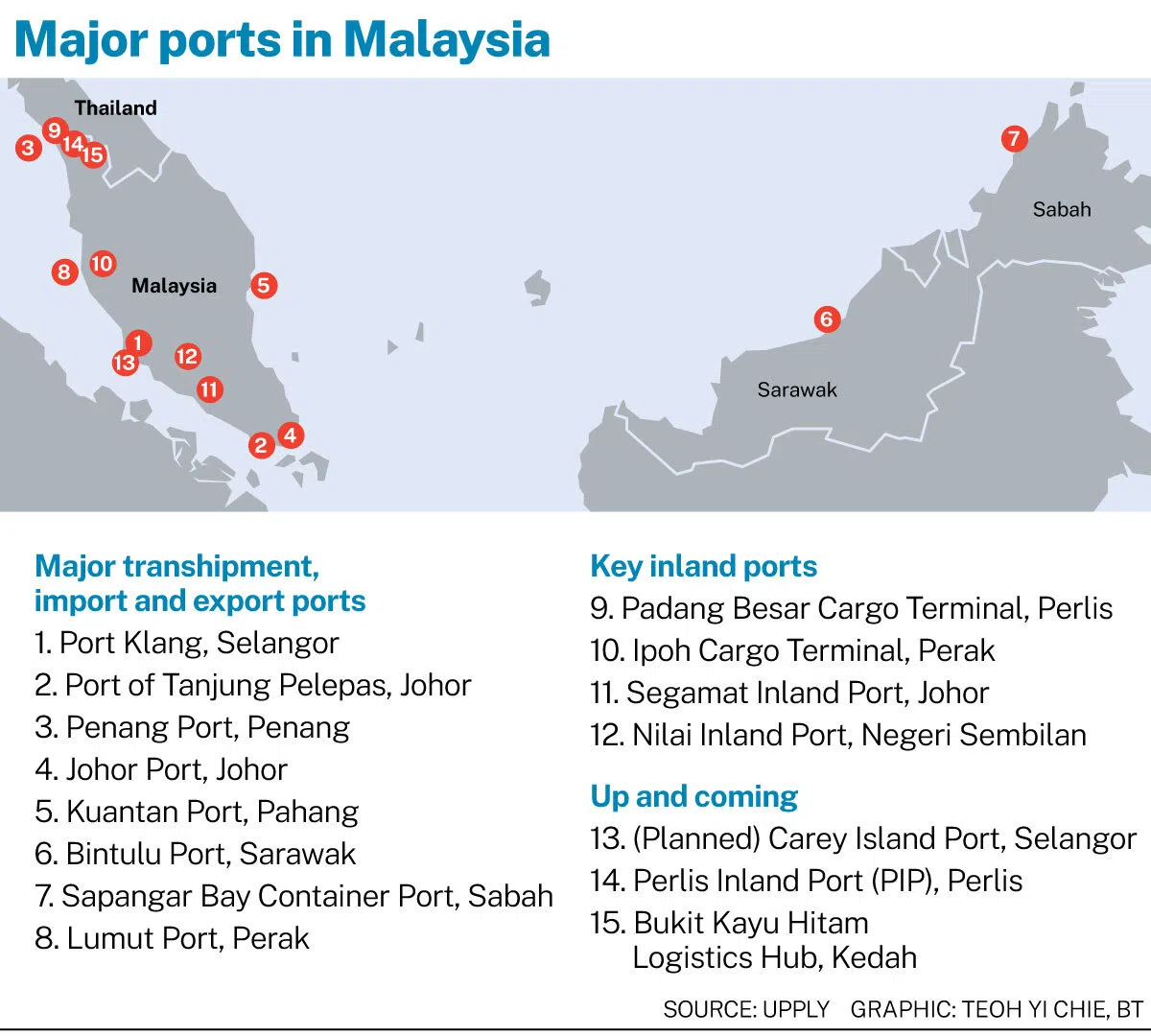
Major transhipment, import and export ports
1. Port Klang, Selangor
Malaysia’s largest port, ranks among the world’s top 10 busiest container ports, serving as a vital global trade hub with strategic location and extensive connectivity.
Feature: Transhipment, import and export port
Operator: Port Klang Authority
2024 cargo throughput (TEUs): Over 14 million
Highlight: Home to Westports and Northport, both major transhipment hubs.
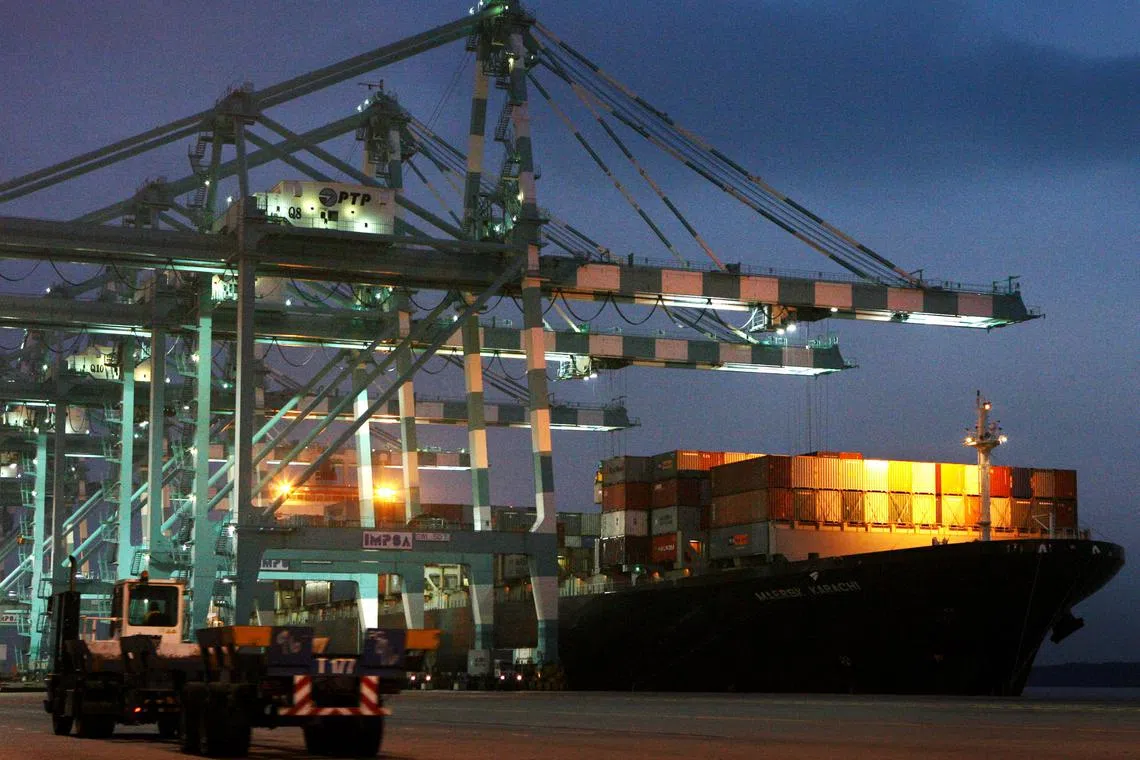
2. Port of Tanjung Pelepas, Johor: Southern transhipment powerhouse
Strategically located near Singapore, with strong support from shipping and logistics companies Maersk and CMA CGM.
Feature: Transhipment, import and export port
Operator: MMC Corp and APM Terminals
2024 cargo throughput (TEUs): Over 12.3 million
Highlight: Part of the Johor-Singapore Special Economic Zone (JS-SEZ), well-known for its modern facilities and ranked fifth most efficient container port globally by the World Bank.
3. Penang Port, Penang: Northern gateway
Malaysia’s oldest port, handling containers, breakbulk and cruise traffic. Serves the northern region and southern Thailand.
Feature: Transhipment, import and export port
Operator: Penang Port, a subsidiary of MMC Corporation
2024 cargo throughput (TEUs): Over 1.4 million
Highlight: Penang Port’s Swettenham Pier berths two mega cruise ships, welcoming over 12,000 passengers. It directly links tourists to Unesco George Town’s attractions, a key port-of-call.
4. Johor Port, Johor: Seamless industrial logistics
Located in Pasir Gudang, Johor Port supports the thriving Pasir Gudang industrial areas and serves as one of the key palm oil terminals globally.
Feature: Import and export port
Operator: Johor Port, a subsidiary of MMC Corporation
2024 cargo throughput (TEUs): Over 700,000
Highlight: As part of the JS-SEZ, a five-year modernisation plan is under way to upgrade infrastructure, expand liquid berths and enhance equipment capabilities.
5. Kuantan Port, Pahang: East coast industrial gateway
Serving as a deep-water gateway on Malaysia’s east coast, this port is crucial for handling bulk cargo, petrochemicals and palm oil exports, strategically anchoring the East Coast Economic Region.
Feature: Transhipment, import and export port
Operator: Kuantan Port Consortium, jointly owned by IJM Corp and Beibu Gulf Holding (Hong Kong)
2024 cargo throughput (TEUs): 500,000
Highlight: Strategically linked to Malaysia-China Kuantan Industrial Park and the Belt and Road Initiative, Kuantan Port benefits from East Coast Rail Link connectivity and major infrastructure expansion.
6. Bintulu Port, Sarawak: Energy export backbone
It is the largest liquefied natural gas (LNG) export terminal in East Asia and Malaysia’s sole LNG export gateway, anchoring the country’s position in the global LNG trade.
Feature: Transhipment, import and export port
Operator: Bintulu Port
2024 cargo throughput (TEUs): 356,318
Highlight: Sarawak’s largest multipurpose port handles LNG (58 per cent) and non-LNG (42 per cent) cargo, connecting Borneo regionally. It supports industrial projects such as Samalaju and Kasawari, expanding while aiming for green energy status.
7. Sapangar Bay Container Port, Sabah
Developed as Sabah’s main link to global trade, Sapangar Bay Container Port aims to be a key regional hub for the Brunei-Indonesia-Malaysia-Philippines East Asean Growth Area.
Feature: Transhipment port
Operator: Sabah Ports
2024 cargo throughput (TEUs): 500,000
Highlight: With major expansions, including a partnership with global operator DP World, it will more than double its container capacity to nearly 1.3 million TEUs by 2025 and boost Sabah’s logistics efficiency, connectivity and economic growth.
8. Lumut Port, Perak
Although it is privately operated, this bulk cargo terminal, focusing on dry and liquid bulk, serves Perak’s steel, cement and agro-industrial sectors.
Feature: Transhipment, import and export port
Operator: Lumut Maritime Terminal, a subsidiary of Perbadanan Kemajuan Negeri Perak
Latest cargo throughput (TEUs): Not stated
Highlight: The port is undergoing major expansion with the Lumut Maritime Terminal 2, aiming to become one of South-east Asia’s most efficient cargo terminals and a key logistics and industrial hub.
Key inland ports
Beyond the coastline, a network of inland ports and dry hubs is helping manufacturers move goods faster and cheaper. These facilities link to major seaports by road and rail, easing congestion and offering customs clearance, warehousing and transhipment services inland.
9. Padang Besar Cargo Terminal, Perlis
Located at Malaysia’s northern border with Thailand, it is a critical rail-linked gateway for cross-border trade, handling major exports of timber and rubber.
Feature: Border-based dry port
Operator: Multimodal Freight, a subsidiary of Keretapi Tanah Melayu
Latest cargo throughput (TEUs): 145,000
Highlight: A significant gateway for southern Thailand’s export market and manages containers from southern Thailand en route to Penang Port and Port Klang.
10. Ipoh Cargo Terminal, Perak
Malaysia’s first inland port, it allows seamless goods movement within and around the Kinta Valley to Port Klang.
Feature: City-based dry port
Operator: Tiong Nam Logistics
Latest cargo throughput (TEUs): Not stated
Highlight: It connects the hinterland to major seaports such as Westport, Northport and Penang Port, with about 90 per cent of its cargo moved by rail, reducing road congestion and logistics costs.
11. Segamat Inland Port, Johor
Located in northern Johor, serves as a vital logistics hub for the south-central region of Peninsular Malaysia.
Feature: Border-based dry port
Operator: Port Klang Authority
Latest cargo throughput (TEUs): 3,500
Highlight: It offers feeder rail and road links to Port Klang and other major seaports, supporting industrial parks and facilitating sea cargo transhipment to inland destinations.
12. Nilai Inland Port, Negeri Sembilan
Serves dual functions as a short-range inland port for Port Klang and a long-distance hub for the Port of Tanjung Pelepas, with robust road and rail connectivity.
Feature: City-based dry port
Operator: Nilai Inland Port, a subsidiary of Hextar Technologies
Latest cargo throughput (TEUs): 1,200
Highlight: Its strategic location and value-added services make it a crucial inland node for the electronics, automotive, and fast-moving consumer goods sectors.
Up and coming
To stay competitive, Malaysia is rolling out a wave of port expansions – both under way and on the horizon – as part of a long-term push to anchor itself more firmly on the map of global trade.
13. (Planned) Carey Island Port, Selangor
Feature: Transhipment, import and export port
Carey Island Port is a proposed third terminal for Port Klang, developed through a joint venture between MMC Corp, Sime Darby and India’s Adani Ports. Currently in the feasibility stage, it awaits final approvals and environmental assessments, with construction expected to begin in 2025 and full completion by 2055.
14. Perlis Inland Port, Perlis
Feature: Border-based dry port
Expected to be operational by the third quarter this year, the port will add a capacity of 300,000 TEUs annually, supplementing the existing 150,000 TEU capacity at Padang Besar, a border township with road and rail links to southern Thailand. The strategic plan includes aligning the port with two key rail lines, including the Padang Besar-Penang Port connection, to bolster regional connectivity.
15. Bukit Kayu Hitam Logistics Hub, Kedah
Feature: Border-based dry port
The Inland Clearance Depot has already started operation; it serves as a key logistics hub with cross-border connectivity to Thailand with core facilities including container handling, warehousing and customs clearance. Further phases and supporting infrastructure are still under construction and slated for full completion by 2029. Planned capacity is up to 240,000 TEUs.