

Westports in RM39.6 billion expansion to tap Port Klang’s bullish prospects

Tay Peck Gek
WESTPORTS Holdings is planning to add as many as eight berths to the current 31 it operates at Port Klang over the next two to four decades, as it looks to double its container handling capacity to around 28 million 20-foot-equivalent unit containers a year.
The investment would cost the Malaysia-listed port operator RM39.6 billion (S$11.2 billion) in total.
Westports, which has a market value of about RM12.8 billion as at Mar 1, has recently been granted the right to continue operating existing facilities as well as new facilities at the port in the Straits of Malacca.
It would be allowed to run the facilities until the year 2070 if it builds four berths, or to 2082 if eight berths are constructed.
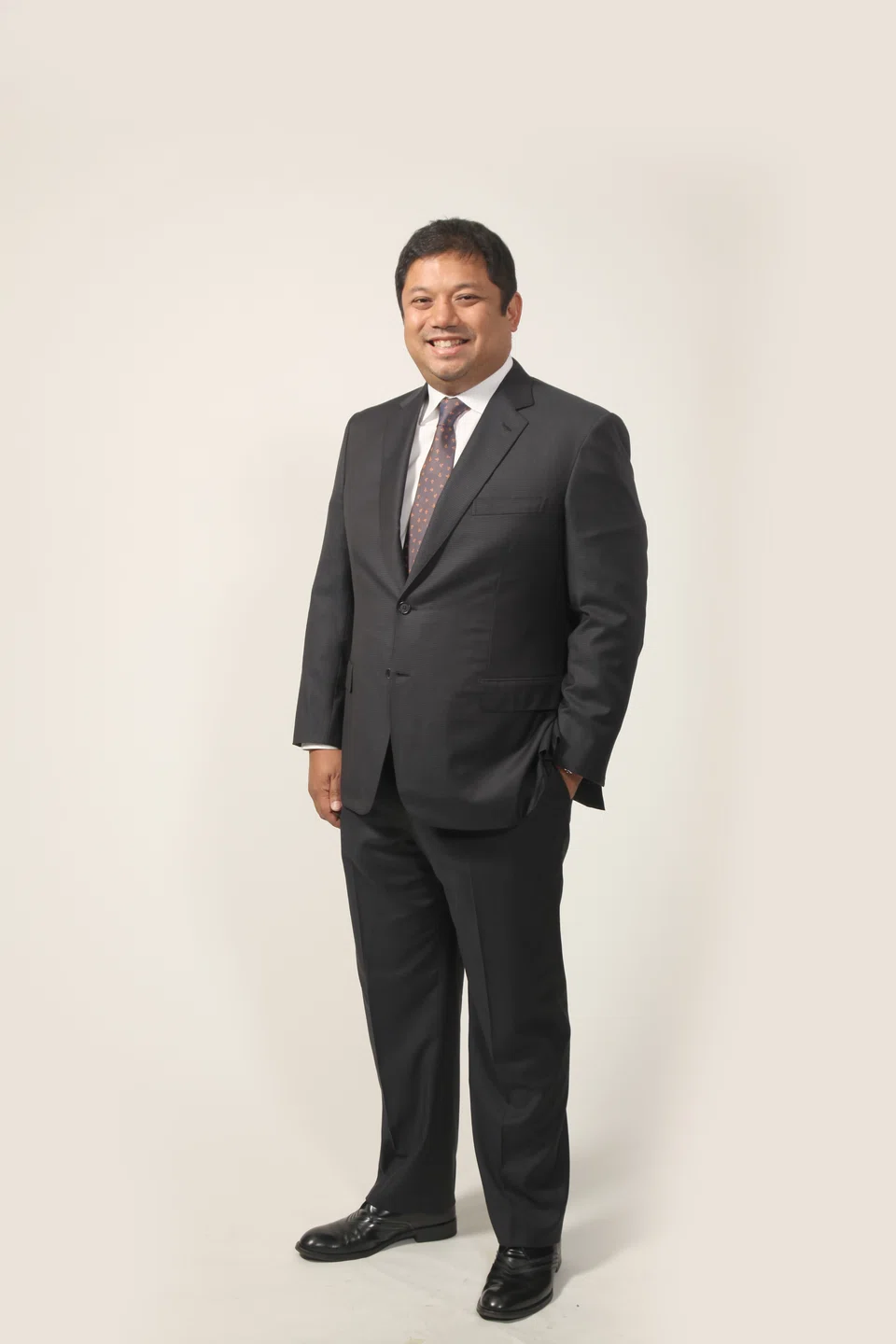
“We just signed (the agreement) with the government in December last year, after about six years trying to get this off the ground,” Ruben Gnanalingam, Westports group managing director, told The Business Times.
“We are going to start construction with the reclamation, dredging (and others) pretty soon. It’s something that we have been working on for a long time, so we are happy that we finally got it through.
“Our focus right now is actually to fund it with internally generated funds, and also some borrowings. And we believe that whatever shortfall we have, we can probably do a dividend reinvestment plan,” the 47-year-old added.
The amount of internally generated funds would vary every year, depending on the cash flow from operations in that year.
Any shortfall would then be covered by borrowings. At the time of this interview, Westports was finalising the terms of a RM5 billion perpetual bond programme. This gives the company the flexibility to issue bond amounts within that limit, depending on its financial needs.
Westports’ debt-to-equity ratio stood at 0.24 times as at end-2023.
The dividend reinvestment plan has not been firmed up, as this would only kick in if net operating cash flows and borrowings are inadequate for the capital expenditure on the new berths.
“For what we know from the (majority of) shareholders – which come up to about 90 per cent – most of them will rather reinvest. So a small 10 per cent probably might not reinvest. For them, at least they have a choice,” said Gnanalingam, whose family has a 45.5 per cent stake in Westports.
Westports has maintained a dividend payout ratio of 75 per cent of its net profit since it listed in 2013.
In 2023, the company delivered RM779.4 million in net profit, up 11 per cent year on year as revenue rose 4 per cent to a record RM2.2 billion, mainly driven by the highest-ever number of containers handled.
Intra-Asia trade makes up about 65 per cent of Westports’ container volume.
Net operating cash flow stood at RM994.6 million, while net cash used in investing activities amounted to RM213.2 million and that expended in financing activities stood at RM756.7 million.
Westports’ cash pile was RM535.2 million as at Dec 31, 2023.
Meanwhile, Gnanalingam said the company is open to the idea of any strategic investor that comes along who can add value on top of pumping in US$300 million. But, he stressed “the value add is more important than the cash”.
The value that the strategic investor adds to Westports could be in the form of bringing business or technology, or opening up networks to it.
When asked if Singapore’s port operator PSA or state investor Temasek would be deemed a strategic investor, Gnanalingam said: “I don’t think they will find us strategic either… I don’t see how they will value add.”
But he added that strategic investor funding is the least preferred source because it would dilute existing shareholders’ equity.
He was also quick to clarify that the RM39.6 billion is not meant to be raised or spent over one year, as he was still upset that an earlier news article purportedly gave readers such an impression.
“We have bankers calling us to say, ‘can we help you raise the RM39.6 billion?’,” Gnanalingam shared. “I told him: ‘if I need to raise the RM39.6 billion, I’m in trouble.’”
The mega investment underscores the operator’s bullishness about the prospects of Port Klang in the long term.
Gnanalingam believes that foreign direct investments in Malaysia are expected to continue.
“What we see is that the ‘China Plus One’ strategy is also resulting in companies moving towards South-east Asia,” he said.
Over the next 40 years, intra-Asean (Association of South-east Asian Nations) trade is likely to rise as well, as the 10 member states in the bloc become richer, the helmsman believes.
In the near-term, the Red Sea diversions around South Africa have presented “no real volume changes” to Westports except for a two-week lag due to the longer route.
The company has started negotiations with the government to raise tariffs – the charges for handling cargo at Port Klang – but has not been given a date for the outcome.
Gnanalingam declined to reveal the numbers he put on the negotiations table.
The sharp depreciation of the ringgit has not had much adverse impact on Westports, but has instead made it very competitive and boosted demand.
The only time there might be an unfavourable impact is when Westports purchases cranes, but it is trying to negotiate with vendors to have the orders denominated in their local currency such as the Japanese yen or the Chinese yuan, instead of the US dollar.
Meanwhile, Westports is working towards achieving net-zero carbon emissions by 2050 through various measures, including the use of solar panels, planting mangrove trees and electrifying its fleet of vehicles.
Likewise, automation and digitalisation are some of the technologies that the port operator will leverage to raise its game.
But Gnanalingam stressed that the adoption of sustainability measures and technologies involves cost-benefit analysis.
“We’re not going to race towards going sustainable at all costs. We have to do it in a very cost-conscious manner,” he said.






