



Middle East oil shocks send S-E Asia scrambling for alternatives, but cleaner mix is no easy choice
The crisis may be a catalyst – or obstacle – for the region’s renewable energy transition goals
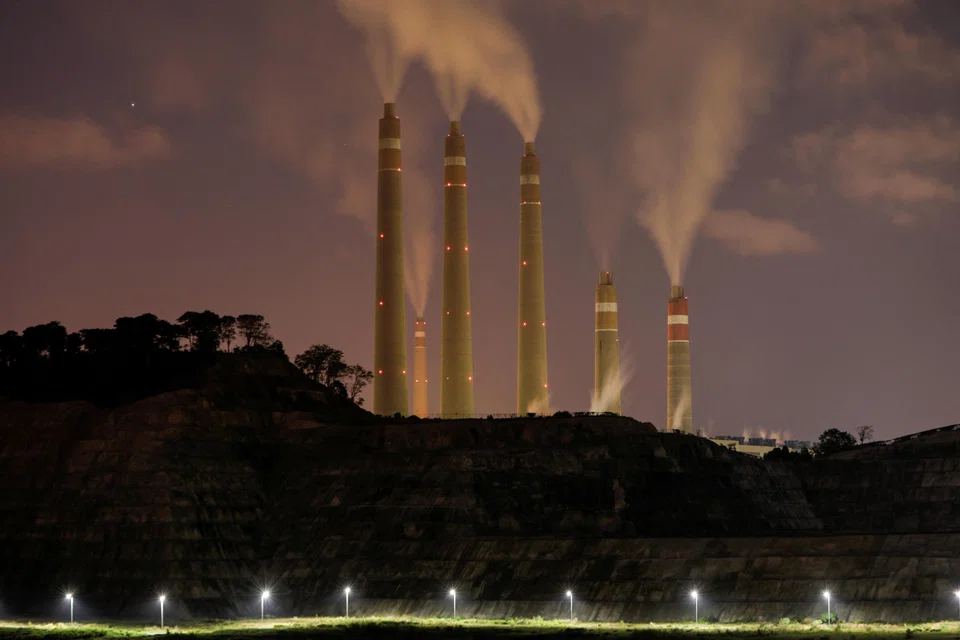
[SINGAPORE] Oil supply shocks since the onset of the Iran conflict have laid bare South-east Asia’s exposure to fuel from the Middle East, with key sectors such as agriculture, industry and transportation heavily dependent on imported crude oil.
The region is disproportionately dependent on energy imports from the Middle East, with an energy mix still dominated by fossil fuels. Neither is the region’s electricity mix spared from the crisis, with several economies obtaining most of their power generation from liquefied natural gas (LNG) imports.
Across the region, governments have introduced energy-saving measures. Thailand has encouraged public employees to work remotely and instructed government offices to set air conditioning temperatures at 26 degrees Celsius, while the Vietnamese government has urged the use of public transport to save fuel.
The Strait of Hormuz handles about 20 million barrels per day of crude and oil products, making it the most critical oil transit point in the world. Of this, about 90 per cent is bound for Asia.
The Philippines and Vietnam ship most of their crude oil needs through the strait; likewise, Singapore relies on the Middle East for crude oil and gas imports. Over 40 per cent of Singapore’s LNG imports originated from Qatar in 2025, according to Rystad Energy. That year, LNG made up 57 per cent of Singapore’s total imports of natural gas – the critical resource from which most of the Republic’s electricity is generated.
Stockpiling reserves
As the Strait of Hormuz remains closed, producers in the region may have to turn to crude oil inventories, which vary in quantity across Asia.
“Reserves will be the first line of defence,” said Pauline Tang, an analyst at S&P Global Ratings.
China had built up a 120-day buffer of crude imports in expectation that the US would strike Iran, while Japan holds oil stockpiles equivalent to 254 days of total consumption.
South-east Asia’s reserves, however, remain uneven. Indonesia maintains only a 23-day buffer due to limited storage capacity, while Thailand has a 95-day buffer.
“It remains unclear under what conditions different countries will tap into their reserves,” said Tang. “Given limited stock and escalating prices, the situation may need to get significantly worse for governments to consider this option.”
Diversifying power
The crisis could have lasting consequences for the region’s longer-term energy policy, said analysts.
For one, the conflict may spur governments to reconsider the region’s reliance on energy imports.
“Prolonged geopolitical tensions impacting oil and gas supply chains would pressure economies to seek alternative energy sources,” said Ong Shu Yi, sustainability research analyst at OCBC, in a Wednesday (Mar 11) report.
“This can reduce dependence on fossil fuel imports and mitigate energy disruption risks in the long term,” she said.
Diversification into more renewable energy sources could potentially shield the region’s economies from inflationary pressure during energy crises, said Ali Izadi-Najafabadi, head of Asia-Pacific at Bloomberg New Energy Finance.
“A higher share of renewables can help reduce exposure to external price shocks, provided there is an appropriate power market design in place,” he said.
But Izadi-Najafabadi noted that these benefits are largely confined to electricity-dependent sectors, as electrification levels in industry and transportation in the region are still low.
But Dr Christopher Len, acting coordinator of the climate change in South-east Asia programme at the Iseas-Yusof Ishak Institute, warned that the crisis could push governments to return from “cleaner” LNG to domestically produced coal, a fossil fuel which the region has struggled to phase out.
“The Iran conflict is a stark reminder that cleaner does not mean more secure,” he said. “When governments are under crisis pressure, the temptation is to fall back on what is familiar and readily available.”
Regional electrification
Geopolitically-induced energy shocks could tip the scales for regional integration efforts in energy security, for better or for worse.
One such development is the Asean Power Grid (APG), which aims to link up member countries’ power systems by 2045. The initiative has been touted as an important means to strengthen the region’s energy security.
“The disruption of supply routes beyond South-east Asia makes the case for pooling energy resources within the region considerably harder to ignore,” said Dr Len.
But the crisis may also push governments to protect their own national energy supply at the expense of regional integration, he noted.
Projects under the APG have already faced setbacks prior to the Iran conflict. For instance, plans to export solar power from Indonesia’s Batam to Singapore have hit challenges in securing capital under Jakarta’s licensing rules.
“Whichever of these impulses wins out will ultimately shape whether the Asean Power Grid gains traction or loses ground,” added Dr Len.
Additional reporting by Elisa Valenta, Jamille Tran and Tan Ai Leng






