Pandora opens US$150 million Vietnam plant as Singapore hub drives Asia growth
The jeweller’s first manufacturing base outside Thailand is aimed at raising production and resilience
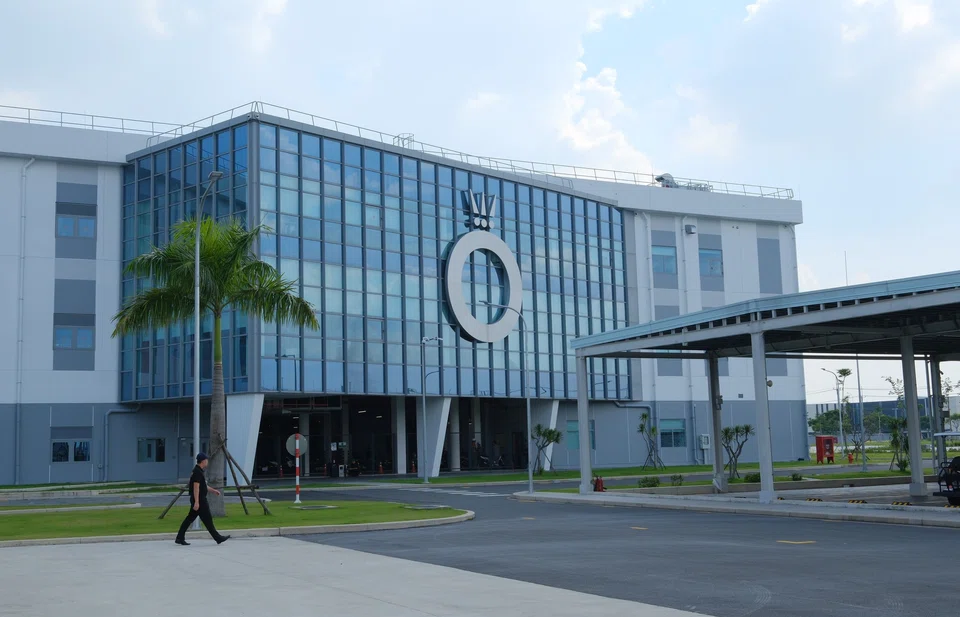
[HO CHI MINH CITY] Pandora inaugurated its factory in Vietnam, north of Ho Chi Minh City, on Thursday (Oct 1), adding Vietnam to its South-east Asian network that includes its long-established manufacturing operations in Thailand and its new Asia headquarters in Singapore.
The Vietnam facility comes online as the Danish jewellery giant turns to Asia for fresh growth, with Japan remaining its key regional growth driver. The launch comes amid slowing momentum in North America and Europe, and continued weakness in China. Higher precious-metal costs, currency movements and US tariffs have also weighed on profitability in its more established markets.
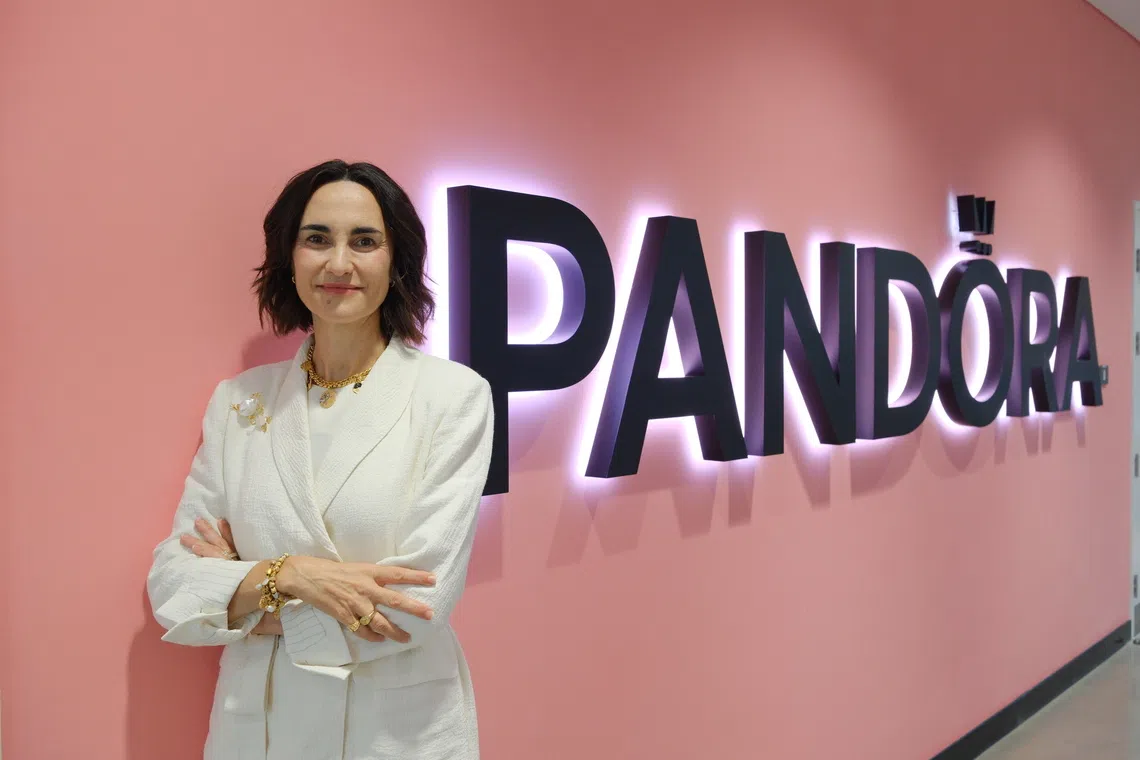
Pandora CEO Berta de Pablos-Barbier said the company had assessed 27 potential locations, and Vietnam stood out for its stable business environment and strong infrastructure. Another plus was its deep pool of jewellery-making talent, which has roots in the country’s centuries-old crafting tradition.
“We believe that with this (new) capacity, we can continue for the next midterm,” she said in an interview with the media in Ho Chi Minh City.
She added that Pandora aims to build capacity ahead of demand because factories take time to develop, and market opportunities demand rapid reaction. “Today is about more than opening a facility for us; it is building the next decade for Pandora.”
Asia bet through Singapore
As part of Pandora’s strategy to accelerate its broader Asian expansion, the jeweller inaugurated its new headquarters in the Marina Bay financial district of Singapore on Friday.
It has said previously that the hub would oversee Pandora’s Asia cluster and support growth in markets such as Japan, South Korea and India. Its Asian operations were previously managed out of Australia.
De Pablos-Barbier said that Singapore concentrates Pandora’s marketing, commercial and finance power for the region, while its individual markets retain local operations responsible for driving growth.
Diversifying production
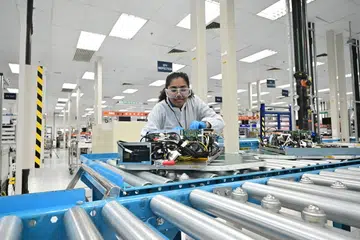
The new plant in Vietnam will be able to produce as many as 60 million pieces of jewellery a year and employ as many as 7,000 people at full production capacity, boosting Pandora’s global crafting capacity by half.
In 2025, the world’s largest jewellery brand by volume sold 112 million pieces globally. Its products are offered in more than 100 countries through roughly 7,000 points of sale, including more than 2,800 concept stores.
It was in 2022 that the Nasdaq Copenhagen-listed jeweller first announced plans for the Vietnam facility, which was to be its fourth crafting site globally and the first outside Thailand, where it has manufactured jewellery since 1989.
By the time construction began in 2024 in the Vietnam-Singapore Industrial Park III in Binh Duong, Ho Chi Minh City, the company had increased its investment commitment to more than US$150 million.
The Vietnam facility has about 700 employees now, but this number could grow 10 times as production ramps up.
“The way that we prepare and build our global crafting network is to ensure great flexibility,” said de Pablos-Barbier, adding that Vietnam will enable Pandora to expand its capacity while strengthening its resilience because it is “no longer dependent on a single point of craft”.
In its manufacturing operations in Thailand, including sites in Bangkok, Gemopolis and Lamphun, the company has more than 12,000 employees on its payroll.
“We will continue to monitor when and if we need to expand capacity,” de Pablos-Barbier said. “We’ll ensure that Vietnam is part of this.”
Jeerasage Puranasamriddhi, Pandora’s chief supply officer and managing director, said that labour costs in Vietnam remain below Thailand’s, but Thailand now sits at “a different level” of productivity because of its longer manufacturing history for the jeweller.
“Vietnam will have to build up productivity. There will come a time when it draws even (with Thailand),” he told The Business Times, adding that he expects the operation to become “very competitive” in a few years.
The company also plans to transfer production best practices and craftsmanship know-how from Thailand, he added, describing Thailand as Pandora’s “heart and soul” and a key source of expertise as Vietnam scales up.
From manufacturing base to consumer market
De Pablos-Barbier said that Pandora’s manufacturing remains concentrated in the two countries, and that it would keep production flexible rather than assign individual factories to particular markets or product categories.
That flexibility also comes as Pandora moves towards becoming a broader multi-material jewellery brand, and seeks to reduce its exposure to silver and the swings in the prices of precious metals over time.
De Pablos-Barbier added that changes in consumer attitudes towards jewellery also support a pivot to a broader range of materials. Jewellery was previously closely associated with status and purchasing power, she said, but consumers increasingly use it “to express who they are and what matters most to them”.
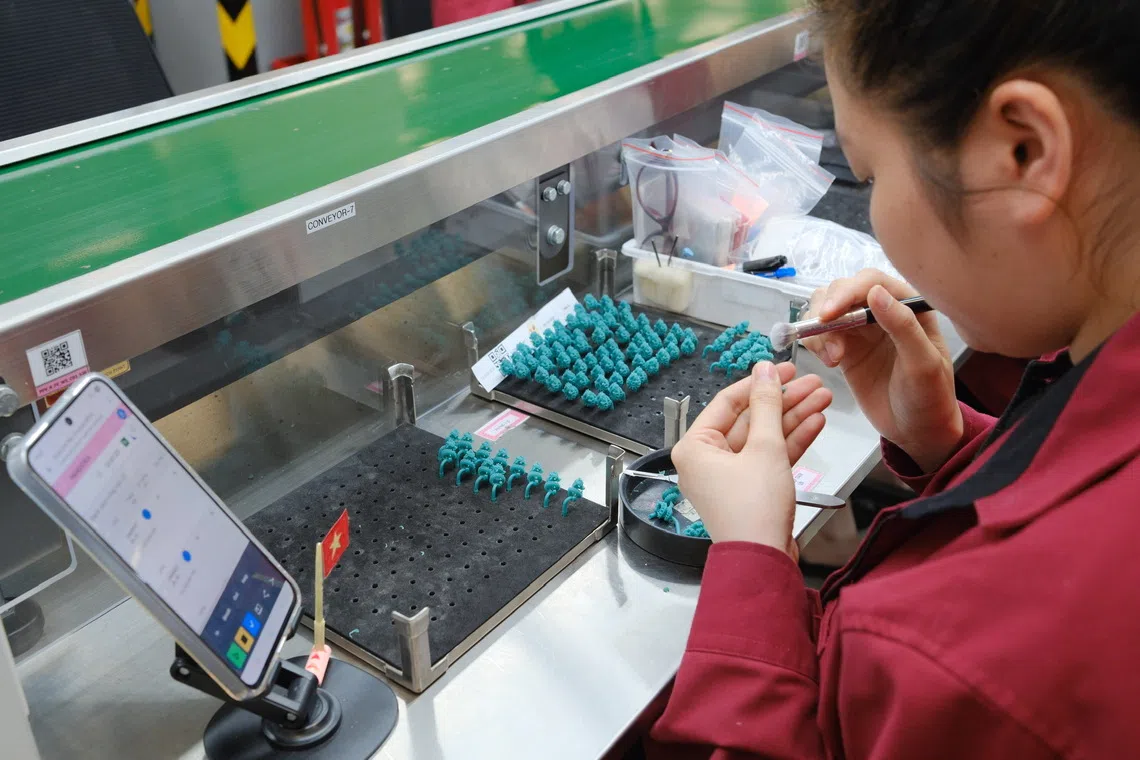
The first products being manufactured at the Vietnam plant are from Pandora’s gold-plated range, which she said was chosen because of strong demand.
Vietnam is not yet among Pandora’s largest Asian consumer markets, where it now ranks seventh. “We have great expectations that growth will continue to place Vietnam higher up in the ranks,” De Pablos-Barbier noted, pointing to its growing economy and young consumers.
Pandora claims to craft its jewellery with 100 per cent recycled silver and gold, maintaining a brand DNA rooted in hand-crafted jewellery and accessible prices.
Elevating focus
In an interview with BT last November to announce its new Singapore headquarters, Pandora’s chief commercial officer Massimo Basei said that Asia – home to some of the largest jewellery markets in the world – is an under-represented region for Pandora.
“It’s not that we have not been present in Asia so far, but now we really want to elevate our focus in this region,” he said.
The Asia-Pacific business remains far smaller than Pandora’s European and North American businesses, with the US its largest single-country market. The region generated 2.51 billion Danish kroner (US$380 million) in revenue in 2025, or about 7.7 per cent of the group’s 32.55 billion Danish kroner total.
But growth in the Asia-Pacific market has been relatively most stellar.
Like-for-like sales in the region rose 10 per cent in the second quarter of 2026, compared with declines of 1 per cent in North America and 2 per cent in Europe, the Middle East and Africa. Latin America grew 18 per cent, but remained Pandora’s smallest region by revenue contribution.
Overall, Pandora generated 14.33 billion Danish kroner in global revenue in the first half of 2026, with organic growth of 2 per cent, slowing from 7 per cent in the same period a year earlier. Growth for the full year in 2025 was 6 per cent. THE BUSINESS TIMES