



Petronas calms Malaysia fuel fears, but supply risks remain
State-owned oil giant says fuel supply across its nationwide station network had been secured till end-June
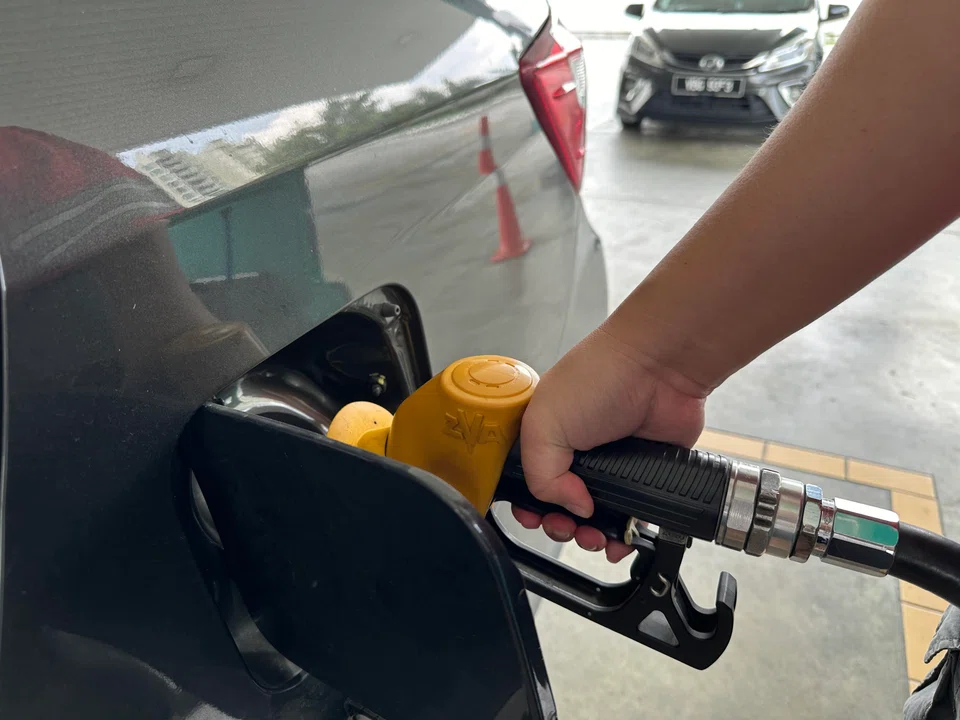
[KUALA LUMPUR] Immediate concerns over Malaysia’s fuel supply have eased after state-owned oil giant Petroliam Nasional (Petronas) said that supplies across its station network are secured till the end of June 2026, a month beyond the company’s earlier end-May assurance.
But the bigger test lies ahead: whether refinery runs, import timing and regional fuel flows can remain stable if the disruption in the Middle East drags on.
Petronas said on Wednesday (Apr 15) that it continues to manage its supply chain actively to ensure there is sufficient stock, adding that about 50 per cent of Malaysia’s fuel needs are supplied through its listed subsidiary Petronas Dagangan, with the balance coming from other oil firms.
The update offers some relief after Economy Minister Akmal Nasrullah Mohd Nasir said earlier this month that June and July would be a “very critical period” for ensuring fuel availability, with the government looking at diversification measures and other steps to reduce strain on the system.
Shell, in response to queries from The Business Times, said that it was “closely monitoring what is a very dynamic situation” and was “prioritising efforts to support fuel supply continuity within (its) retail network”.
That caution fits the view of Nithin Prakash, an analyst at Rystad Energy, who told BT that while Malaysia is not exposed in the same way as a pure fuel importer would be, it is also not fully insulated from disruption in oil and liquefied natural gas flows.
On the refining side, Prakash said that runs have generally held in the 700,000 to 800,000 barrels per day range, though utilisation can drop sharply during disruptions, tightening product availability for export.
Malaysia is typically a net exporter of diesel, though the surplus is not especially large. Meanwhile, jet fuel flows are more volatile, with some periods showing strong exports and others a clearer need for imports.
This leaves the country playing a hybrid role in the regional fuel chain. Prakash noted that it leans more towards being a supplier, especially in diesel, but also retains some buffer capacity because its import-export balance can adjust depending on regional tightness.

“What stands out is that Malaysia isn’t a dominant exporter like the Middle East, but it does act as a swing supplier in refined products at the margin, especially when South-east Asia tightens.”
He added that the main risk for now is still logistics and availability, rather than outright scarcity.
When refinery utilisation dips, fewer export barrels are available, imports rise, and regional competition for cargoes intensifies. That, in turn, can show up in higher prices and tighter availability even if there is still enough product in the system overall.
The government has also moved to reduce diesel demand.
It has announced plans to raise its 10 per cent biodiesel mandate – known as B10 – to a 15 per cent biodiesel blend, with a phased B12 introduction as an interim step. The move would reduce the volume of petroleum diesel needed, and could ease pressure on import-dependent parts of the supply chain if the disruption around the Strait of Hormuz persists.
For now, Petronas’ updated assurance lowers the risk of an immediate station-level supply scare.
But the broader issue for Malaysia may be less about whether fuel is available today than whether the underlying supply challenges can be contained well enough to prevent a tighter squeeze later in the quarter.
Decoding Asia newsletter: your guide to navigating Asia in a new global order. Sign up here to get Decoding Asia newsletter. Delivered to your inbox. Free.
Share with us your feedback on BT's products and services
TRENDING NOW

Inside Singapore’s government team that kills its own products

Once staunchly pro-China, Malaysian Chinese businesses are now distancing themselves from Beijing

Cliff Tan has 7 million followers and a 4-month waitlist. Why won’t he expand his business?

Grab CEO’s wife Chloe Tong on life with Anthony Tan and finding her purpose

