



Risks are ‘clearly to the downside’ for Asia after a strong start to the year: IMF Asia-Pacific director
The region relies heavily on energy imports from the Middle East, which have been affected by the Iran conflict

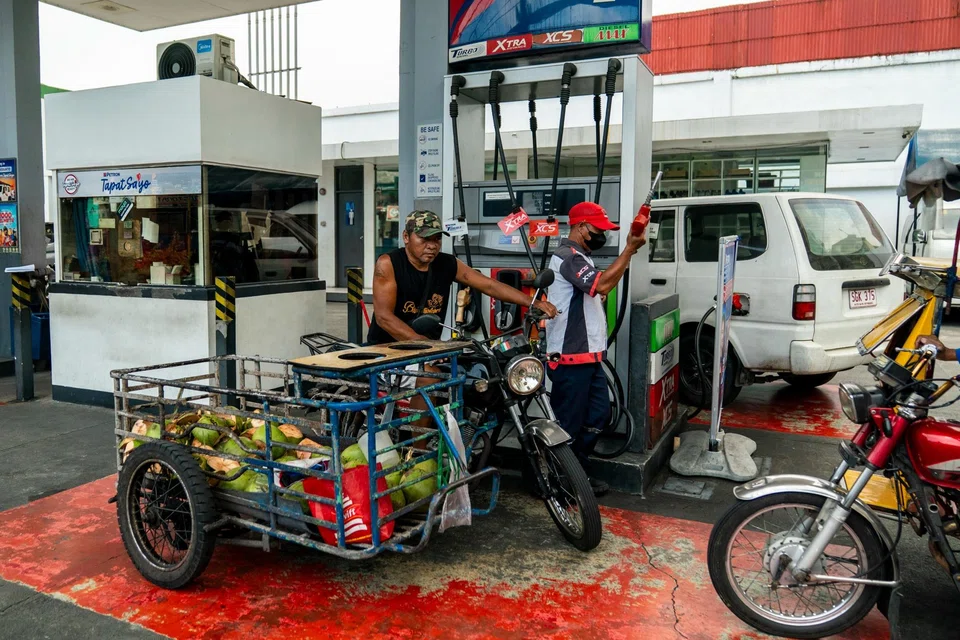
[SINGAPORE] Asian economies entered 2026 on a stronger footing as tech exports, driven by AI demand, and consumption helped the region weather the tariff uncertainty.
Yet the International Monetary Fund’s director for its Asia-Pacific department Krishna Srinivasan said at a media roundtable in Singapore on Thursday (Apr 29) that war and continued uncertainty around US tariff policies mean the rest of 2026 could be more challenging than expected for Asian economies.
“The dust hasn’t settled on the tariff issue. At the same time, you have the (energy) shock that continues to linger. So the risks are clearly to the downside,” Srinivasan said at the IMF’s office in Singapore.
Many Asian economies, including some in South-east Asia, are highly energy-intensive. But these economies also do not produce enough energy domestically and rely heavily on imports, meaning that they are especially exposed to oil and gas price hikes.
For example, the fund’s data showed that Thailand’s oil and gas consumption exceeds 10 per cent of its gross domestic product, while its net imports of oil and gas are approximately 8 per cent. Similarly, Singapore’s oil and gas consumption hovers around 8 per cent of its GDP, while its net imports of oil and gas are slightly below 8 per cent.
Economies like these two could be at higher risk from an extended conflict in the Middle East that prolongs the bottleneck of energy exports from that region.
Srinivasan said Asean economies that are highly energy-intensive in their production and highly dependent on energy imports but do not have enough policy buffers are “most at risk” of a prolonged conflict in the Middle East.
His comments follow the release of the IMF’s World Economic Outlook report in mid-April, where the fund revised its global growth projection downward. The IMF now projects that the global economy will grow 3.1 per cent this year, a 0.2-percentage-point decrease from its January projection. The fund also expects inflation to rise from 4.1 per cent in 2025 to 4.4 per cent this year as a result of the war.
The fund noted these projections were based on a short-lived conflict, and a more adverse scenario could see global output declining to 2.5 per cent and inflation rising to 5.4 per cent.

Economies in Asia entered 2026 on “solid ground” according to the fund’s report, despite last year’s trade tensions. Exports, particularly tech exports, have benefited many Asian economies that are deeply integrated into tech supply chains, and consumption also held up better than anticipated.
But the conflict in the Middle East is likely to slow growth in Asia for the rest of the year for a variety of channels – including geographic proximity, financial flows and energy dependencies.
The fund also warned that several South and South-east Asian economies could see lower tourism and remittances flows due to the conflict in the Middle East.
In Asean-5 economies, the fund expects growth to slow to 4.1 per cent in 2026 – cutting 0.1 percentage points from its projections in January. The Philippines could be the most heavily hit in the region, with the IMF revising its 2026 growth projections down by 1.5 percentage points from its January estimate – from 5.6 per cent in January to 4.1 per cent – as the conflict compounds a weaker-than-expected 2025 performance.
But Srinivasan also advised economies in Asia to use policy buffers in a “judicious way” to support continued economic expansion, noting that the region mostly bore the brunt of the US tariff policy just last year, and that there could be potential shocks in future, such as climate issues.
“There are people who can pay higher prices. Let prices play out so demand can adjust to supply. If you don’t do that, the fiscal cost would be so much higher that you won’t have enough dry powder for the next shock which will inevitably play out,” Srinivasan said.
Decoding Asia newsletter: your guide to navigating Asia in a new global order. Sign up here to get Decoding Asia newsletter. Delivered to your inbox. Free.
Copyright SPH Media. All rights reserved.
TRENDING NOW

LTA proposes combining car COE categories, adding rebate-surcharge system

StarHub to acquire MyRepublic’s mobile business amid ongoing telco consolidation

DBS, OCBC, UOB rout lops billions off STI as inflation, rate concerns spook investors

Grab CEO’s wife Chloe Tong on life with Anthony Tan and finding her purpose

