



RTS boom, JS-SEZ buzz: Are homes racing ahead of jobs – again?
Are we planning housing primarily around Johor-based employment growth or around cross-border commuting demand?

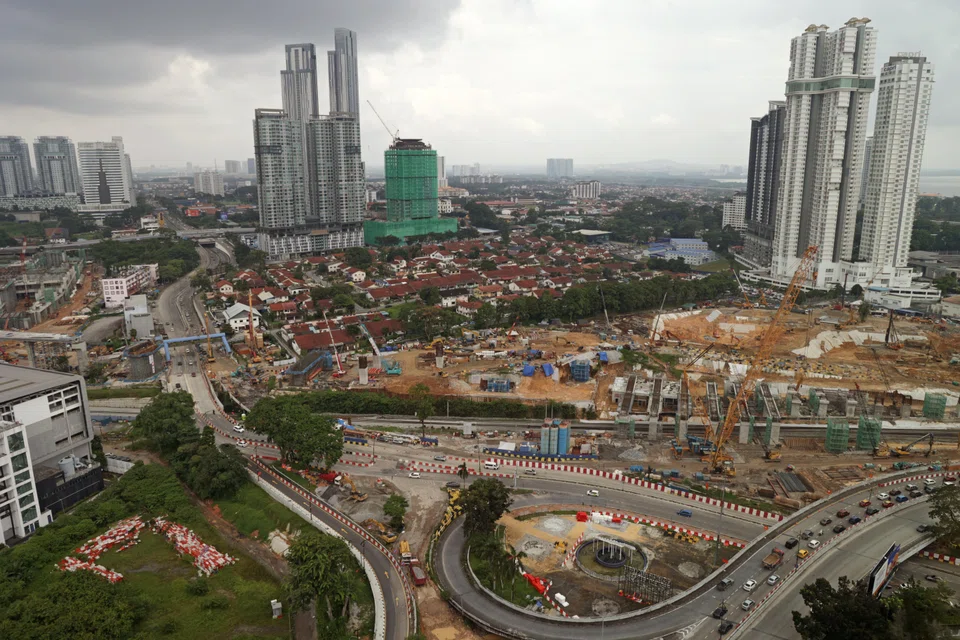
[SINGAPORE] The much-anticipated Johor Bahru-Singapore Rapid Transit System (RTS) Link is meant to move people. For now, it is moving prices.
Ask any property agent what drives prices today and the answer is the same: distance to Bukit Chagar, the Johor Bahru terminus of the RTS Link.
Land there has jumped from about RM700 (S$222) per square foot three years ago to RM1,000-RM1,500 today, based on a report by The Business Times. Even in the broader city centre, prices are up about 18 to 20 per cent since 2020.
The excitement is easy to appreciate. Johor has been underserved on connectivity for years and no one should begrudge the region for catching up on infrastructure.
Connectivity is lifting everything. Johor’s House Price Index rose 5.7 per cent year on year in the first half of 2025, among the strongest gains in the country, according to official data. It makes the nationwide increase of a meagre 0.7 per cent over the same period sound like a rounding error (it’s not).
The widening gap matters for the Johor-Singapore Special Economic Zone (JS-SEZ) – one of the most sensible economic initiatives in the region – as it shows momentum.
But when minutes-to-Singapore becomes a dominant theme, it is easy for the zone’s value proposition to tilt from jobs and ecosystems to corridors and condos, diluting the project’s economic logic.
The question is not whether real estate should be part of the JS-SEZ story. Housing is necessary for investments as people need places to live. Well-planned townships are enabling infrastructure, not a side issue.
The risk is when property shifts from supporting the economic plan to driving it. Johor has seen this movie before.
Iskandar Malaysia was pitched as an ecosystem play: woo higher-value investment, build jobs and suppliers, and make Johor investable. But the bit that took off fastest was also the easiest to sell – real estate.
Developers treated demand as a given and rushed supply to market, leaving a sizeable overhang that dragged prices and rents lower when conditions shifted.
The lesson should be obvious. Speculative supply cannot outpace economic substance.
This history forces a question about the current boom: Are we planning housing primarily around Johor-based employment growth, or around cross-border commuting demand?
While there is no single right answer – cross-border residents can and do contribute to local consumption and services – a more disciplined way to keep the JS-SEZ grounded is to adopt a simple principle: property should follow jobs, not lead them.
Any development has to match the economic engine the JS-SEZ says it wants. That means utilities planned as rigorously as transport, and supplier ecosystems enhanced so that a “queen bee” investor – when one lands – creates spillovers.
Johor is pulling real investment. The state topped Malaysia with RM91.1 billion in approved investments in the first nine months of 2025 (versus RM51.9 billion for Selangor and RM45.9 billion for Kuala Lumpur), up from RM18.1 billion in 9M 2024, driven by manufacturing and digital sectors including data centres.
That is the harder story to maintain at the front and centre. The easier story – also the path of least resistance – is the one about homes.
The real test is not proximity to Bukit Chagar, but the number of pay cheques created on the Johor side of the Causeway. Get that right with jobs, skills and wages rising alongside investment, and the property story takes care of itself.
TRENDING NOW
Easy to rent out, hard to sell: Are buyers losing interest in Singapore’s one-bedroom condos?

GovTech retrenches another 38 staff in second round of layoffs

Stocks to watch: Seatrium, CapitaLand Investment, Keppel DC Reit, Suntec Reit, CLCT, TSH Resources
World’s largest offshore wind platform by Seatrium consortium on track to be completed by 2028

