



State polls a speed bump as RTS, JS-SEZ accelerate shifts in Johor’s property market
Industrial growth is lifting the state, but overhang and affordability concerns persist

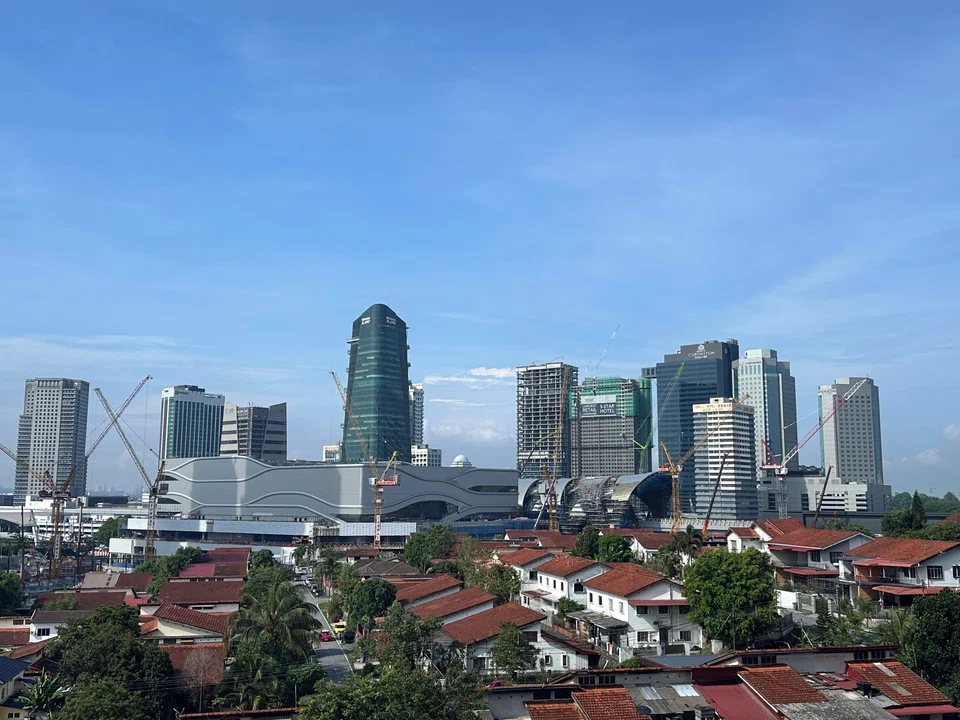
[KUALA LUMPUR] Johor’s property market is being reshaped by factories, data centres and the Johor-Singapore Special Economic Zone (JS-SEZ), shifting the state away from the residential speculation that has long defined its real estate story.
But with state polls due on Jul 11, investors are cautious of whether the demand momentum, coupled with policy certainty and execution, can be sustained.
Nawawi Tie managing director Daniel Ma observed that a two-speed market is emerging in Johor, with industrial land commanding record prices led by data centres, logistics players and manufacturers, while parts of the residential sector continue to struggle with a sizeable overhang of premium homes.
The shift is structural, rather than another short-lived property cycle.
“The industrial story is being driven principally by the JS-SEZ and spillover from Singapore’s tightening industrial land constraints,” said Samuel Tan, CEO of Olive Tree Property Consultants.
He added that the buyer profile has shifted from individual investors to real estate investment trusts, logistics operators and cross-border manufacturers seeking to establish a presence ahead of the JS-SEZ’s full implementation.
Development land demand remains especially strong in growth corridors such as Kulai, Kempas and Iskandar Puteri, where developers are seeking large parcels for townships, industrial parks and mixed-use projects, said Ma.
Recent acquisitions have been dominated by data centres, logistics facilities and industrial park expansions, while institutional transactions such as CapitaLand Malaysia Trust’s RM72 million (US$17.6 million) purchase of an industrial asset in Senai Airport City last year reflected growing confidence in Johor’s long-term industrial prospects.
Data from the National Property Information Centre showed Johor remained Malaysia’s second-largest property market in the first quarter of 2026, recording 13,598 transactions worth nearly RM11.3 billion, behind Selangor’s 15,226 transactions valued at RM13.2 billion.
Johor’s commercial segment generated RM2.2 billion from 1,904 transactions in the first quarter of this year; industrial properties contributed almost RM2.5 billion across 356 deals, underscoring the state’s growing role as an investment and industrial hub.
Data centre boom
The rapid expansion of data centres has become one of the biggest drivers of Johor’s property market.
Research for Social Advancement (Refsa) estimates that the state has 65 data centre projects at various stages of development.
While these investments are boosting industrial land demand and approved investment figures, the think tank cautioned that data centres alone may not generate the broad economic spillovers seen in sectors such as semiconductors or electrical and electronics manufacturing.
“The policy question is therefore not how much investment Johor attracts, but how much public value Johor captures from that investment,” Refsa executive director Thenesh Anbalagan and research analyst Ng Sze Fung wrote in a recent report.
They argued that long-term property demand would depend on whether investments translate into local hiring, technical training, domestic vendor participation and skilled job creation.
The industrial boom is also encouraging developers to replenish their land banks.
Rising land prices
The increasing demand has also pushed up land prices. Ma estimated that prime industrial land values have risen to between RM114 and RM150 per square foot over the past two years, from around RM80 previously.
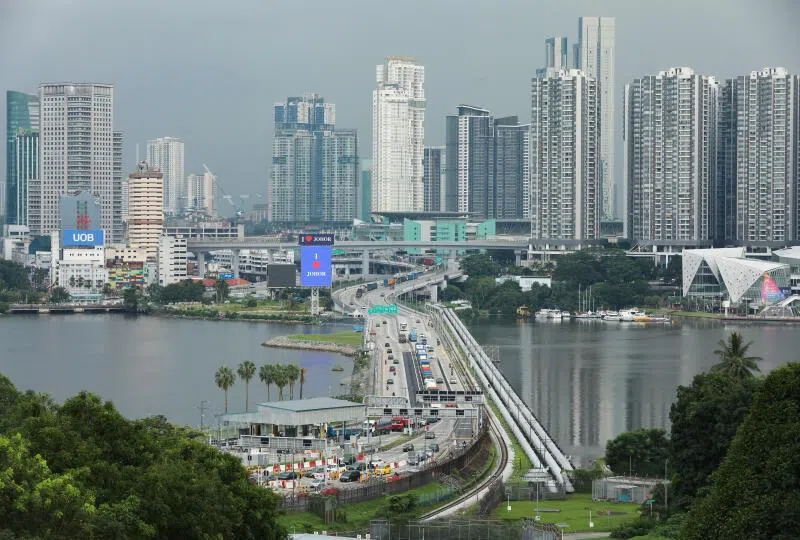
“While pricing still varies based on location and infrastructure readiness, market evidence shows that prime industrial land values have appreciated rapidly over the past year,” he added.
Tan added that specialised logistics and industrial properties are generating rental yields of between 5 and 7 per cent, attracting both domestic and regional institutional investors.
Robust launches yet overhang persists
Johor led the country in new residential launches during the first quarter with 2,693 units, ahead of Selangor’s 1,904 units.
Developers are concentrating launches in Johor Bahru, Iskandar Puteri, Tebrau, Skudai and Kulai, particularly in areas expected to benefit from industrial expansion and transportation infrastructure.
Many are seeking to position themselves ahead of anticipated demand from the RTS Link, the JS-SEZ and a growing industrial workforce.
“There is a belief that Johor is entering a new growth cycle after several years of relatively subdued residential activity,” Ma said.
Yet, the housing market tells a more cautious story.
Johor had 3,852 unsold residential units worth RM3.24 billion in the first quarter, with the overhang increasingly concentrated in the premium segment.
A total of 828 completed unsold units were priced above RM1 million.
Refsa estimated that Johor has almost 68,000 housing units under construction and more than 29,000 unsold homes across various stages of development, with serviced apartments accounting for nearly three-quarters of completed unsold units.
The figures suggest that supply in parts of the high-rise segment continues to outpace demand, even as landed homes in established townships enjoy healthier take-up rates.
The state’s property boom is also raising questions about affordability.
Refsa noted that Johor’s median formal-sector monthly wage is RM2,982, while many new projects around the RTS corridor and JS-SEZ are being launched at prices ranging from about RM563,000 to more than RM600,000.
“The housing problem is not only the number of units,” the think tank said. “It is whether homes are affordable relative to local wages and located near jobs, public transport and economic centres.”
The concentration of overhang in the premium segment also suggests that expectations of a rapid return of foreign buyers may still be premature.
Although interest from Singapore, China and other regional markets has improved, buyers remain selective and continue to watch the implementation of the RTS Link and JS-SEZ before making larger commitments.
Tan said that the RTS Link’s completion is “likely the trigger many are waiting for before committing”.
Ma believes that premium inventory in Iskandar Puteri can be absorbed within three years if the RTS Link, JS-SEZ and data centre investments generate the expected jobs and population growth.
Tan, however, expects demand to remain uneven, with projects closest to transport nodes and employment centres outperforming less strategic locations.
Refsa also cautioned against assuming that infrastructure projects alone will guarantee housing demand.
It pointed to Forest City as a reminder that large-scale developments built on expectations of external demand can struggle when occupancy and economic activity fail to materialise as anticipated.
As the RTS Link reshapes land values around Johor Bahru, the think tank argued that future housing supply should be phased according to genuine demand rather than speculative expectations.
For now, Johor remains one of Malaysia’s most closely watched growth stories, benefiting from a rare convergence of industrial investment, cross-border integration and major infrastructure projects.
Growth may pause for state election
The upcoming state election in Johor is unlikely to derail those long-term drivers, but investors will be watching closely for policy continuity as billions of ringgit of planned investments move into execution.
“The momentum should continue for the remainder of the year but may slow down due to the upcoming state election,” Ma said.
Echoing this, Tan said that property demand momentum should hold through 2026, supported by sustainability-driven industrial demand, green buildings, ESG-compliant industrial parks, and smart city infrastructure, which will shape the next phase of growth.
“The key risk to watch is whether JS-SEZ incentive implementation keeps pace with investor expectations,” he added.
In Refsa’s view, Johor’s long-term success should ultimately be measured not by investment approvals or rising land prices, but by whether growth translates into better jobs, higher incomes and housing that local residents can afford.






