Upcoming state polls in Johor, Negeri Sembilan a likely preview of Malaysia’s national elections
Election Commission sets Jul 11 for Johor polling, Aug 1 for Negeri Sembilan
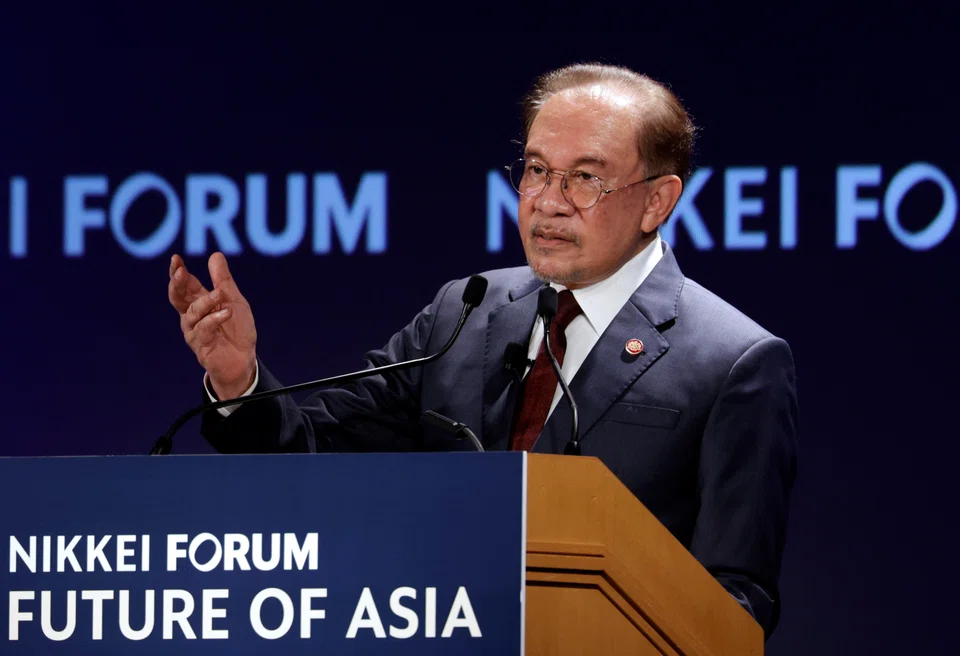
THE loose coalitions that rule Malaysia are starting to fray as the next election season heats up, opening up a multifront challenge for Anwar Ibrahim to maintain his premiership.
The political focus for the South-east Asian nation turns first to upcoming polls in two battleground states, where Anwar’s party will square off on the local level against representatives from his national-level unity government.
Malaysia's Election Commission on Friday (Jun 12) set Jul 11 as polling day for Johor, followed by voting on Aug 1 in Negeri Sembilan. Candidates will file their nominations on Jun 27 in Johor and Jul 18 in Negeri Sembilan, giving parties two weeks to campaign in each state.
Despite being the glue to the multi-coalition national government, the United Malays National Organisation (Umno) will lead its Barisan Nasional bloc against Anwar’s Pakatan Harapan in all 92 assembly seats across both states.
That return to rivalry is a likely preview of the looming national elections, which Anwar could call as soon as in 2026, about 1½ years ahead of schedule.
“It’s almost like a free-for-all,” said Adib Zalkapli, founder of Viewfinder Global Affairs, a geopolitical risk consultancy.
The Anwar-Umno union emerged after the 2022 polls, which had resulted in the country’s first ever hung parliament. Along with smaller partners, they control a combined 153 of the 222 federal seats.
The political marriage of convenience brought together Anwar’s multi-ethnic coalition with Malaysia’s oldest party, which had broken away from a previous alliance with more Islamist-leaning groups. It also made Umno’s leader, Ahmad Zahid Hamidi, Anwar’s deputy prime minister.
“Malaysian politics has entered a period in which voters are increasingly fluid, and parties are more willing to experiment with new political vehicles,” said Kamles Kumar, as associate director at Asia Group Advisors.

While national polls are not due until February 2028, people familiar with situation said earlier that Anwar was considering calling for elections by October, before the oil crunch from the Iran war forces him to cut fuel subsidies. In May, he publicly raised the prospect of calling snap polls.
Meanwhile, the two biggest parties within the opposition coalition Perikatan Nasional are on a collision course.
The Pan-Malaysian Islamic Party, known as PAS, earlier this week announced it was severing ties with Bersatu.
PAS, which leads Perikatan Nasional, is expected to realign itself instead with a group of ex-Bersatu leaders who were purged following an internal feud earlier this year, said Viewfinder’s Adib.
Bersatu – officially known as Parti Pribumi Bersatu Malaysia – is led by former Prime Minister Muhyiddin Yassin. The ex-Bersatu group, which is expected to announce a new party this weekend, is led by former Home Minister Hamzah Zainudin.
Smaller opposition parties will also dip their toes in, namely former Economy Minister Rafizi Ramli’s month-old Bersama party, and the youth-based Muda party.
“The fragmentation is likely to persist until the general election,” said Adib, “with crowded multi-cornered contests now becoming the norm.” BLOOMBERG
Decoding Asia newsletter: your guide to navigating Asia in a new global order. Sign up here to get Decoding Asia newsletter. Delivered to your inbox. Free.
Share with us your feedback on BT's products and services