



Singapore climbs Macquarie’s Asean preference rankings after Trump’s tariff reset
City-state is now in second place after Malaysia

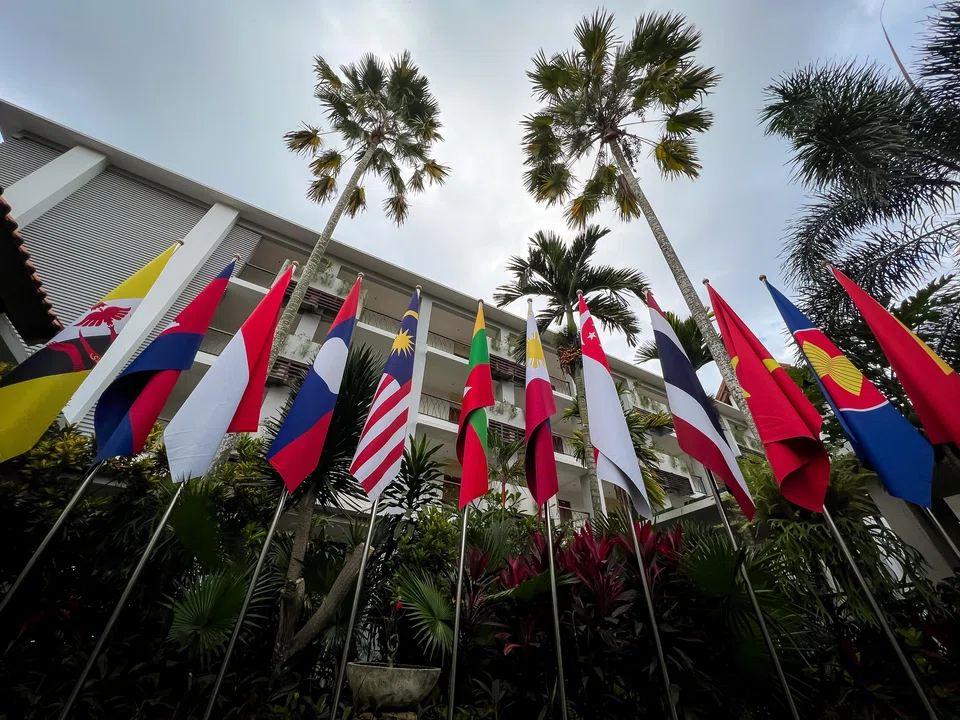
[SINGAPORE] The Republic has emerged as Macquarie’s second-preferred market in the Asean region, behind Malaysia, after a recent reset of US tariff policy reshaped the investment landscape.
In a note published on Monday (Feb 23), Macquarie’s analysts noted that while the Singapore dollar could be affected by the higher headline rate, the low proportion of exports affected makes the overall impact minimal. The Singapore dollar has also been benefiting from a weaker US dollar.
The refreshed rankings place the Philippines, Thailand and Indonesia – from most to least preferred – after Malaysia and Singapore. The changes follow US President Donald Trump’s decision to impose a 15 per cent blanket tariff globally, after a Feb 20 ruling by the US Supreme Court found his earlier tariff measures to be illegal.
Prior to the reconfiguration of US tariffs, Macquarie’s order of preference was Malaysia, the Philippines, Singapore, Indonesia and Thailand.
Malaysia retained its top spot, “reflecting a combination of macro, FX and political risk”, the analysts said, adding: “Whilst tariffs are topical, they are only part of the picture.”
Thailand moved up the rankings following its elections, which delivered a “convincing status quo outcome”. This, the analysts said, reduces near-term political risk in the country.
Malaysia and Thailand were also identified as economies whose currencies stand to benefit the most from the lower 15 per cent tariff rate, compared with the higher rates imposed previously.
Meanwhile, the Philippines fell in the rankings due to “below-potential growth” and earnings growth, which Macquarie called “near-term headwinds to a further re-rating”.
Asean economies ‘largely winners’
Maybank analysts deemed Asean economies to be “largely winners” even after Trump’s tariff changes.

Despite the 15 per cent headline rate, Asean countries will generally face lower effective US tariffs, with only Singapore seeing a small increase, they said in a note on Monday.
Effective tariff rates are the levies faced by a country, weighted by the share of its exports that are subject to overall duties, including product-specific tariffs and exemptions.
With the key exemptions on products such as pharmaceuticals, semiconductors and other electronics still in place, effective US tariffs on the weighted average of Asean-6 economies – comprising Singapore, Malaysia, the Philippines, Thailand, Vietnam and Indonesia – will be lower by 1.4 percentage points, they noted.
Despite the rise in Singapore’s effective tariff rate, Maybank noted that its rate is still “by far the lowest among Asean countries in absolute terms” at 6.9 per cent, as exempted goods comprise more than 60 per cent of the city-state’s US-bound shipments.
The analysts added that “Asean’s growth drivers and economic story for 2026 remain intact”.
The impetus for multinationals to build “China+1” supply chains does not change, they said, even if Asean’s tariff advantage over China is now narrower.
Additionally, Asean exporters will continue to benefit from the artificial intelligence capex and infrastructure boom, given that semiconductors and other electronics remain exempted from tariffs.
However, Macquarie strategists warn that the Supreme Court’s decision could lead to “even greater unpredictability”.
“Instead of using this decision as an escape from unpopular and self-destructive policies, Trump is doubling down, insisting on using other avenues, in this case Section 122 of the Trade Act of 1974,” Macquarie said.
Trump’s newly imposed tariffs under Section 122 will expire after 150 days without congressional approval.
Additional reporting by Evan See
Decoding Asia newsletter: your guide to navigating Asia in a new global order. Sign up here to get Decoding Asia newsletter. Delivered to your inbox. Free.
Copyright SPH Media. All rights reserved.






