



Singapore, Indonesia vow closer cooperation, call for free passage through Strait of Hormuz
Ministers from the two neighbours pledge to keep markets open, maintain unimpeded trade flows, and strengthen regional supply chains

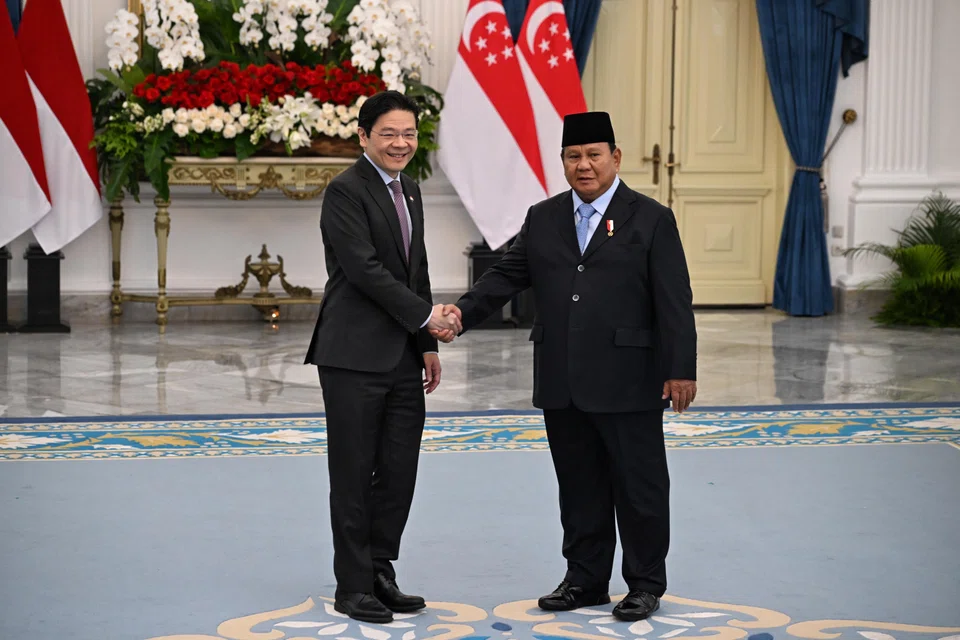
[JAKARTA] Singapore and Indonesia have pledged to deepen cooperation to strengthen supply chains and keep trade flowing amid growing global uncertainty, as both countries warned that the conflict in the Middle East is disrupting energy markets and international commerce.
In a joint statement issued on Monday (Jul 6) on the sidelines of the annual Singapore-Indonesia Leaders’ Retreat in Jakarta’s State Palace, Singapore Deputy Prime Minister and Minister for Trade and Industry Gan Kim Yong and Indonesia Coordinating Minister for Economic Affairs Airlangga Hartarto committed to closer coordination to safeguard the movement of goods and energy supplies during times of crisis.
The ministers said the conflict in the Middle East has had “significant repercussions beyond the Middle East, including on global energy markets and supply chains”.
To that end, they pledged to keep markets open, maintain unimpeded trade flows, strengthen regional supply chains and coordinate on the movement of essential goods and energy supplies during emergencies.
The two sides also committed to swiftly ratify regional agreements where possible this year, including the Asean Framework Agreement on Petroleum Security and the upgraded Asean Trade in Goods Agreement, to bolster the region’s resilience to external shocks and ensure mutual support during crises.
They further reaffirmed their commitment to refrain from imposing trade-restricting non-tariff measures, review restrictions affecting essential goods where appropriate, and coordinate on emergency procurement and transportation of essential goods and energy supplies when needed.
The ministers also pledged closer cooperation on customs procedures, standards, digital trade facilitation and regulatory transparency to facilitate trade and investment.
The statement noted that bilateral merchandise trade between Singapore and Indonesia reached US$32.9 billion in 2025.
Against this backdrop, the two countries also jointly called for the restoration of transit passage through the Strait of Hormuz, warning that continued disruptions threaten global trade.


They called on all parties to adhere to the ceasefire, avoid further escalation, and engage in negotiations that would bring about a peaceful resolution in accordance with international law and the principles of the United Nations Charter.
The ministers also called for “the restoration of the right of transit passage of vessels and aircraft in the Strait of Hormuz”, in accordance with the 1982 United Nations Convention on the Law of the Sea, and urged all parties to ensure the safety of seafarers and ships.
The Strait of Hormuz carries about a fifth of global oil consumption, making it one of the world’s most strategically important maritime chokepoints.
Fighting in the Middle East this year has repeatedly threatened shipping through the waterway, pushing up oil prices, freight rates and insurance costs.
The impact has been felt across oil-importing Asia, including Indonesia, where higher fuel import costs have added pressure to the country’s fuel subsidy programme.
The ministers also reaffirmed the importance of upholding freedom of navigation through international straits.
They noted that Singapore, Indonesia and Malaysia have long upheld this regime in the Straits of Malacca and Singapore, one of the world’s busiest shipping lanes.
Singapore has long opposed proposals to impose tolls on ships exercising the right of transit passage through international straits, maintaining that navigation rights under international law should not be subject to charges.
Decoding Asia newsletter: your guide to navigating Asia in a new global order. Sign up here to get Decoding Asia newsletter. Delivered to your inbox. Free.
Copyright SPH Media. All rights reserved.
TRENDING NOW

Once staunchly pro-China, Malaysian Chinese businesses are now distancing themselves from Beijing
Stocks to watch: HPL, Aims Apac Reit, Zico, Advanced Systems Automation, ComfortDelGro

‘How many will survive?’: Bubble fears arise as China’s humanoid robotics face reality check
Smaller board lots can’t fix a market run by three banks

