



South-east Asian markets account for 8.8% of global capital inflows from 2021 to 2024: report
FDI makes up 72.5% of inflows to Cambodia, Malaysia, Laos, Indonesia, the Philippines and Vietnam

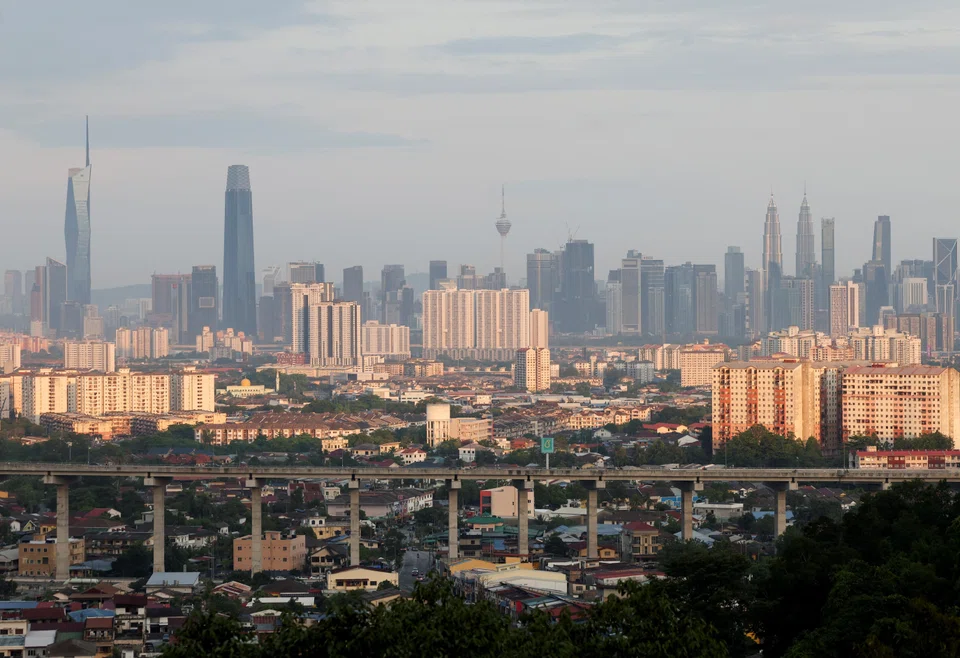
SIX growth markets in South-east Asia made up 8.8 per cent of total capital inflows to developing economies from 2021 to 2024, the Milken Institute has found.
This is up from the 7.6 per cent recorded from 2017 to 2020, it said in its Global Opportunity Index 2026: Growth Markets in Southeast Asia report released this week.
The institute said that the six markets – Cambodia, Malaysia, Laos, Indonesia, the Philippines and Vietnam – are “well positioned to capitalise on emerging opportunities”.
“These countries benefit from strong economic fundamentals, growing financial sectors, and dynamic innovation economies,” it added in the Apr 7 report.
Foreign direct investment (FDI) accounted for 72.5 per cent of the capital inflows into the six markets from 2021 to 2024, marking a 15.1 percentage point increase from the previous four years.
Portfolio inflows, meanwhile, “declined sharply” to 8.5 per cent, while bank-related and other inflows fell to 19.1 per cent.
Mergers and acquisitions “remained relatively stable” from 2017 to 2024 in terms of deal counts, discounting a “brief period following the onset of Covid-19”. Indonesia and Malaysia accounted for the largest share of such activity, both in terms of volume and value.
The Milken Institute said that despite “global trade frictions, softening domestic demand and shifting patterns of capital flows”, South-east Asia has shown that it can sustain economic growth.
Malaysia, Indonesia take the lead
Malaysia ranked 23rd globally on the institute’s global opportunity index, placing it the highest among the six South-east Asian markets. According to the report, the index serves as “a global benchmark for countries’ attractiveness to investors”.
SEE ALSO





The Milken Institute said that Malaysia’s investment landscape is “relatively balanced, anchored by strong institutions and robust economic fundamentals”.
It further noted that Malaysia came in 17th globally for financial services and 18th for business perception, also placing it first among the six markets.
Indonesia stood out for “notable improvements” in its financial sector. It ranked 38th globally in financial services, rising from 78th in 2022. The Milken Institute also noted that Indonesia is among the world’s top 20 economies by gross domestic product, coming in 17th.
The Philippines, meanwhile, “combines strong growth prospects with more uneven investment conditions”, the Milken Institute said.
“With projected real GDP growth of 5.7 per cent in 2026, the country ranks sixth in economic performance and 32nd in economic fundamentals,” it noted.
“However, its weaker scores in business perception and institutional framework – 56th and 59th, respectively – highlight governance and regulatory challenges that may constrain longer-term investment.”
Among the six markets, Cambodia and Laos lagged their regional counterparts, the Milken Institute found.
“Structural and institutional constraints continue to weigh on their investment environments, with both countries struggling with institutional frameworks... and aspects of their economic fundamentals related to long-term growth prospects,” it said.
Laos ranked 79th globally in institutional frameworks; Cambodia came in 73rd.
The institute noted that in Cambodia, capital inflows had been growing “steadily until 2021, driven mainly by a strong expansion in bank-related and other inflows, and a modest gain in FDI”.
“Since then, bank-related and other inflows have declined sharply, turning negative in 2024,” it said, adding that FDI “remained relatively stable, while portfolio inflows were negligible”.
Laos had the biggest share of FDI inflows “from 2017 to 2018, and again in 2023 and 2024”. However, bank-related and other inflows turned negative from 2021 to 2023, after accounting for the largest share of total capital in 2019 and 2020.
The country’s portfolio inflows stayed “minimal” throughout, the institute said.
Dip in China FDI
The Milken Institute pointed out that growth markets in South-east Asia “represent a subset of developing economies, which captured less than 20 per cent of the world’s capital investment from 2021 to 2024”.
Still, it noted that inflows to China “contracted sharply”, falling 64.1 per cent or US$295.2 billion between the two four-year periods.
The country’s share of capital inflows “declined by nearly 20 percentage points” to 14.7 per cent of the developing economies’ aggregate in 2021 to 2024.
“FDI had the smallest decline, down US$5.9 billion, compared with declines of US$14.1 billion in portfolio and US$9.7 billion in bank-related and other inflows,” the Milken Institute noted.
Such declines in capital inflows to China had a relatively significant effect in reshaping the global distribution of capital flows, it added.
Decoding Asia newsletter: your guide to navigating Asia in a new global order. Sign up here to get Decoding Asia newsletter. Delivered to your inbox. Free.
Copyright SPH Media. All rights reserved.
TRENDING NOW

Once staunchly pro-China, Malaysian Chinese businesses are now distancing themselves from Beijing

Cliff Tan has 7 million followers and a 4-month waitlist. Why won’t he expand his business?

Grab CEO’s wife Chloe Tong on life with Anthony Tan and finding her purpose
Singapore F1 to proceed despite haze; no changes planned to outdoor entertainment

