Stakes high on Philippines’ push to privatise over 40 casinos
The plan to decouple the state’s regulator-operator role faces pushbacks, weighing down valuations
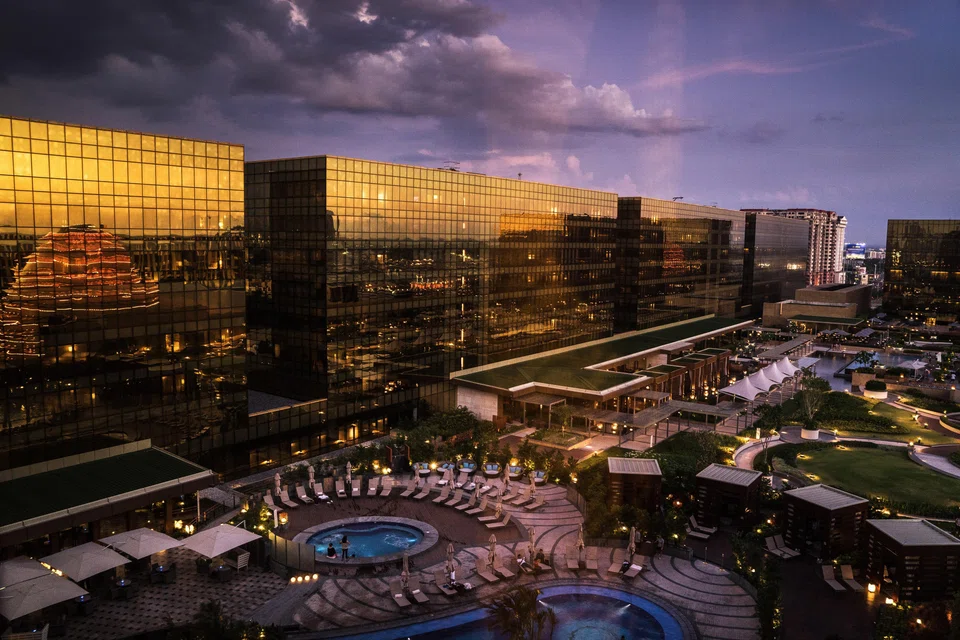
[MANILA] As the Philippine government races to strip its state gaming regulator of more than 40 retail casino venues worth an estimated 50 billion pesos (US$813 million) to eliminate conflict of interest, the plan is facing serious pushback and mounting concerns.
The long-awaited plan, aimed at ending the state’s dual role as casino operator and regulator, could draw bids from major casino operators.
The 43 Casino Filipino venues, driven by mid-tier table and slot play from local patrons, generate more than 10 billion pesos annually.
The Philippines is one of Asia’s fastest-growing gaming markets, competing with Singapore as the region’s top hub behind Macau.
Manila’s mega-resort operators are reportedly the main suitors for the state casino assets, located in key gaming hubs including Paranaque, Pasay, Quezon City and Clark.
Kevin Andrew Tan, chief executive of Alliance Global Group and chairman of Newport World Resorts owner Travellers International Hotel Group, last year signalled interest in acquiring select Casino Filipino venues to expand beyond Manila.
Since 2023, the group has been “actively looking at some of the key tourism hubs all over the Philippines as potential expansion sites”, Tan said.
He said removing the role of the Philippine Amusement and Gaming Corp (Pagcor) as a commercial player would “promote fairness among industry players and ensure long-term viability and growth for the gaming sector”.
Pagcor is the government-owned and controlled corporation (GOCC) that licenses and regulates the country’s US$7 billion gambling sector, but it also operates commercially with the Casino Filipino chain.
“A referee cannot also be a player on the same field,” said Pagcor chairman and CEO Alejandro Tengco, who is pushing to unload the casino venues by 2028 as an overdue governance fix and his signature legacy.
The revamp is unfolding as brick-and-mortar casinos are grappling with margin pressures owing to intensifying competition, shifting digital trends, macroeconomic headwinds and consumers tightening their wallets.
Pagcor’s gaming revenues tumbled 27 per cent year on year in the first half of 2026 to 38.9 billion pesos, dragging total corporate revenue down to 43.3 billion pesos.
Pagcor’s proposal to decouple is currently being reviewed by the Governance Commission for GOCCs – the central policy body that oversees state enterprise reorganisations – and a sign-off from President Ferdinand Marcos Jr is targeted by year-end.
Resistance is also brewing in Congress. House appropriations committee member Rufus Rodriguez has opposed selling the revenue-generating casinos, proposing instead a separate regulator while Pagcor retains them.
“Pagcor is earning tens of billions of pesos a year for the government and for its numerous public service programmes,” Rodriguez said.
“Why sell the goose that lays the golden eggs?”
Valuation conundrum
Market observers see a widening valuation gap as Pagcor’s dual role nears its end.
Once projected to fetch 60 billion to 80 billion pesos, the casinos are now expected to raise just 30 billion to 50 billion pesos, according to Tengco.
At the heart of that valuation hit is a structural drag: Manila’s landlord problem.
“Initially, I thought (the valuation) was going to be big. But unfortunately, I realised that we do not own any property; we’re just leasing,” he said in a congressional briefing in 2024.
With Pagcor leasing casino floors rather than owning the properties, landlords hold the upper hand in transfer talks. Lease disputes and rent hikes could delay deals and erode valuations.
“What we are selling here is the licence and future revenue. So, the minimum is around 50 billion pesos,” Tengco added.
The markdown is only part of the problem. Transactional friction, labour resistance and a lasting hole in state health funding threaten to squeeze net proceeds from the potential sales even further.
Asset sale friction
The primary hurdle is Casino Filipino’s structure.
As an unincorporate division of Pagcor, it cannot be sold through a stock acquisition, requiring instead site-by-site asset sales and individual lease assignments, Stanley Geronimo, founder of the legal practice Geronimo Law, told The Business Times.
“Under the Civil Code, these leases cannot be transferred without explicit landlord consent – unless the contracts state otherwise – effectively giving property owners individual veto power and significant leverage to demand higher rent,” he added.
Geronimo noted that, to keep the deal moving, Pagcor “should proactively engage landlords early to secure transfer consents or standardised assignment terms prior to final bidding”.
Labour, legal issues muddy the sale
Labour pushback and political blowback are further complicating the sale.
Pagcor management has signalled that buyers may have to absorb 50 to 70 per cent of current casino staff – or bankroll severance payouts – even though the country’s labour law does not require acquirers in an asset sale to keep existing workers.
Labour unions’ resistance could also weigh on valuations as institutional operators will likely resist rigid retention quotas, Geronimo explained.
The Pagcor Employees Association argues that separating Pagcor’s regulatory and operating roles requires an act of Congress, not an executive order, calling presidential action an “unconstitutional encroachment upon legislative power”.
Fiscal leakage
Another concern is the potential hit to state finances, with half of the government’s share of Pagcor gaming revenue earmarked for PhilHealth.
Privatisation would replace direct casino earnings with smaller regulatory licence fees.
Geronimo said: “Roughly 24 centavos of every peso of gaming revenue goes to universal health care. For Casino Filipino, that amounts to about 2.5 billion to three billion pesos a year.”
Privatisation will not wipe out the funding entirely, since Pagcor will still collect licence fees from buyers to feed the same bucket.
But, at current rates, Geronimo estimates a gaping annual healthcare shortfall of 1.7 billion to 2.1 billion pesos.
To make up the difference, privatised Casino Filipino locations would need to more than treble their gross gaming revenue to break even for the state’s medical coffers, he added.
TRENDING NOW
Grab CEO’s wife Chloe Tong on life with Anthony Tan and finding her purpose
HDB reviewing ‘jumbo’ flat scheme after Telok Blangah unit listed for sale at S$2.18m
He built the Vingroup empire. Now South-east Asia’s richest man is handing some key roles to his sons
Singapore judge raises doubts iron ore trader Radiant World is owed US$1 billion