Subsidy reform a la Malaysia – one tiny step at a time
Such policy changes – on their own – may not move the needle in a big way, but they represent small nudges towards a sustainable fiscal path

[SINGAPORE] Fuel subsidies are the third rail of Malaysian politics – touch them and one risks getting burned, even more so when an election is around the corner and political backlash is never far away.
For that reason, the government’s latest announcement on its widely used RON95 transport fuel is worth contextualising.
For one, it’s not just about what Malaysians will pay at the pump; it’s also a curtain-raiser for Budget 2026 on Oct 10. The overriding theme appears to be modest fiscal consolidation as external headwinds build. Think tariff skirmishes, slowing global trade and semiconductor uncertainty.
The tiered transport fuel subsidy follows the roll-out of the RM100 (S$30.60) Sumbangan Asas Rahmah programme in August – a one-off cash handout to every adult Malaysian. Malaysians have until the end of the year to spend the money, which could potentially inject as much as RM2 billion into the economy and deliver a boost to fourth-quarter gross domestic product.
Electricity tariffs were tweaked in July, and water subsidies are also being rationalised.
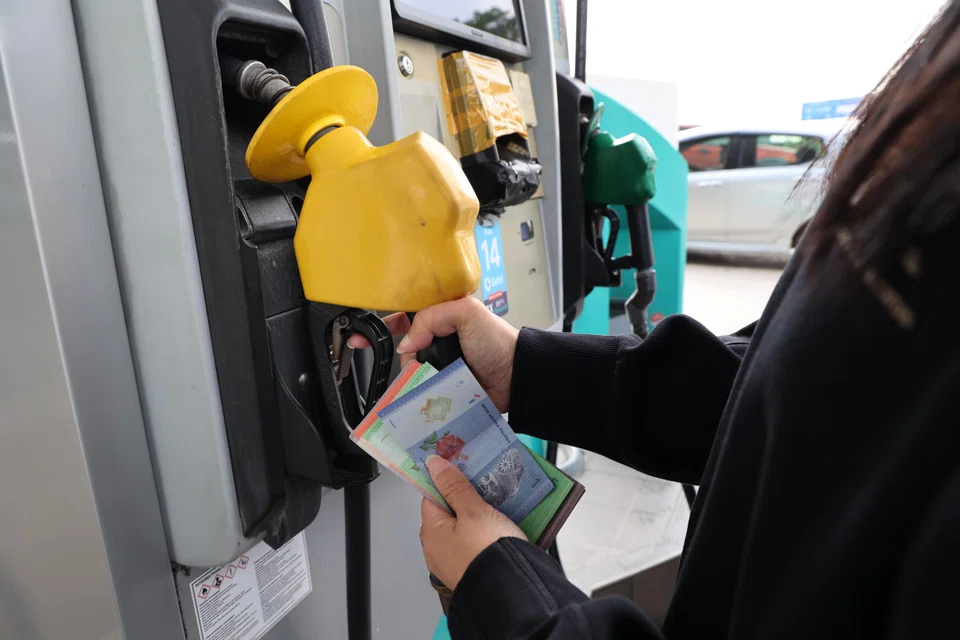
From Tuesday (Sep 30), the price of RON95 petrol will be trimmed by six sen to RM1.99 per litre for Malaysian citizens driving locally registered vehicles. Foreigners, even if using local plates, must pay the unsubsidised rate – just over 30 per cent higher – while those in Singapore or Thai-registered cars are limited to the premium-grade fuel, now retailing at RM3.21 a litre.
But there’s a twist, with the subsidy capped at 300 litres a month – roughly double the average driver’s usage. A nod to inclusivity, perhaps. It also plants the idea that subsidies are no longer open-ended and come with trade-offs.
Analysts see room for the quota to be trimmed later to further cut the government’s overall fuel subsidy bill, especially as volatile oil prices keep Malaysia’s fiscal position exposed.
The country’s large public-subsidy bill – spanning fuel, utilities, food and other basics – has long been a thorn in its fiscal side. Rationalisation has been on the policy agenda for years, but reforms in Malaysia rarely travel in straight lines. They inch forward, run into pushback, and then tend to be recalibrated to a softer middle ground.
This time is not any different. What began as a bold plan to fully target aid to the poor and phase out blanket subsidies has been scaled back to a universal-but-capped model. The result: instead of the RM8 billion in savings once envisaged, the fiscal gain is now a modest RM2.5 billion to RM4 billion a year.
Budget 2026 will be delivered against this backdrop of cautious reform. Malaysia is on track to meet its 2025 fiscal deficit target of 3.8 per cent of GDP, with next year’s goal narrowing further to 3.4 to 3.6 per cent.
Critics may still slam the changes as too modest and say that the government lacks the courage to cut deep. And they may not be so wrong. A six-sen cut at the pump will hardly lead to a windfall and is unlikely to turbocharge consumer spending, nor will it move the needle on the adoption of electric vehicles or reduction of emissions.
The real shift here is psychological.
It is also fortuitous that global oil prices remain low enough for the government to accommodate modestly lower RON95 prices. But whether the government holds that line when global oil prices climb is worth watching.
That is why the RON95 tweak feels like part of a larger story. Malaysia isn’t opting for big-bang reforms but, instead, is opting for smaller, less-jarring steps – widening the sales and service tax, nudging up sin taxes, and even floating the idea of a carbon tax.
It’s a compromise, but one that still keeps the country inching towards a more sustainable fiscal path.