



Indonesian startups chasing growth test waters in the Gulf
Startup funding in Indonesia has been on a decline since 2021
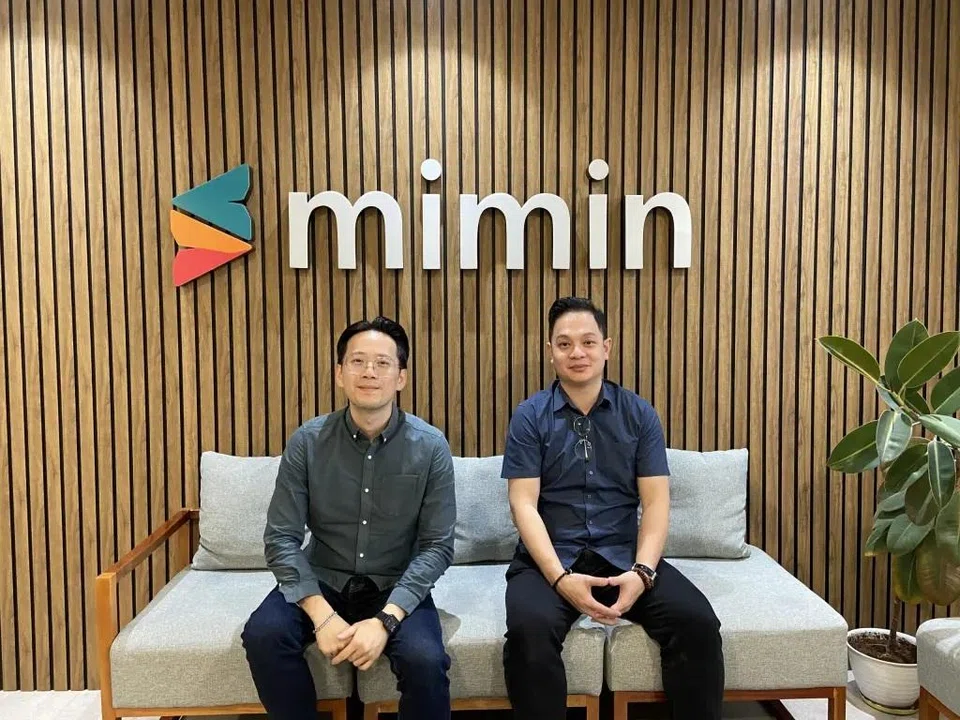
THE funding winter has forced startups in South-east Asia to rethink their expansion strategies.
Instead of taking the usual route of entering India or China, many Indonesian startups are setting their sights on the Middle East, specifically the Gulf countries. These include coffee chain Kopi Kenangan, artificial intelligence (AI) conversation firms Kata.ai and Mimin, logistics provider Kargo Technologies, and smart IoT company TaggIoT.
Indeed, startup funding in Indonesia has been on a decline since 2021. In 2025, funding totalled only around US$700 million, the lowest level in the last nine years, across just 69 deals, according to the Tech in Asia database.
There are also market conditions in the Middle East that are hard to find in South-east Asia, such as stronger purchasing power and higher B2B contract values. At the same time, governments across the Gulf are actively diversifying their economies away from oil, steering them towards finance and tech.
Vision 2030, for instance, is Saudi Arabia’s road map to becoming a leading global tech hub by 2030. Aside from creating new opportunities for startups, the plan is driving demand for AI, fintech, and enterprise software.
However, is expanding to the Gulf sustainable in the long term for Indonesian startups? Or is it merely a short-term effect of the funding winter?
A blue ocean
Historically, Indonesian and other South-east Asian startups expand first to India or China due to the markets’ scale and the maturity of those ecosystems. However, both countries have become increasingly difficult for foreign entrants to crack.
Joseph Simbar, co-founder and CEO of Mimin, said entering China is difficult due to the language barrier, cultural differences, and strict regulations. Meanwhile, India has an intensely competitive market with many established players.
For Mimin and rival Kata.ai, the Middle East is a blue ocean, even though the infrastructure and clientele are already in place.
Kata.ai secures higher contract values in Dubai, where it expanded in July 2025, than it does in Indonesia. This means the company’s clients in the Emirati city are 5x to 10x more profitable than those in its home market, according to co-founder and CEO Irzan Raditya.
“It’s the same effort but with higher gross margins, higher profit, and higher lifetime value,” he said.
Raditya added that in the Middle East, using voice notes – one of Kata.ai’s services – is “very common” and “deeply ingrained in daily behaviour”. In contrast, people in Indonesia are “very text-oriented”.
A November 2023 survey from YouGov found that 19 per cent of consumers in the United Arab Emirates prefer audio messages to text compared with just 5 per cent in Indonesia.
Meanwhile, Mimin is currently in discussions with several potential clients in Dubai ahead of a planned expansion in Q1 2026. CEO Simbar cited stronger willingness to pay and growing investment opportunities in the region as key reasons for the move.
Saudi Arabia’s Vision 2030, which also aims to position the kingdom as a global manufacturing and logistics hub, presents an opportunity for TaggIoT. Within that framework, the company could secure clients in high- and low-value segments, said CEO and founder Hendriansyah.
The company’s clients in Indonesia largely produce high-value products: Automakers such as Honda and Astra, for example, use smart tags and IoT to track spare parts. While TaggIoT plans to target customers involved in lower-value products such as marketplace logistics, few are willing to pay for such services in Indonesia, so broader adoption may be a problem.
Kopi Kenangan is looking to enter the Middle East in the first half of this year, although it did not specify which Gulf nation will be its first market. Kargo Technologies, on the other hand, has sent a team to visit Riyadh, Dubai, and Doha as it explores a potential expansion, but it has yet to set a timeline.
Capital sourcing
The abundance of funding has made the Gulf more appealing to Indonesian startups, especially as South-east Asia grapples with a prolonged tech winter. In the third quarter of 2025 alone, startup funding in the Middle East and North Africa (Mena) reached US$6.6 billion across 514 deals, according to Dubai-based accelerator Wamda.
This figure is much higher than funding in South-east Asia for the whole of 2025, which stood at just US$6 billion across 302 deals, according to the Tech in Asia database.
AI companies can raise funds not just from VC firms and private investors but also via government grants. For example, the UAE’s Ministry of AI offers approximately US$136,000 to over US$1.3 million in grants. Programmes such as the Dubai Future Accelerators and Abu Dhabi’s Hub71 offer non-dilutive grants ranging from around US$40,000 to US$136,000.
However, grant programmes and most VCs in the Gulf require foreign startups to have a local entity or headquarters in the region if they want to secure funding.
Nuwa Capital, a Dubai-based VC focused on early-stage investments, said it is open to backing foreign startups, including those from Indonesia. However, the companies it backs must “have a meaningful presence and commitment to Mena,” said Iman Haider, an analyst at the firm.
This typically means being headquartered in the region or establishing Mena as a core operating base rather than treating it as a secondary market, she added.
“What matters to us is not where a company was originally founded, but whether Mena is central to the business going forward in terms of team, decision-making, and growth strategy,” Haider said.
Hendriansyah echoes this view, saying TaggIoT has received several investment offers in the region, but potential backers have consistently asked whether it already has operations there.
As such, the company is exploring a joint venture to open an entity in Riyadh with SupplyTech, a local warehousing company. Hendriansyah also plans to form a holding firm in Dubai as the city has a zero-tax policy.
Gateway to expansion, market for scaling
Dubai offers several advantages for foreign startups making their first expansion into the Gulf.
Nuwa Capital’s Haider said the city is the most common entry point into the region because it is internationally oriented, relatively easy to set up operations in, and has a clear regulatory environment.
“Many global companies already operate from Dubai, which significantly reduces friction for foreign founders testing the region,” she added.
The UAE’s free zones are special economic areas that allow companies to have 100 per cent foreign ownership and offer exemptions from corporate and income taxes and full repatriation of capital and profits. These areas give startups the flexibility to choose a setup suited to their needs, explained Maged Harby, general partner at Riyadh-based accelerator Value Makers Studio (VMS).
Because the UAE “is home to many nationalities and international companies, it has become a strong hub for sectors like trade, logistics, and financial services,” he said.
Saudi Arabia, though, is where startups can scale meaningfully. The kingdom has the largest domestic consumer base in the Middle East, offering a “primary consumption market,” said Kentaro Machii, a programme manager at Jakarta-headquartered ERIA (Economic Research Institute for Asean and East Asia). In fact, a September 2025 study from McKinsey estimates that there could be over 100 million consumers in the kingdom by 2035.
There are also around 850,000 Indonesians living and working in Saudi Arabia, with many more across the region. Indonesian startups can offer services and products tailored to these communities, Machii said.
Harby of VMS points out that there’s substantial enterprise demand in Saudi Arabia as well, particularly across fintech, software, healthcare, and AI.
The Saudi government is actively strengthening its regulatory framework to make it easier for both local and international startups to establish operations, obtain commercial registrations, and operate legally, Harby said.
“One example is the entrepreneurial license, which allows startups to avoid certain setup costs and simplifies company establishment and license renewal for up to three years,” he added.
Geography works in the region’s favour, too. Saudi Arabia and the UAE are in highly connected time zones, enabling companies to engage with Asia in the morning, Europe during the day, and the US at night, said Nuwa Capital’s Haider. This allows companies to base their operations in the region while serving customers in several markets from a single location.
Southeast Asian startups can attract investor interest in the Gulf because they come from “demanding environments” with large, fast-growing markets and young, digital-first populations, she added.
“There’s also notable capital discipline,” Nuwa said. “Many Indonesian teams have grown in conditions where capital wasn’t consistently abundant, which is reflected in their thoughtful approaches to product development and growth.”
Not a walk in a park
Even though the Gulf is flush with opportunity, winning this market is far from easy. For one, the standard of living and the costs of establishing and running a business are markedly high.
To test the market, startups could sell their products or services to Saudi Arabia or other Gulf countries without opening an office upfront, Harby of VMS said.
Moreover, developing solutions in Indonesia is usually cheaper than in Saudi Arabia due to lower labour costs. This can help startups avoid the risk of ballooning expenses when setting up teams in the region.
Another alternative is to start with a small regional team or collaborate with a strategic partner and then scale as demand grows, suggests Nuwa Capital’s Haider. “Many successful foreign startups” have used this approach in the region, she added.
Having a local partner or team member is crucial for handling regulatory matters, especially in Saudi Arabia, said Harby. Despite recent improvements, setting up a company can still involve dealing with over seven government entities.
From an investor’s perspective, local operations help de-risk the venture and signal serious market commitment. But building trust takes time, meaning startups that treat Gulf expansion as a quick experiment often struggle.
As such, Haider believes that the entrance of Indonesian startups in the Middle East is part of a “growing curiosity” in the region instead of a major trend. Most South-east Asian founders “still prioritise their home region first, where they have a deeper understanding of customer needs,” she explained.
“Gulf expansion typically represents a second wave.”
Harby advises Indonesian founders to focus on the local market first as they need to build a sound foundation in their home country, with real traction, demand, and a solid user base.
“Flexibility is very important as founders may need to adapt their product, pricing, or business model rather than simply copying and pasting what worked at home,” he said.
Kata.ai is preparing for its Dubai entry by sending a team on the ground to better understand local conditions. CEO Raditya said the company is also considering setting up an entity there as part of its broader global expansion plans.
“Many software companies in the Middle East come from the US and India and have a global footprint,” Raditya said. “We also have aspirations in that direction.” TECH IN ASIA
TRENDING NOW

Once staunchly pro-China, Malaysian Chinese businesses are now distancing themselves from Beijing

Looking beyond looming CEO succession, should UOB potentially pursue a transformative merger?

Could stablecoins be the future of money?

Grab CEO’s wife Chloe Tong on life with Anthony Tan and finding her purpose

