



ThaiBev optimistic in Thailand for second half of 2026 despite weaker beer sales
Revenue for the segment is down 5.4% at 62.6 billion baht for the six months ended Mar 31

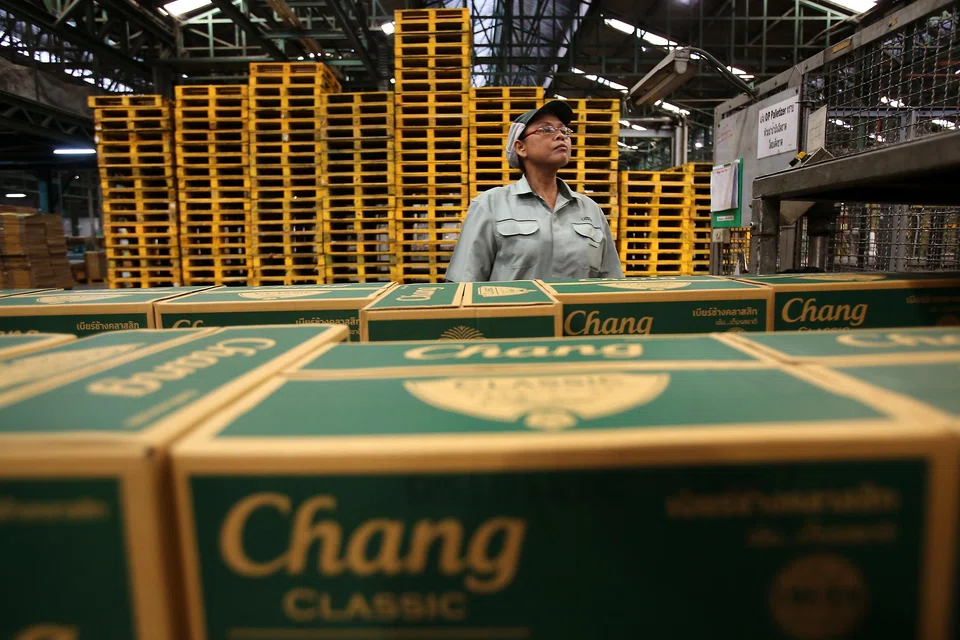
[SINGAPORE] Singapore-listed Thai Beverage ( ThaiBev ) believes that market conditions will improve in Thailand for the second half of this year, which could help drive growth for its beer segment.
“The sentiment in Thailand right now, we have some positive factors,” said Songwit Sritham, senior vice-president and chief of spirits business for Thailand, at an analyst briefing on Friday (May 15) evening.
“Point one: The government, in the second quarter, expanded the window for selling alcohol so we can sell alcohol from 11 am until midnight. Point two: Thai people are travelling less overseas compared to the previous period.”
Songwit said that an expanded window for selling alcohol could boost consumption in tourist areas and hotels; at the same time, Thai residents not travelling overseas could lead to higher consumption domestically.
His comments came a day after the group released its results for the six months ended Mar 31.
ThaiBev posted a 3.2 per cent drop in net profit to 14.2 billion baht (S$559.5 million) for the half-year, from 14.7 billion baht for the previous corresponding period.
The company said that the decline was driven primarily by softer performance in the beer and non-alcoholic beverage (NAB) segments, which experienced sales revenue decreases of 5.4 per cent and 5.5 per cent, respectively.
Revenue for the beer segment fell to 62.6 billion baht on the back of “subdued market conditions in Thailand” and “severe weather in Vietnam”.
Despite this, another ThaiBev executive, Nongnuch Buranasetkul, senior vice-president and chief of beer business for Thailand, noted that ThaiBev did not observe any notable consumer slowdown apart from a dip in its first quarter ended Dec 31, 2025.


She attributed this to the mourning period following the death of Thailand’s queen on Oct 24 that year.
Nongnuch shared that activity picked up later in the second quarter due to Thai festivities; she also expects the upcoming Fifa World Cup to be another potential growth driver for ThaiBev. ThaiBev is the brewer of Chang Beer, one of the most popular beers in Thailand.
Executives also acknowledged at the briefing that rising energy costs could dampen consumer spending.
Energy prices have soared since the US and Israel launched attacks on Iran on Feb 28. The conflict has led to the effective closure of the Strait of Hormuz, a waterway that typically carries about 25 per cent of global oil flows.
Asian economies are particularly affected as about 80 per cent of the oil and gas passing through Hormuz is bound for Asia, according to the Asian Development Bank.
Beyond raising energy costs, the strait’s prolonged closure has also led to price increases for raw materials such as aluminium.
But ThaiBev executives, responding to a question on raw material prices, revealed at the briefing that the group had secured prices of the main raw materials for both beer and spirits at least until the end of 2026, including for bottles and cans.
Shares of ThaiBev rose 2.4 per cent or S$0.01 to close at S$0.43 on Friday.
Decoding Asia newsletter: your guide to navigating Asia in a new global order. Sign up here to get Decoding Asia newsletter. Delivered to your inbox. Free.
Copyright SPH Media. All rights reserved.
TRENDING NOW

Once staunchly pro-China, Malaysian Chinese businesses are now distancing themselves from Beijing

Looking beyond looming CEO succession, should UOB potentially pursue a transformative merger?

Could stablecoins be the future of money?

Grab CEO’s wife Chloe Tong on life with Anthony Tan and finding her purpose

