Thailand gets serious about chasing high-spending tourists
Geopolitical risks and regional rivalry make high-spending travellers key over mass tourism
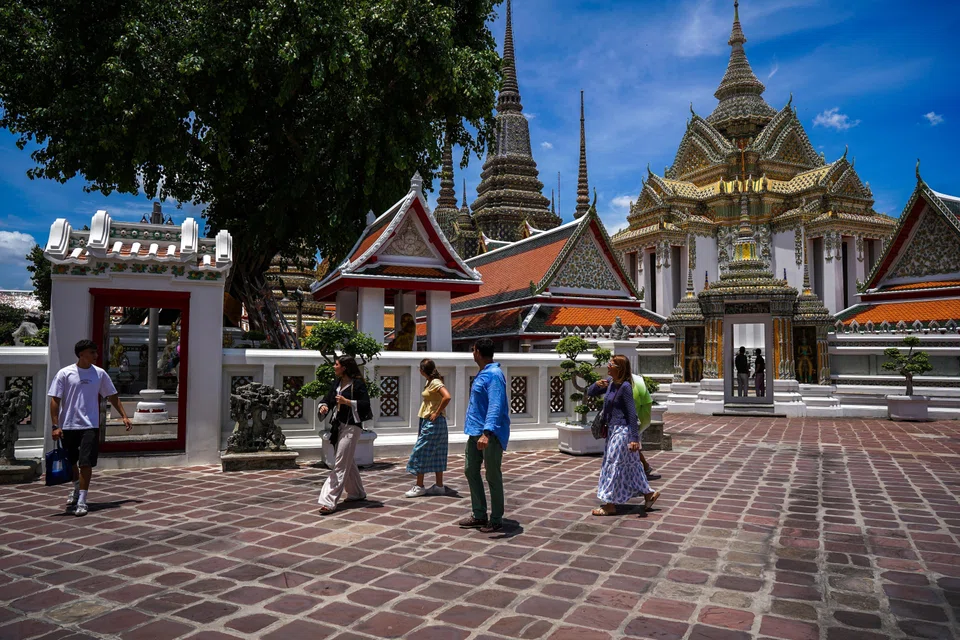
[BANGKOK] Thailand is done chasing tourist records. After decades of measuring success by ever-rising arrival numbers, the government is making its clearest push yet to prioritise how much visitors spend versus how many show up.
The South-east Asian nation, famed for its beaches and city nightlife, is only targeting about 33 million foreign visitors this year, well below the nearly 40 million who arrived in 2019. If arrivals fall short of last year’s 32.97 million, it would mark Thailand’s first back-to-back annual decline outside the pandemic since at least 1995.
Geopolitical tensions and intensifying regional competition mean a focus on higher-spending travellers rather than mass tourism is key, Tourism Authority of Thailand deputy governor Nithee Seeprae said in an interview.
“We’re not too worried about the number of tourists because we want to generate more revenue from each visitor,” Nithee said. “We focus on quality markets.”
Nithee pointed to the tourism authority’s recent marketing events in UK cities including Oxford and Manchester as evidence of the shift. The agency is targeting travellers drawn by medical care, wellness retreats, concerts, festivals, golf, marathons and other sporting events because these visitors tend to stay longer and spend more.
The agency’s website also leans heavily into the luxury and wellness angle, with a welcome video suggesting visitors can “heal and become a warmer, happier you.”
Visitors currently spend roughly US$1,500 per trip on average. Officials ultimately want that to climb to about US$2,400. Yet international tourism receipts are projected to edge up only slightly this year, to 1.55 trillion baht (S$60.3 billion) from 1.54 trillion baht in 2025.
The clearest sign Thailand is no longer singularly focused on visitor numbers is its reversal around visas. Measures introduced after the pandemic to stimulate tourism have been rolled back after authorities linked easier entry rules to a rise in illegal work, overstaying and crimes involving foreigners.
Last week, Thai police arrested an Australian man at Bangkok’s Suvarnabhumi Airport as he allegedly tried to flee the country after authorities accused him of killing a 17-year-old Thai girl and abandoning her body in a suitcase.
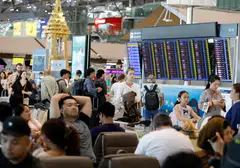
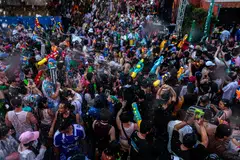
But with tourism accounting for about one-fifth of Thailand’s economy, the ecosystem of hotels, restaurants, food markets, transport operators, dive shops and tour companies which has sprung up around that depends on large volumes of visitors. Destinations such as Phuket and Chiang Mai were built around scale, making a shift towards fewer, higher-spending travellers harder to execute.
Thailand also no longer dominates the value-for-money market the way it once did. Vietnam and Indonesia have become increasingly competitive, while a stronger baht in recent years has eroded one of Thailand’s traditional advantages.
Thailand spent decades building one of the world’s biggest mass-tourism industries, helped by a cheaper currency, global exposure from films and TV series and a boom in Chinese visitors before the pandemic. It’s struggled to regain that momentum since Covid-19.
Nithee insists the new strategy isn’t about excluding Budget travellers. “For Thailand, luxury is about meaningful experiences and exclusive experiences,” he said. “That’s our new definition of luxury.” BLOOMBERG
Decoding Asia newsletter: your guide to navigating Asia in a new global order. Sign up here to get Decoding Asia newsletter. Delivered to your inbox. Free.
Share with us your feedback on BT's products and services