The tourism tug-of-war – concerts, cash and culture wars in Malaysia
The industry is booming again, but so are tensions over culture and identity

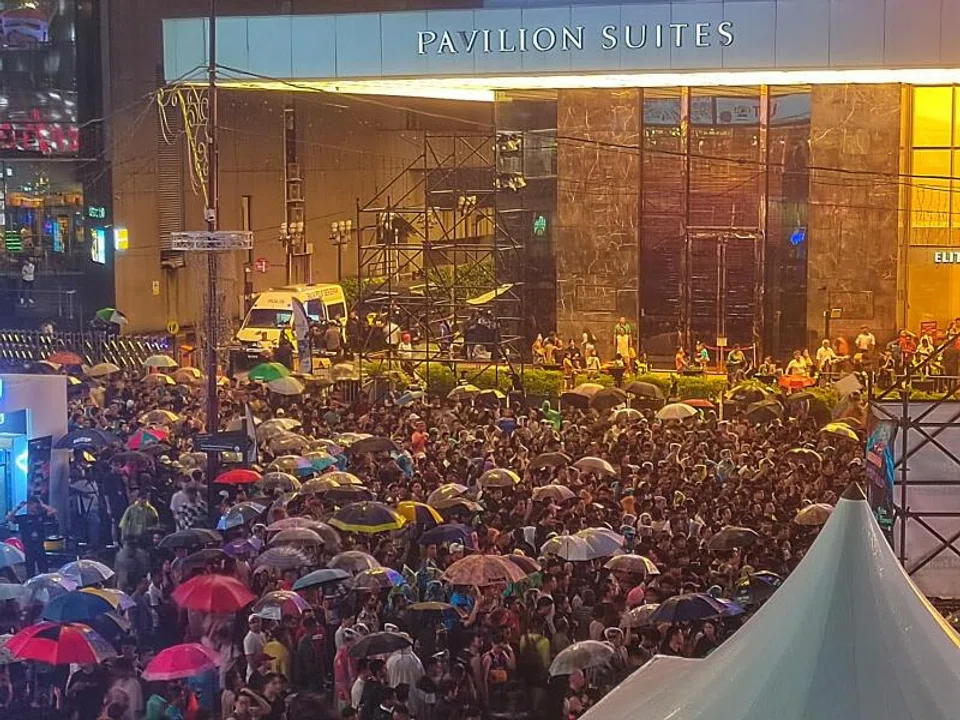
[KUALA LUMPUR] Malaysia’s tourism industry appears to be delivering robust numbers from hotels, malls and airlines. But as the country leans harder on concerts, festival celebrations and global entertainment to woo visitors, it is running into a familiar wall: How much fun is too much for conservative Malaysia?
The tension has become more visible as the country pushes to revive tourism as a major economic driver while balancing the expectations of a multicultural society and the sensitivities of its more conservative constituents.
The recent Rain Rave Water Music Festival, held from Apr 30 to May 2, was promoted as part of efforts to boost Malaysia’s global tourism profile. It highlighted both the commercial potential and political sensitivity of entertainment-led tourism.
The Malaysian Inbound Tourism Association (Mita) estimated that the three-day festival drew roughly 180,000 cumulative visitors, generating more than RM200 million (S$64.5 million) in tourism revenue and racking up 1.4 billion social media interactions globally.
In a statement issued shortly after the event, Mita president Mint Leong said that such “traffic-driven” tourism activities could quickly translate into tangible economic outcomes while elevating Malaysia’s global brand.
She asserted that the event’s potential to convert online buzz into actual tourists should not be underestimated.
Her remarks followed criticisms by the Malaysian Islamic Party, which deemed the festival as a “large-scale disco” that was not reflective of Malaysia’s true identity.
The backlash highlighted a broader industry struggle within the tourism industry as authorities attempt to expand tourism offerings without alienating the conservative segments of society.
Tourism dollars versus cultural discomfort
The debate is unfolding as policymakers push tourism as part of the country’s key economic agenda, given the sector’s ripple effect of economic opportunities.
This year marks the official launch of the Visit Malaysia Year campaign, a nationwide initiative aiming for an ambitious target of 47 million international arrivals and RM147.1 billion in tourism receipts.
This campaign builds on the performance of 2025, during which the country welcomed a historic 42.2 million international tourists and generated RM145.3 billion in direct tourism receipts.
To buffer the tourism sector against global geopolitical disruptions, the government has extended the Visit Malaysia campaign until the end of 2027, allowing international markets more time to stabilise.
Economy Minister Akmal Nasir noted that the extension is a key component of broader measures aimed at ensuring industry resilience amid rising global volatility and Middle East tensions.
Despite geopolitical headwinds in the Middle East that disrupted fuel supplies, forced flight reroutes, and inflated airfares by late March, Malaysia’s tourism recovery remains firmly on track, data released on May 13 showed.
Malaysia recorded around 10.7 million international visitor arrivals in the first quarter of 2026, up 5.4 per cent from a year earlier, the Ministry of Tourism, Arts and Culture said.
Singapore remained its largest source market with 5.14 million visitors, while visitors from China recorded the fastest growth among major markets, with arrivals surging more than 25 per cent year on year to 1.41 million.
European arrivals also rose more than 9 per cent to surpass the 500,000 mark for the first time in a first quarter.
Tourism, Arts, and Culture Minister Tiong King Sing revealed that the country added 26 new international aviation routes during the quarter, including 20 scheduled and six charter services linking Malaysia with China and Hong Kong.
Additionally, 12 airlines ramped up operations by introducing 95 extra international flights per week.
Third-largest GDP contributor
Tourism is Malaysia’s third-largest contributor to gross domestic product after manufacturing and commodities.
The World Travel & Tourism Council noted that the sector is expected to contribute RM332.2 billion, or 11.3 per cent of GDP, in 2025 and support 3.5 million jobs.
Tourism Selangor chief executive officer Chua Yee Ling said that large-scale, recognisable events elevate Malaysia’s status in the international market by encouraging tourists to explore more in-depth or thematic tours across the country.
“Thailand’s Songkran Festival, for instance, initially captures tourists’ attention. Once that interest is established, visitors are drawn to explore the rest of the country further,” she told The Business Times.
This momentum not only generates immediate tourism revenue but also drives job creation across related industries including services, hospitality, short-stay accommodation, and local F&B businesses.
Chua cited Port Klang’s cruise tourism as an example. As more cruise ships dock in Klang, the influx of tourists has spurred opportunities for local planners to introduce cultural and thematic excursions nearby. These include day tours – of Klang, one of Malaysia’s oldest towns, and the royal city of Selangor – or brief shopping trips to local malls.
Competing with regional destinations
But the recurring controversies could dent Malaysia’s tourism appeal. If the backlash is not well managed, the country could risk losing its competitive edge in the lucrative live entertainment and concert space.
Khairiah Ismail, a senior lecturer at the School of Hospitality, Tourism, and Events at Taylor’s University, pointed out that confidence among international organisers, artists, investors and tourists has already been affected by similar past incidents such as the Rain Rave, Future Music Festival Asia and Good Vibes Festival 2023.
“In the events industry, consistency and predictability are extremely important,” she told BT.
“When controversies involve political intervention, policy uncertainty, cultural sensitivities or sudden event restrictions, international stakeholders may begin comparing Malaysia with neighbouring destinations such as Singapore, Thailand and Japan – which are often perceived as having more stable event ecosystems.”
Across Asia, tourism now thrives on experiences, entertainment and social media clout. Neighbouring countries are already investing heavily in high-profile festivals and influencer-driven campaigns to win the battle for global attention.
Malaysia, however, faces a more delicate balancing act, because tourism policy often intersects with religion, culture and domestic politics.
The country has long marketed itself as culturally diverse and Muslim-friendly while simultaneously trying to attract younger travellers, digital nomads, music fans and higher-spending international tourists.
Striking a balance becomes more difficult as social media amplifies both tourism promotion and public backlash in real time.
Moving beyond mass tourism
At the same time, Malaysia is trying to reposition itself beyond traditional mass tourism models.
Thanam Subramaniam, hub leader of the Sustainable Tourism Impact Lab at Taylor’s University, said that Malaysia is increasingly focusing on becoming a high-value, sustainable, digitally connected and culturally immersive tourism destination.
That includes attracting travellers seeking authentic cultural experiences, eco-tourism, gastronomy, wellness and heritage tourism, rather than prioritising arrival numbers alone.
“The emphasis is shifting towards tourism receipts, quality experiences, and value creation,” said Dr Subramaniam.
Malaysia is also investing more heavily in smart tourism ecosystems involving artificial intelligence, digital platforms and immersive travel experiences.
But the transition also exposes structural gaps. Dr Subramaniam noted that many rural and secondary destinations lack sufficient transportation links, tourism training, digital marketing capabilities and long-term sustainability planning.
Malaysia may still have the ingredients of a strong tourism destination such as strategic location, cultural diversity and competitive costs. But sustaining momentum could increasingly depend on how clearly it defines the kind of tourism it wants to promote.
“The key challenge,” said Dr Khairiah of Taylor’s University, “is ensuring a balance between protecting local values and maintaining a supportive, transparent and well-managed environment for live entertainment events.”