



Trump trade war puts Indonesia’s Batam on global factory map
US-China tensions see firms shift production to the island, facilitating its rise as a manufacturing hub
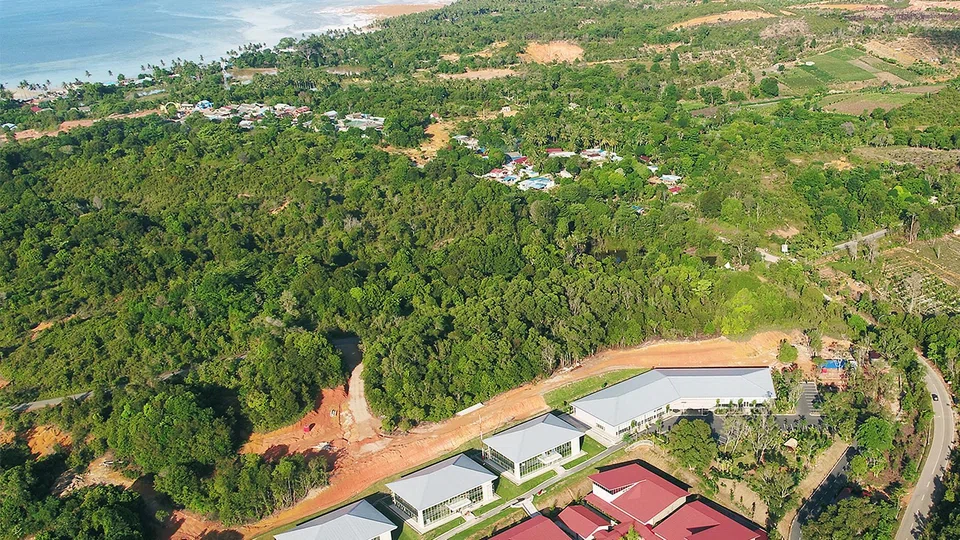
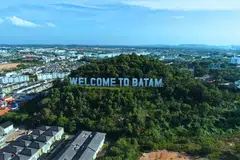
[SINGAPORE] For decades, Batam was an Indonesian island that barely registered with global investors. Now, it is gaining traction as an emerging manufacturing hub thanks to US President Donald Trump.
The US-China trade war, which escalated under Trump’s second term, is pushing more companies including Chinese toy maker Dongguan Welson Plastic Hardware Products – which counts Walt Disney and Crayola as customers – to shift production to Batam.
These firms are lured by the island’s young workforce, tax incentives and close proximity to Singapore, a shipping hub.
In July, Welson’s local unit, Welson Group Indonesia, opened its first factory outside of China.
It will produce more than 30 novelty items for Disney theme park gift shops, including Cinderella pumpkin carriage popcorn holders and figurines of Olaf the snowman and Sulley from Pixar’s Monsters, Inc.
“We had no choice but to diversify,” Welson’s general manager Andy Yao said during a recent visit to Batam to check the factory’s final specifications.
“If we stayed in China, we risked losing orders.”
Trump’s Liberation Day tariffs in April 2025 triggered Welson’s search after customers demanded the company diversify its supply chain. Costs in China were also getting more expensive, Yao said.
But Batam was not Welson’s first choice. Yao had no knowledge of the island.


He first surveyed Malaysia, Thailand, Cambodia and Vietnam before an acquaintance suggested Batam. Three months after his visit in July last year, Welson signed a lease.
The island ticked several boxes: it is a 40-minute ferry ride from Singapore, making it easy to ship products and convenient for customers to travel to Batam for audits, and more than half its population is under 30, providing a deep labour pool at a time when much of South-east Asia is grappling with shortages, Yao said.
Welson will hire 300 workers to start and plans to raise that to 600 by the end of 2027.
Batam’s free trade zone status was also key.
It means companies enjoy raw materials and machinery imports that are exempt from tax and firms also pay zero export duty on finished goods.
Since Trump’s first presidency in 2017, the island’s exports have more than doubled to some US$19.6 billion as at 2025.
Bright spot for Indonesia
Outside of benefitting from the supply chain diversification that has seen manufacturers expand beyond China into South-east Asia, Batam’s rise is a bright spot for Indonesia more broadly.
The region’s biggest economy is grappling with mounting fiscal strain, a weak domestic currency and corruption at President Prabowo Subianto’s flagship free meals programme, among other challenges.
Although Batam is only about four times the size of Manhattan and has a population of slightly over 1.2 million, its economic growth has outpaced Indonesia’s since the pandemic, supported by exports, manufacturing and investment.
As at 2025, Batam’s gross domestic product stood at 6.8 per cent compared to the national expansion rate of 5.1 per cent.
In the first quarter, Batam’s economy expanded by 5.8 per cent, slightly better than the whole country’s 5.6 per cent.
Often overlooked is Batam’s advantage around power. More than 80 per cent of its electricity comes from natural gas, far more palatable than the coal-heavy power supply that dominates Indonesia’s main island of Java and much of the rest of the archipelago, said Mardika Parama, BowerGroupAsia Indonesia’s director for energy, climate and resources.
The island is also largely free of natural disasters because it is not located within the Pacific Ring of Fire unlike many other places in Indonesia.
Those factors, together with its several special economic zones, have help shelter Batam from the turmoil in the rest of the country.
Over the past 12 months, Apple has built an AirTag factory that now churns out 70 per cent of its global supply, while Oracle and Hong Kong’s Gaw Capital Advisors have invested in cloud and data centres.
Most recently, Firmus Technologies said it will build its first 360-megawatt data centre project there as part of a partnership with US chip giant Nvidia.
Recognising its growing potential, Indonesia’s investment ministry in June 2025 set up a permanent office on Batam to better facilitate investments and attend to companies’ needs.
In July, Prabowo discussed how to accelerate Batam’s transformation with local leaders. One of the president’s directives was to further develop the island’s international ports to reduce logistics costs and boost export competitiveness, according to a statement from local officials.
“Batam’s strongest marketing tool is the experience of companies already operating there,” Parama said. “If investors genuinely benefit from setting up on the island or sourcing through Batam, they will say so. In global investment circles, that kind of word travels fast.”
Success decades in the making
Batam’s current-day business success has been decades in the making.
Half a century ago, it was a sleepy island populated by fishing villages and mangroves.
Its rise as an oil and shipyard outpost dates to the early 1970s, when Pertamina Persero established the island as a logistics base for offshore oil and gas operations. After that, it slowly attracted foreign manufacturers producing electronics and engineering products.
Its development mirrors that of Citramas Group, a Batam-based diversified conglomerate helmed by Indonesian tycoon Kris Taenar Wiluan.
Its businesses span real estate to tourism and the company is behind Nongsa Digital Park, one of the island’s five special economic zones.
Citramas provided the infrastructure to support oil and gas companies in Batam before expanding into tourism in the 1980s, when the island was seen as having potential as a cheap weekend getaway for residents of Singapore and Malaysia before the low-cost carrier boom.
Over the years, Citramas has developed holiday resorts on the island, including an 18-hole Jack Nicklaus-designed golf course.
But Mike Wiluan, Kris’s second child and his eldest son, wanted to focus on the digital economy.
An avid film maker, he founded Infinite Studios, an over-6 hectare (ha) compound equipped with film sets that have been used in the television series Westworld as well as movies such as Monkey Man, the directorial debut of Hollywood actor Dev Patel.
Movies and animations produced at Infinite Studios have been streamed on Netflix, HBO and Apple TV.
Before the big Hollywood projects came, Wiluan, who is currently the chief executive of Citramas Group, recalls he had a tough time persuading his overseas counterparts to film at his studio.
“Everyone was just trying to imagine what is this. And it’s almost like a figment of the imagination until they come and see,” said Wiluan, who was a co-producer of the hit movie Crazy Rich Asians.
Infinite Studios became the seed for the development of Nongsa Digital Park, which was launched in 2018 and seen as a digital bridge between Indonesia and Singapore by the countries’ leaders at the time.
The 188 ha site also includes land set aside for data centres, all of which has been filled by the likes of DayOne Data Centers Singapore and BW Digital. There is now a waiting list for companies to get in as they try to capitalise on the island’s 14 subsea cable systems.
Regional competition
Batam is not without its competitors in the region.
Malaysia and Thailand are also vying to be data centre hubs and there is the Johor-Singapore Special Economic Zone that was launched in 2025 with an eye to attracting firms in the digital and manufacturing sectors.
Wiluan, however, believes Batam can hold its own. Within Nongsa, he is looking at developing green infrastructure and renewable projects such as solar, water and power generation.
Locals are upgrading their lives also. Apple and IBM both have academies in Nongsa that teach Batam residents about digital technologies.
Infinite Studios meanwhile offers a one-month free training programme on animation software. Graduates that excel are offered jobs at the company. So far, the program, which started in 2016, is onto its 19th intake.
One of the locals who has secured a job after the course is 31-year-old Tommy Bagasdame. He joined the animation studio eight years ago.
“Without a major creative anchor here, local artists and tech talent would face a difficult choice, either adapt to traditional factory and administrative roles, or leave Batam entirely to pursue modern creative careers in bigger cities like Jakarta,” Bagasdame said.
Batam’s income per capita as at 2025 is also higher than capital Jakarta’s. The island’s unemployment rate meanwhile has dropped to 7.6 per cent as at 2025 versus 11.8 per cent in 2020.
South of Nongsa is the 100 ha Tunas Prima Industrial Estate, where Apple’s huge AirTag factory sits.
Luxshare Precision Industry has hired at least 2,000 locals at the AirTag facility and plans to ramp that up to 6,000 in coming months, according to people familiar with the matter. Representative for Apple and Luxshare did not respond to requests for comments.
The estate itself, developed by Batam property firm Tunas Group, is 60 per cent occupied. As well as toymaker Welson, other tenants include a factory that makes outdoor furniture sold in Walmart and Costco Wholesale.
Tunas Group has two other industrial estates, all of which have been filled.
“I don’t think Trump is aware that he may have boosted Batam’s rise,” Chrispin Andereas, head of business development at Tunas Group, said.
“Not just Batam but much of South-east Asia has benefited from supply chain disruptions. This trend is here to stay.” BLOOMBERG
Decoding Asia newsletter: your guide to navigating Asia in a new global order. Sign up here to get Decoding Asia newsletter. Delivered to your inbox. Free.
Share with us your feedback on BT's products and services
TRENDING NOW

LTA proposes combining car COE categories, adding rebate-surcharge system

StarHub to acquire MyRepublic’s mobile business amid ongoing telco consolidation

DBS, OCBC, UOB rout lops billions off STI as inflation, rate concerns spook investors

Grab CEO’s wife Chloe Tong on life with Anthony Tan and finding her purpose

