



UMNO-PAS marriage again? Anwar is staring down the barrel of a rekindled Malay unity pact
Despite strong economic performance, Malaysia’s leader has struggled to win back Malay voters. The challenge just got harder
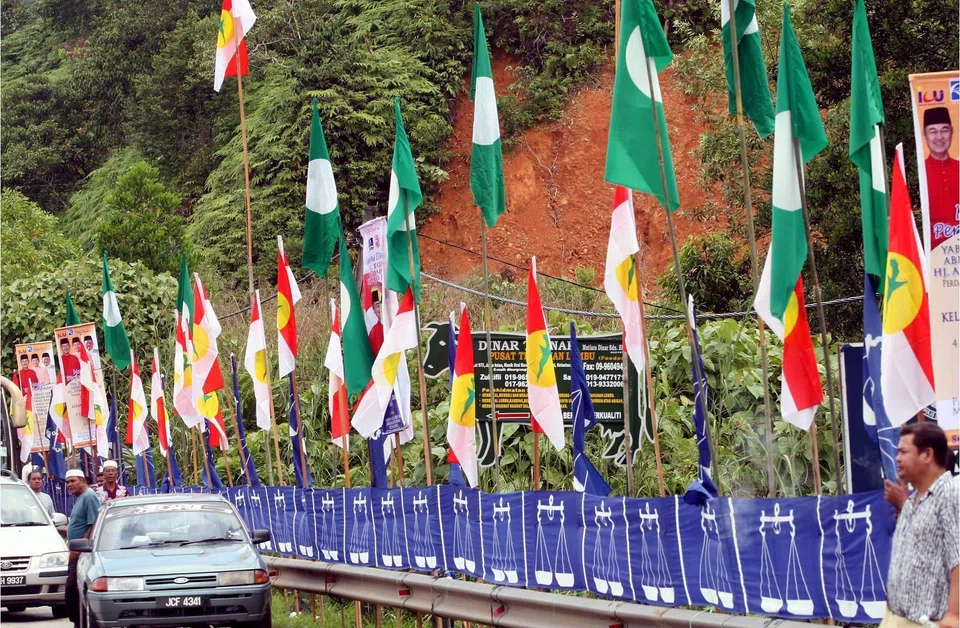
DURING a TIME magazine interview in October 2023, Prime Minister Anwar Ibrahim was asked how he would combat Malay-Islamist supremacist rhetoric in Malaysia.
This came just two months after the opposition led by Parti Islam SeMalaysia (PAS) had made huge gains in polls across six states and even denied Anwar and his allies a single seat in north-eastern Terengganu.
Appearing relatively sanguine in the face of ebbing support from the Malay-Muslim majority, he said: “Economic development. A more just, equitable system so that no community or part of the country is seen to be ignored or marginalised.”
Nearly three years later, Malaysia’s economy has outperformed expectations. Growth has exceeded 5 per cent, while investment and trade have reached record highs. Yet politically, Anwar’s wager looks increasingly fragile as support among Malay-Muslim voters remains stubbornly elusive for his Pakatan Harapan (PH) coalition.
This is despite the extraordinary political bargain struck in 2022, when PH and the UMNO-led Barisan Nasional (BN) put aside decades of rivalry to form a unity government after Malaysia’s first-ever hung Parliament.
The lack of significant gains in Malay-Muslim votes has raised questions about whether economic performance alone can reshape Malaysia’s political landscape.
Sensing this, the BN has gone from willing ally to thorn in the side of the so-called unity government. There has been a rekindling of a Malay unity pact – Muafakat Nasional or National Consensus – between UMNO and PAS at recent and ongoing state polls, last seen (you guessed it) when PH was in power between 2018 and 2020.
This apparent revival of strategic cooperation proved a smashing success at the July 11 Johor vote. While the Election Commission has yet to release more granular data from the Johor state election, the 19 seats where Malays made up two-thirds or more of the voter roll were telling.
Nine in 10 voters picked either BN or the PAS-led Perikatan Nasional (PN) in constituencies with more than 80 per cent Malay electorates, and wards with between 65 and 80 per cent Malays saw four in five picking BN or PN.
SEE ALSO





This trend helped BN sweep 48 of the 56 seats contested, with PH winning just eight, four fewer than its tally in 2022. According to top pollster Merdeka Center, vote transferability from PN to BN was well above 95 per cent, reaching even 99 per cent in some constituencies.
Johor’s 2.7 million-strong electorate largely reflects the ethnic mix in the rest of the peninsula. If – although it is admittedly a big if – voting trends in the southernmost state were to replicate across the board at the next national polls, then a BN-PN spine for the next government would be an easy shout.
Even discounting for the fact that Johor is the birthplace of UMNO, which has ruled the state for all but 22 months since independence, the margin of victory – taking six of every seven seats – is far more than what is required for a Malay unity federal administration to be formed.
That said, was Anwar wrong to believe economic development could deliver political dividends? No. But the bigger question for him is whether PAS and UMNO would deem an electoral pact irresistible for a general election due by early 2028, especially if the latter reclaims Negeri Sembilan on Aug 1.
The long game
It’s one thing for two Malay-Muslim parties that have for over half a century vied to be Malaysia’s dominant force to cooperate at a local election, and another altogether to share the spoils of the entire nation.
Back in 2019, Muafakat Nasional scored a string of victories that cumulatively slayed the 22-month-old PH government in early 2020 as its Malay MPs defected. But UMNO and PAS eventually clashed at the 2022 general election, which saw BN hobble to its worst-ever electoral performance.
Will PAS, so dominant in the northernmost states of Kelantan, Terengganu, Kedah and Perlis, throw UMNO a lifeline in these strongholds this time round? It may be that PAS will be happy to let UMNO president Zahid Hamidi be promoted from deputy prime minister currently, to the top job, knowing that its superior numbers mean that they are the real power behind the throne.
Further, letting Zahid entrench himself will slow the pipeline of second-liners in UMNO such as vice-president Johari Ghani and the prodigal son Khairy Jamaluddin. Instead, it will give time for PAS to build experience and possible recognition for technocratic abilities beyond just its vice-president and Terengganu chief minister Ahmad Samsuri Mokhtar and secretary-general Takiyuddin Hassan.
For the Islamist party, it has always been about the long game, and despite constant criticism over president Hadi Awang’s Islamic supremacism, political insiders give him credit for his patient vision.
Those close to him often talk of how, despite having been PAS chief for over two decades, his political blueprint is for the party’s dominance to come to fruition another two decades from now. The demographic projections seem to favour the party.
By the year 2050, it is estimated that four in five Malaysians will be Malay. And the way PAS has continued to capitalise on the disenchantment of Malay youth since UMNO’s decline stands to pay even greater dividends.
But why does it seem so easy for PAS to gain the trust of young voters joining the electoral roll?
The empty belly of the beast
Practically all surveys cite bread-and-butter issues such as cost of living and job opportunities as their top concern.
By all accounts, PAS, which governs some of Malaysia’s poorest states, has not covered itself in glory on this front. While UMNO was eventually brought to its knees under the weight of corruption scandals, PH, which has continued to bring steady economic development to Penang and Selangor, and arguably facilitated Johor’s recent rise, should be the logical choice.
The lived experience, however, tells a different story. Youth unemployment is over 10 per cent, more than triple the national average.
Merdeka Center’s programmes director Ibrahim Suffian says that in focus groups with young people, a frequent grouse is that fresh graduates today earn about RM2,800 (S$884) a month versus the RM2,300 their parents secured two decades ago.
“The increase in incomes versus the increase in expenses, it’s a big differential there,” he said. “There’s a very deep distrust of institutions which they view as helping keep the wealthy wealthy and the rest at subsistence levels.”
The likes of Kedah chief minister Sanusi Md Nor, election director for PAS and PN, often mock PM Anwar for his frequent overseas trips and coming home with “billions and billions” of investments, resonating with young Malays who cannot see the benefit.
A 2025 study by think-tank IMAN Research on “Malay Youth Democratic Renewal Post-GE 15: The Politics of Acknowledgement and Resentment” also found that young Malays voted for PN at the 2022 general election in protest against poor governance.
Those who have followed Malaysian politics for decades would point out that the genesis of its economic structure and its two-speed growth (some call it K-shaped to describe the divergent trajectories of the rich and poor) stemmed from BN’s six decades in power.
But that history may carry less weight with a growing segment of the electorate. With the lowering of the voting age to 18, it would be pertinent to note that those born when BN first lost its two-thirds supermajority as well as five states in 2008 are now eligible to cast a ballot.
For many of these voters, all the problems they face today are directly the consequence of whoever is leading the country now. And since 2018, it has more often than not been someone from PH, with PAS mostly in opposition, or playing only a minor role in Putrajaya.
The inevitable romance?
So, what should or can PH do to stem the tide? Ostensibly, it needs to convince young Malays that it is righting the ship and moving the country towards the right trajectory.
But even on this count, it will be an uphill battle as PAS appears to have a firm grip on the online infowars.
Merdeka Center’s studies of social media ecology found that political news accounts for only about 12 per cent of what is being consumed, with religious topics higher at 15 per cent. For the most part, people are following lifestyle topics such as travel, recipes, sports and entertainment.
“Within Malay-language social media, when we talk about the footprint of the political organisations, I would say nowadays PAS captures probably about 70 to 75 per cent of the coverage because they don’t just have political news, they have religious preachers and even people in entertainment and education who are sympathetic to their cause,” said Ibrahim.
Economic indicators alone mean little to those struggling day-to-day. There is little sense among Malaysian youth that Anwar’s proposed “equitable and just” system has been put in place.
Unfortunately for the Prime Minister, one year or so is precious little time to convince young Malays, who are already deeply sceptical of PH, that it is righting the ship and moving the country towards the right trajectory.
This, in turn, could see UMNO walking away from the unity government project, thereby exposing what has always been Anwar’s Achilles heel since forming PH in 2015 – the congregation of Malay parties working against him. THE STRAITS TIMES
Decoding Asia newsletter: your guide to navigating Asia in a new global order. Sign up here to get Decoding Asia newsletter. Delivered to your inbox. Free.
Share with us your feedback on BT's products and services
TRENDING NOW

Singapore identifies 7 firms responsible for haze fires, notices issued urging action: Grace Fu

Philippine power giant First Gen rebuffs foreign offers, plans up to US$2.6 billion in expansion

DBS remains analysts’ pick ahead of Q3 earnings after Singapore banks’ share slump

Indonesia imposes US$116 million in fines over manipulation of Sinar Mas, Prajogo-linked stocks

