



US still expects governments to abide by reciprocal trade pacts: Trump’s 2026 trade policy agenda
In South-east Asia, Malaysia, Cambodia and Indonesia have such agreements

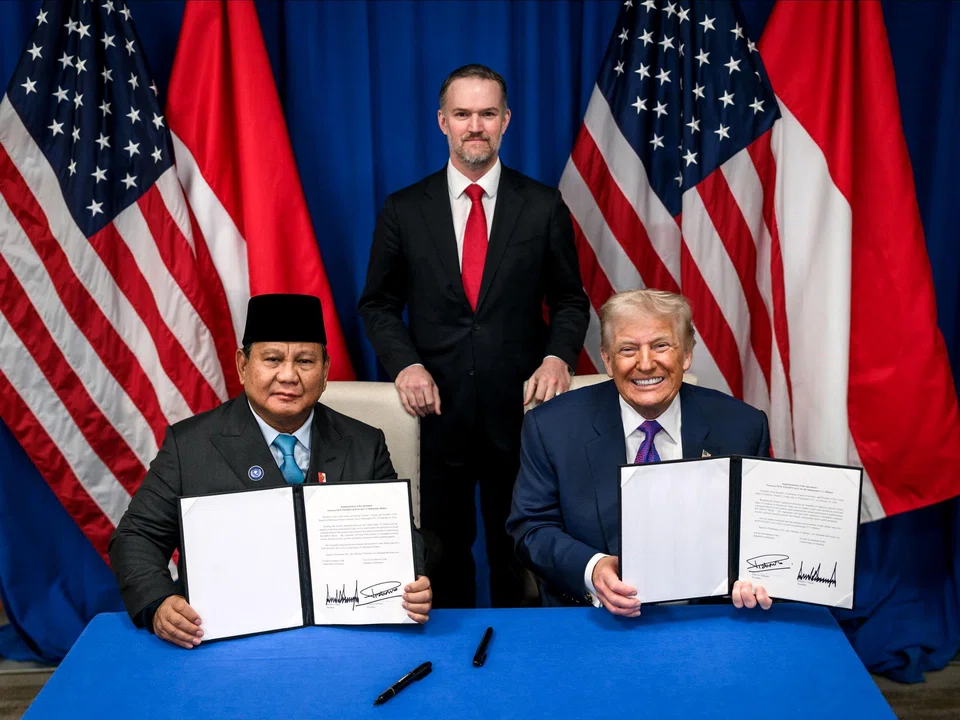
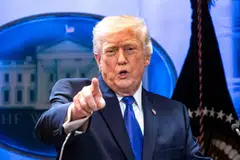
[SINGAPORE] The US Supreme Court may have invalidated most of President Donald Trump’s tariffs with its Feb 20 ruling, but the White House is still expecting governments to abide by reciprocal trade agreements.
The latest indication of this was found in the US trade policy agenda for 2026, released by the Office of the US Trade Representative (USTR) on Monday (Mar 2).
It said: “Although the tools for implementing and maintaining tariffs in connection with the ARTs (agreements on reciprocal trade) are subject to judicial review, and may change when appropriate, we expect to continue to work with our partners to implement these deals.”
These ARTs were signed in the months following “Liberation Day” on Apr 2, 2025, when the Trump administration slapped sweeping tariffs on foreign imports. Several economies in South-east Asia were initially hit with some of the highest duties.
Of the ARTs the US has signed, the trade policy agenda showed that three were with South-east Asian countries – Malaysia, Cambodia and Indonesia.
Two other economies in the region – Vietnam and Thailand – have framework deals, which the Trump administration is looking to upgrade to an ART or its equivalent, based on the document.
The US tariff on imports now stands at 10 per cent and could rise to 15 per cent. This comes after Trump invoked Section 122 of the 1974 US Trade Act, which allows the president to impose tariffs of up to 15 per cent for 150 days without congressional approval to address significant balance-of-payments deficits or currency depreciation.
Some of the tariff rates in the ARTs are higher than the current duty, but analysts think governments will still follow through and work towards ratifying them.
Deborah Elms, head of trade policy at the Hinrich Foundation, told The Business Times that governments with ARTs may have considerations beyond trade, such as security.
She also pointed out that they may have accepted these deals because they were comfortable with what they would receive in return, or negotiated them despite knowing that Trump’s reciprocal tariff policy could be legally challenged.
For example, the ART with Indonesia would allow zero import duties on 1,819 Indonesian tariff lines entering the US, ranging from palm oil and coffee to semiconductor components and aircraft parts.
And while some governments – such as Malaysia’s – have said that they are assessing the recent legal and policy developments in the US and are seeking further clarity, analysts pointed out that America still has other means to introduce more painful measures that would push governments to adhere to the ARTs.
Dr Elms noted that the US trade policy document has a paragraph indicating that the USTR could initiate new Section 301 investigations or use other enforcement mechanisms to address trade distortions.
Section 301 of the 1974 Trade Act allows the USTR to penalise foreign nations for unfair trade practices, such as intellectual property theft or discriminatory policies. It was applied to China recently, and Dr Elms said that the US previously used it to target Japan in the 1980s.
She added that the size of the US market and its security partnerships are still significant to some governments, thus giving the Trump administration leverage.
Stephen Olson, a visiting senior fellow of the regional economic studies programme at the Iseas-Yusof Ishak Institute, holds a similar view.
“From the perspective of trade partners in South-east Asia, I’m not sure anything has changed. Trump will still have his tariff hammer – he will simply have to use different legal authority in order to swing it,” he said.
He added that any government which attempts to use the Supreme Court ruling to justify renegotiating or abrogating its trade deals with the US could find itself facing far harsher retaliation down the line, based on Trump’s track record.
“It’s clear the administration views the Supreme Court ruling as little more than a speed bump,” he said. “Officials including (USTR Jamieson) Greer have made it clear that the tools will change, but the policies will remain the same.”
Decoding Asia newsletter: your guide to navigating Asia in a new global order. Sign up here to get Decoding Asia newsletter. Delivered to your inbox. Free.
Copyright SPH Media. All rights reserved.






