



Vertiv bets on Johor as AI infrastructure boom shifts from data centres to manufacturing
While 75% of production from its Senai facility caters to Malaysia, the remainder will serve other markets

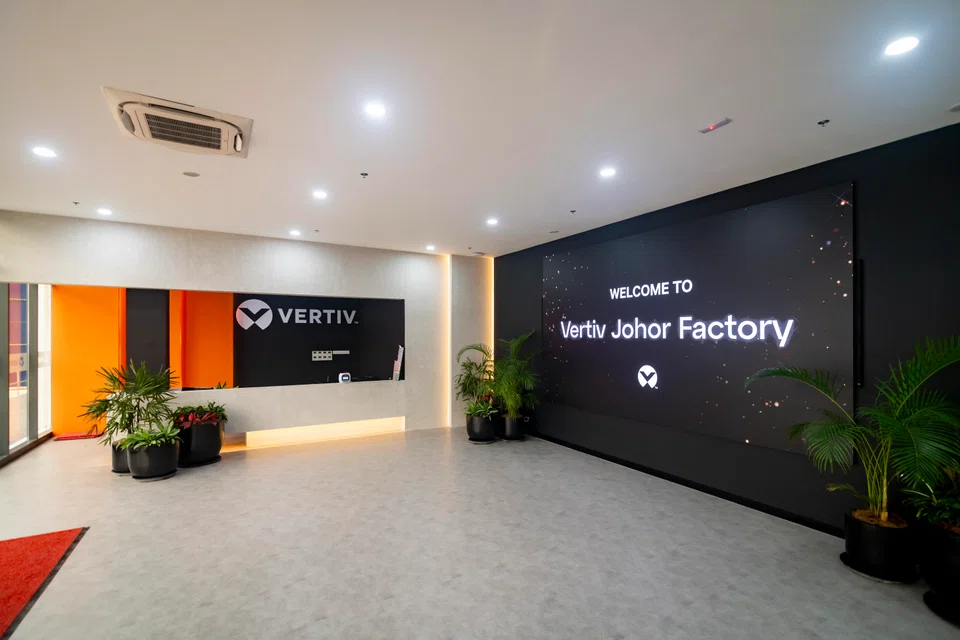
[JOHOR BAHRU] The race to build artificial intelligence data centres across Asia is no longer just attracting cloud giants and developers. It is increasingly drawing the companies that build the critical equipment behind them.
That shift was evident as US-listed Vertiv officially opened a manufacturing facility in Senai, Johor, betting that demand for power and cooling infrastructure will continue to surge as AI reshapes the region’s digital economy.
Vertiv’s new 236,000-square-foot facility will manufacture, assemble and test advanced thermal management systems, modular power solutions and prefabricated infrastructure for customers across South-east Asia, North Asia, Australia and New Zealand. The plant is expected to employ up to 500 people when fully operational in 2027.
The investment comes as AI workloads drive unprecedented demand for specialised power and cooling equipment, prompting suppliers to establish production closer to one of the world’s fastest-growing data centre markets. “The expansion of Vertiv’s footprint in Malaysia aims to further enhance our ability to support customers with quality, speed, scale and resilience,” Vertiv CEO Giordano Albertazzi said in a pre-recorded video address during the opening ceremony on Wednesday (Jul 1).
For Johor, Vertiv’s arrival marks another step in the state’s transformation from simply hosting hyperscale data centres to becoming part of the regional supply chain supporting AI infrastructure.
Invest Johor CEO Natazha Hariss said the state has approved 52 data centre projects to date, of which 17 are already operational. Although the state has tightened approval for future data centre developments, focusing on AI-related data centres, the move is intended to raise the quality of investments rather than slow growth.
As the sector matures, he said Johor is seeing increasing opportunities for critical hardware manufacturers, engineering firms and solution providers that support AI infrastructure, beyond the data centre operators themselves.
For Vertiv, locating production closer to customers has become a competitive advantage.
“We’re probably one of the first critical data centre infrastructure manufacturers in Johor to support the AI growth,” Vertiv Asia vice-president of operations and service operations Andrew Whall told The Business Times.
“It significantly reduces our lead times, and customers appreciate having us on their doorstep. Instead of flying to the US, Europe or China to inspect equipment, they can simply drive here, inspect production and witness product-testing,” he added.
While about 75 per cent of production from its Senai facility caters to Malaysia’s domestic market, the remaining will serve other markets, such as Australia, said Whall.
He added that the facility will ultimately supply customers across Indonesia, Thailand, Japan, South Korea, Australia, New Zealand and Pakistan. China and India are excluded because Vertiv already has dedicated manufacturing operations in those countries.
“We’re seeing a lot of demand from Malaysia, Australia – particularly Sydney and Melbourne – as well as Tokyo, Osaka and Korea… Jakarta is also starting to pick up rapidly, and we’re seeing increasing investment in places like Batam,” said Whall.
The company expects the Johor facility to also strengthen its competitive position by reducing delivery times.
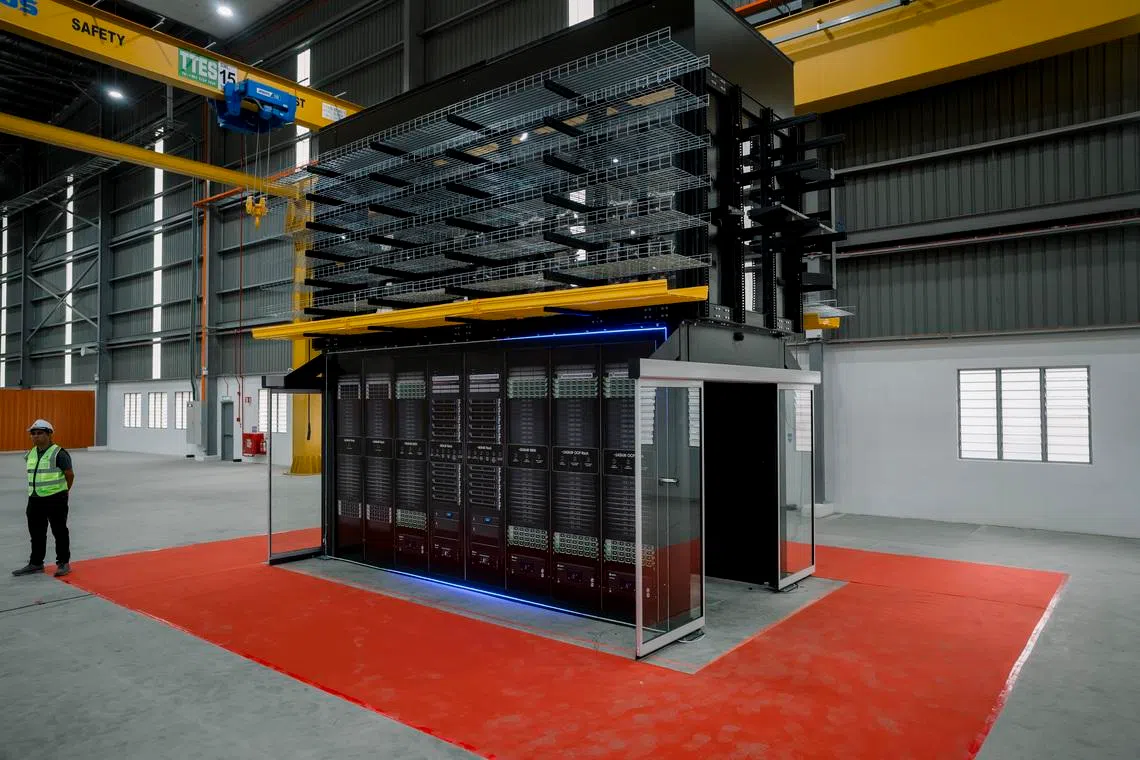
According to Vertiv, its modular power systems can reduce deployment times by up to 50 per cent, while its SmartRun integrated overhead infrastructure can shorten on-site installation by as much as 85 per cent compared with conventional construction.
Vertiv also collaborates with Nvidia to co-design systems that enable data centres to run high-density, next-generation AI graphics processing unit workloads.
Why Johor?
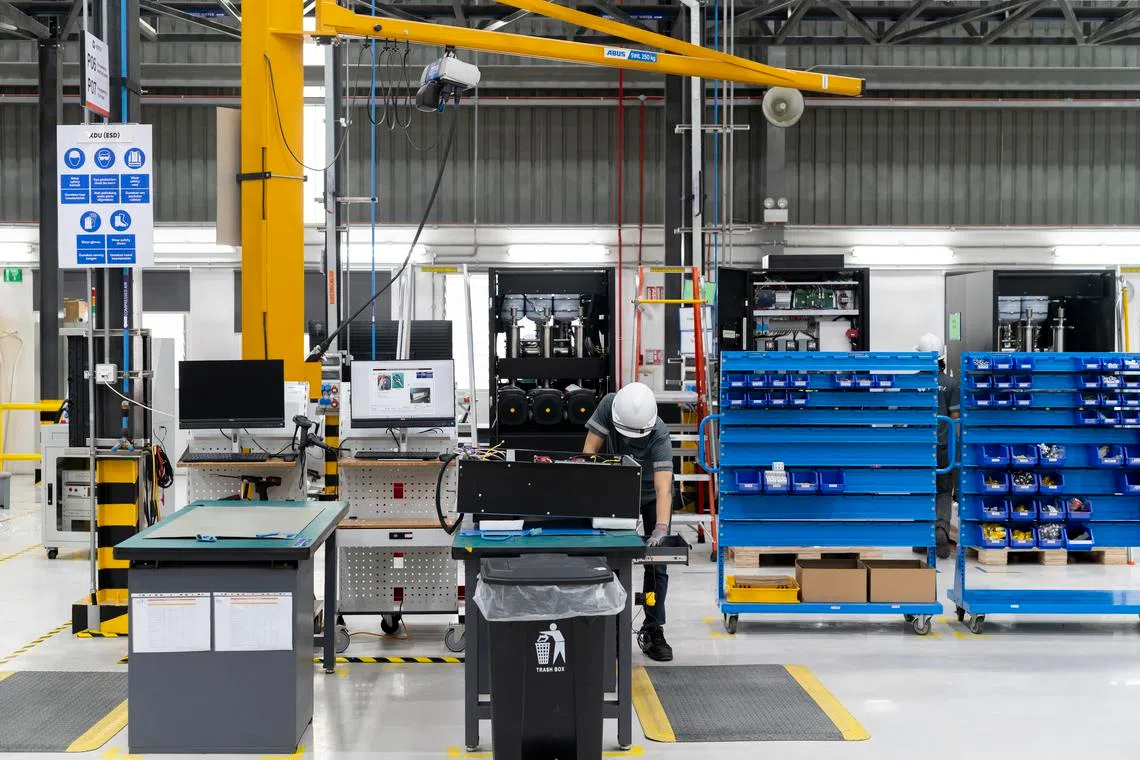
Johor has attracted billions of ringgit in data centre investments over the past several years, fuelled by its proximity to Singapore, abundant industrial land and relatively competitive power costs.
More recently, equipment suppliers, engineering firms and supporting manufacturers have established operations alongside data centre developers, creating a more integrated industrial ecosystem.
Whall noted that a growing manufacturing base was one of the key reasons Vertiv selected Johor. “When I lived in Singapore years ago, Johor was somewhere you drove through on the way to Kuala Lumpur,” said Whall.
“Today it’s completely different. It’s not just the data centres – it’s the entire industrial ecosystem that’s growing around them. Around Senai, you can see new factories and industrial developments across many different sectors.”
He added that Vertiv received strong support from investment agencies, contractors and local businesses while setting up operations, helping the company establish the facility within two years.
Although the factory is still ramping up production, the company has already hired nearly 150 employees, almost all of them Malaysians, with plans to reach around 500 by the middle of next year.
Many of those positions are high-value roles covering mechanical, electrical and manufacturing engineering, alongside quality specialists and advanced manufacturing engineers connected directly to Vertiv’s global network. “We are also starting partnerships with universities and technical institutions to attract interns and graduates… Developing local talent benefits us, but it also benefits the wider economy,” Whall said.
Sourcing more materials locally
Beyond employment, Vertiv is also looking to deepen Malaysia’s participation in its global supply chain.
Whall said the company aims to source about 80 per cent of materials used in products manufactured at the Johor plant from Malaysia, ideally from suppliers within Johor itself.
Today, the factory already sources sheet metal from Melaka and components from Penang and other Malaysian manufacturers, while working with investment agencies to identify opportunities to localise more specialised parts currently imported from overseas. “Our objective is to bring more of the manufacturing capability and supplier ecosystem closer to this facility,” he said.
The rapid rise of AI is also changing the products customers want, Whall noted. The biggest shift has been in cooling technology.
Traditionally, data centres relied largely on air cooling around server racks. AI servers packed with high-performance graphics processing units, however, generate far greater heat, driving adoption of liquid cooling systems that remove heat directly from the chips.
“Years ago, people wouldn’t have imagined putting liquid anywhere near electrical equipment,” Whall said.
“Now we’re circulating coolant directly over the processors. That’s probably the biggest technological change we have seen.”
At the same time, customers are increasingly seeking prefabricated power modules and integrated infrastructure that can be assembled in factories while the buildings themselves are still under construction, reducing deployment times for new AI facilities.
Despite Johor becoming more selective in approving new data centre projects amid concerns over electricity and water resources, Whall said Vertiv remains confident about long-term demand.
The company generates recurring business from maintaining and upgrading existing facilities throughout their operating life, while the current pipeline of approved projects across Malaysia and the wider region remains substantial. “Our work doesn’t stop once a data centre is built… We help customers maintain, optimise and improve the efficiency of those facilities throughout their lifecycle,” said Whall.
TRENDING NOW

Britain’s mansion tax shows the difficulty of targeting wealth

Once staunchly pro-China, Malaysian Chinese businesses are now distancing themselves from Beijing

The only common thing in S-E Asia is that we all eat rice: Cisco’s Asean president
Singapore data centre operator DayOne opts for US IPO at likely US$20 billion valuation

