



Vietnam banks strain to finance Hanoi’s double-digit growth push
This is driving the country to seek overseas funding for its large infrastructure pipeline
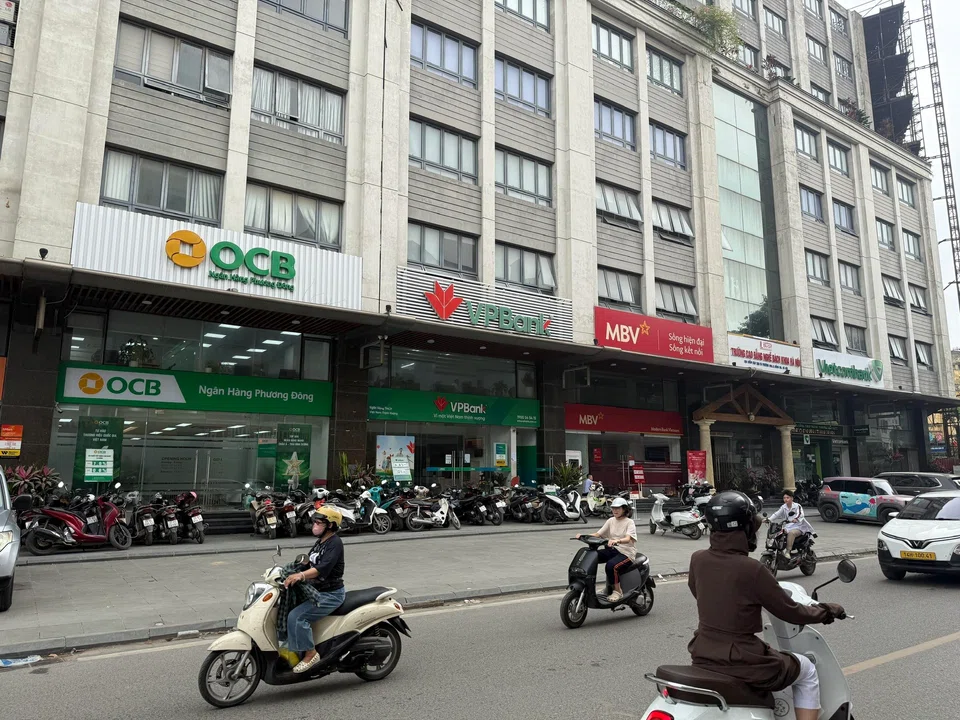
HANOI is in urgent need of bringing more foreign capital into its economy as local banks strain to finance large-scale projects that are underpinning Vietnam’s pursuit of double-digit growth this year and till 2030.
Nguyen Thanh Tung, chairman of Vietcombank, Vietnam’s largest listed bank by market capitalisation, delivered the warning at a government-business conference chaired by Prime Minister Le Minh Hung on Saturday (Jul 18). Tung said that the country’s domestic savings will not be sufficient to fund the scale of investment being planned.
To achieve economic growth of about 10 per cent, total investment would need to reach roughly 40 per cent of gross domestic product. Vietnam’s domestic savings rate stands at only about 36.5 per cent, indicated calculations by the state-owned bank’s macroeconomic research team.
“The core issue is that banks will no longer have sufficient capital to meet credit demand, particularly for the many large-scale projects expected in the coming period,” Tung said in a post on the government portal. “The inevitable solution is to mobilise capital from external sources.”
Vietnam has long relied on local commercial banks as the economy’s principal source of capital. Its credit-to-GDP ratio reached 145 per cent in 2025, the highest in Asean and among the highest in lower middle-income economies, indicated the World Bank.
The government wants banks to increase lending to infrastructure, manufacturing and priority sectors such as social housing, while keeping borrowing costs affordable.
Yet domestic banks rely largely on short-term funding, while the savings pool is not expanding quickly enough. At the same time, lenders are struggling to keep interest rates low amid intensifying competition for funding and persistent inflationary pressures.
State Bank of Vietnam (SBV) governor Pham Duc An said at the same conference that the regulator has had a relatively “difficult” time managing interest-rate policy because capital demand has been very high while funds mobilised from the economy remain limited.
The SBV has introduced a range of measures to ease liquidity pressure and create more room for credit growth. It raised the share of short-term funding that banks can use for medium and long-term lending, while allowing State Treasury deposits at commercial banks to expand.



Open-market operations and foreign-exchange swaps are also used more flexibly to inject liquidity when needed, while a special financing channel is being opened to direct credit towards strategic megaprojects.
“When there is a shortage of capital, interest rates naturally rise,” he noted. “When deposit rates rise, lending rates rise – and that directly affects companies’ production and business activities.”
Funding comfort fades
Quan Trong Thanh, head of research at Maybank Investment Bank Vietnam, believed that Vietnam’s banking system is no longer operating with the funding comfort seen in 2023 and 2024.
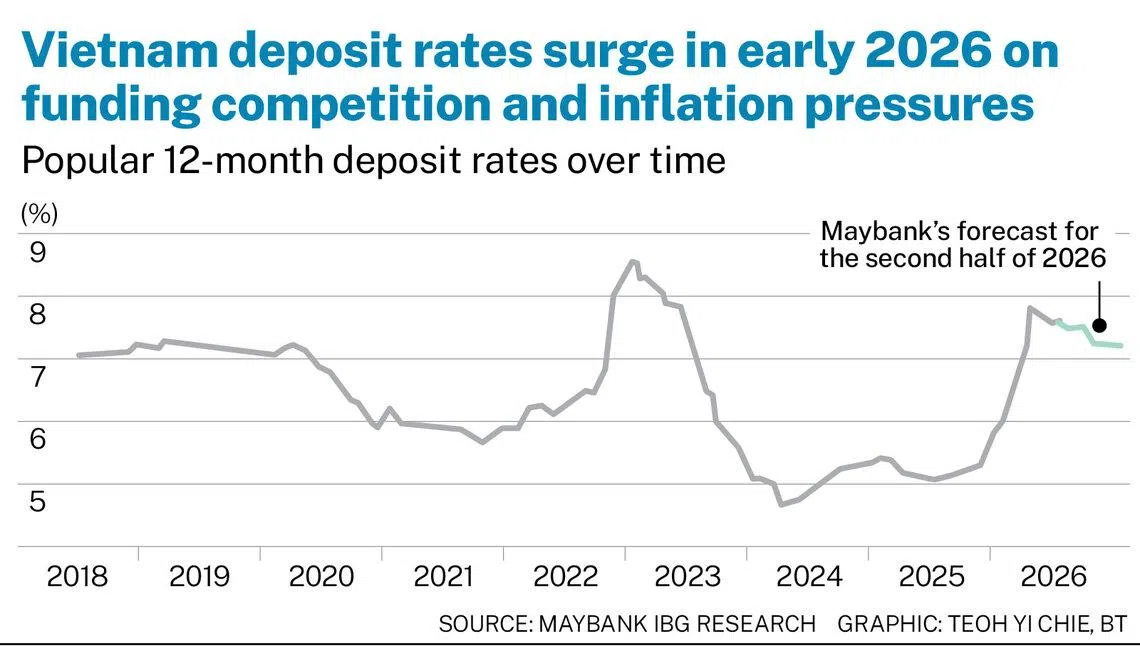
Vietnamese banks will have to “accept a mobilisation cost of around 7 per cent” in the period ahead, he said. The 12-month deposit rates likely peaked at 7.5 to 8 per cent in the second quarter of 2026 and could gradually ease towards 7 per cent by year-end, indicated Maybank’s forecast.
Lending rates would take longer to follow but corporate rates need to remain within the 8 to 11 per cent range, and home-loan rates at around 10 per cent to avoid a sharp rise in bad debt and a collapse in credit demand, he added.
“Banks need time to build a sufficiently large pool of lower-cost funding before their overall funding costs can meaningfully decline,” Thanh said.
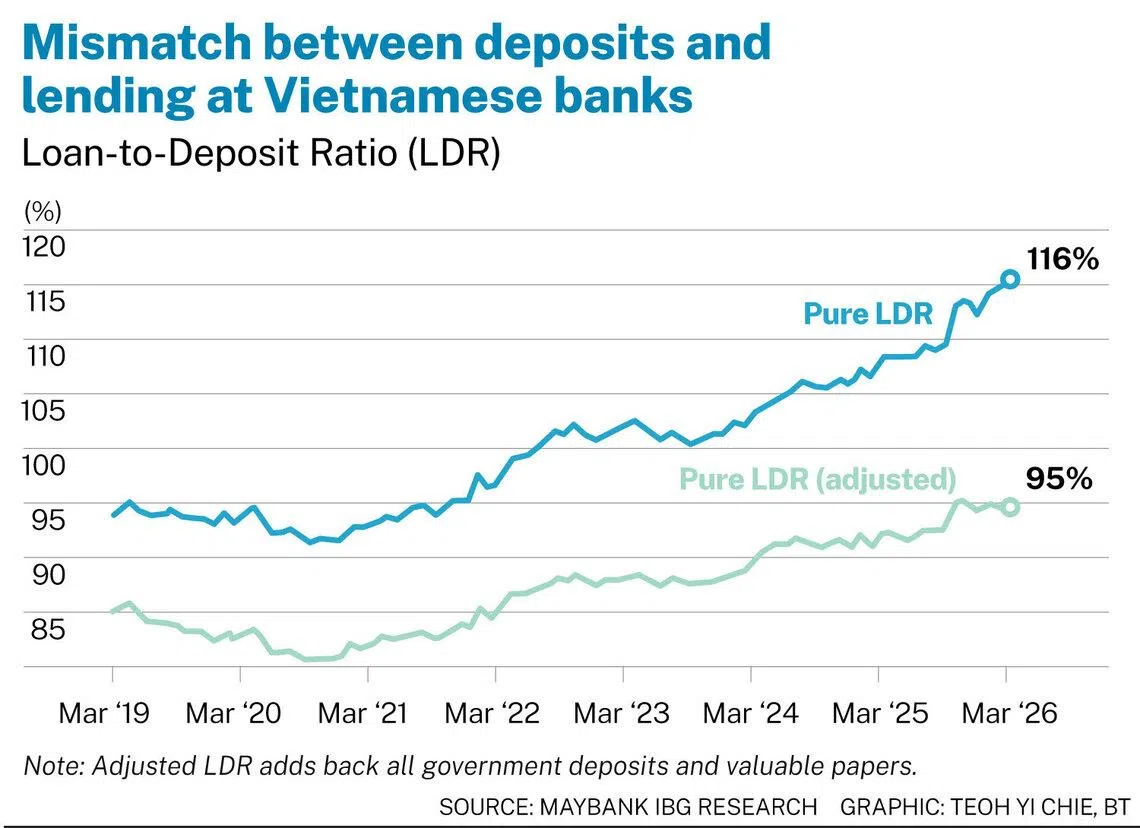
However, he added that Vietnamese banks are not facing an immediate liquidity crisis arising from a mismatch between customer deposits and lending. This is because they usually draw on other funding sources, which include certificates of deposit, bond issuance, long-term foreign borrowing and Treasury deposits.
Broadening the funding base
Vietnamese private-sector banks are increasingly turning to international lenders for large-scale, longer-term funding, including VPBank’s US$1.44 billion sustainability-linked syndicated loan facility and HDBank’s US$721 million syndicated social loan – both were announced over the past month.
Vietcombank’s Tung also urged the finance ministry to consider issuing international sovereign bonds. He argued that the government could obtain more attractive pricing than companies borrowing individually.
He also called for a stronger corporate bond market. Its size was only about 10 per cent of GDP, he said, far below markets such as Thailand, Malaysia and China.
In response, the central bank said that it is proposing amendments to banking legislation that would allow commercial banks to provide collateral-management services for corporate bond issuances.
“We hope this will also become a channel through which the capital market can develop and shoulder part of companies’ medium and long-term funding needs,” SBV’s An noted.
Speaking at Bloomberg Businessweek Vietnam’s Infrastructure Symposium on Jul 9, Nguyen Quang Thuan, chairman of Hanoi-based financial service provider FiinGroup, said that bank loans will remain important for Vietnam’s infrastructure push but “the banking system cannot meet the need alone”.
To finance large-scale infrastructure projects, Vietnam needs to structure deals through special-purpose vehicles and draw on blended finance, project bonds and private equity, supported by credit-enhancement tools such as guarantee mechanisms from local and international institutions.
Not-yet-bankable projects
Access to offshore capital, however, is only one part of the problem. International investors will not finance projects simply because Vietnam needs the money.
“The real challenge is whether suitable projects exist, and whether they are bankable,” Thuan said.
Helen Han, a principal investment officer at International Finance Corporation, said during the symposium that the institution invested a total of US$9.5 billion in infrastructure projects across emerging markets in the 2025 fiscal year, but only about US$20 million was allocated to Vietnam.
“One of the key points for Vietnam in terms of attracting infrastructure investment is bankability,” Han added, citing contractual frameworks that have not permitted long-term financing from international lenders, especially in the power sector.
Important provisions would typically include availability payments that ensure stable long-term revenue, compensation for lenders following termination, protections against changes in law and effective arbitration arrangements.
“We have a lot of appetite to finance in Vietnam,” she pointed out. “But the regulatory framework has to be in a position where we would be comfortable taking on that kind of risk.”
Below-investment-grade status
Maybank estimated that Vietnam’s debt costs are currently 3.8 percentage points higher than Malaysia’s and 5.7 points above Thailand’s. Fitch rates both countries “BBB+”, three notches above Vietnam’s sovereign rating of “BB+”, which is one notch below investment grade.
Large mutual funds and pension funds operating from global financial centres such as London and New York often face restrictions on investing in below-investment-grade debt, Thuan added.
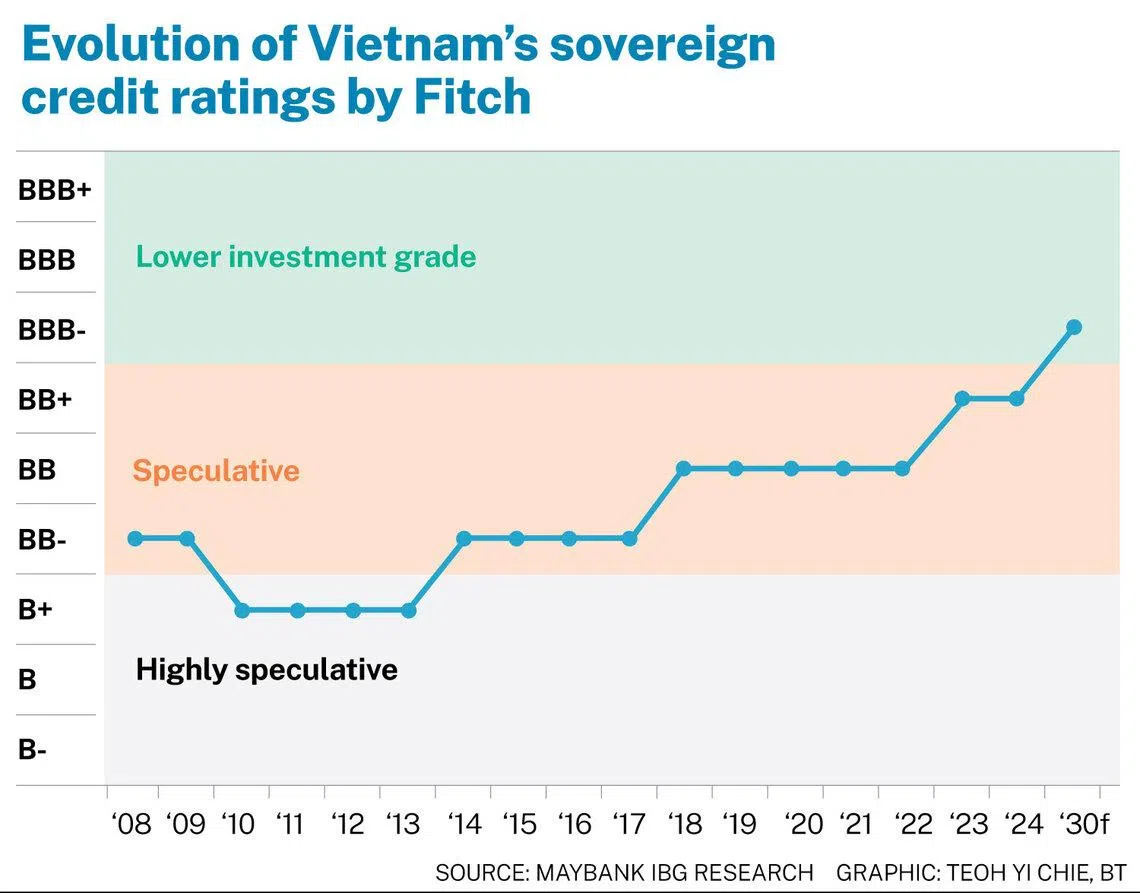
Analysts said that an improvement in Vietnam’s sovereign credit rating, with the country aiming to achieve investment-grade status by 2030, could significantly broaden its investor base and reduce the funding-cost disadvantage. This would be on a far greater scale than its recent stock-market upgrade.
If Vietnam moved from “BB+” to “BBB-”, US dollar borrowing costs for the central government or its municipalities could fall by about 0.5 to 1.5 percentage points, indicated FiinGroup’s calculations.
As part of efforts to support such an upgrade, the central bank is developing new rules to move the banking system from its existing prudential framework towards Basel III, a more comprehensive and stringent set of international banking standards.
It has also committed to greater transparency, including publishing official data on foreign-exchange purchases and reserves beginning in 2027.
“If Vietnam achieves double-digit growth, it will be a superstar globally,” Thuan said. “But the more important thing international investors are watching is how the country finances that growth so it is genuinely sustainable.” THE BUSINESS TIMES
Decoding Asia newsletter: your guide to navigating Asia in a new global order. Sign up here to get Decoding Asia newsletter. Delivered to your inbox. Free.
Share with us your feedback on BT's products and services
TRENDING NOW

DBS, OCBC, UOB rout lops billions off STI as inflation, rate concerns spook investors

Grab CEO’s wife Chloe Tong on life with Anthony Tan and finding her purpose

OCBC sheds S$8 billion in value as shares close nearly 6% down; analysts cautious on banks

Deal between tycoon friends sparks scrutiny of Philippine power sector

