



Vietnam ready to act to stabilise dong, will boost liquidity
Its central bank will ensure the government can meet a goal of 10% growth in 2026 without overheating the economy
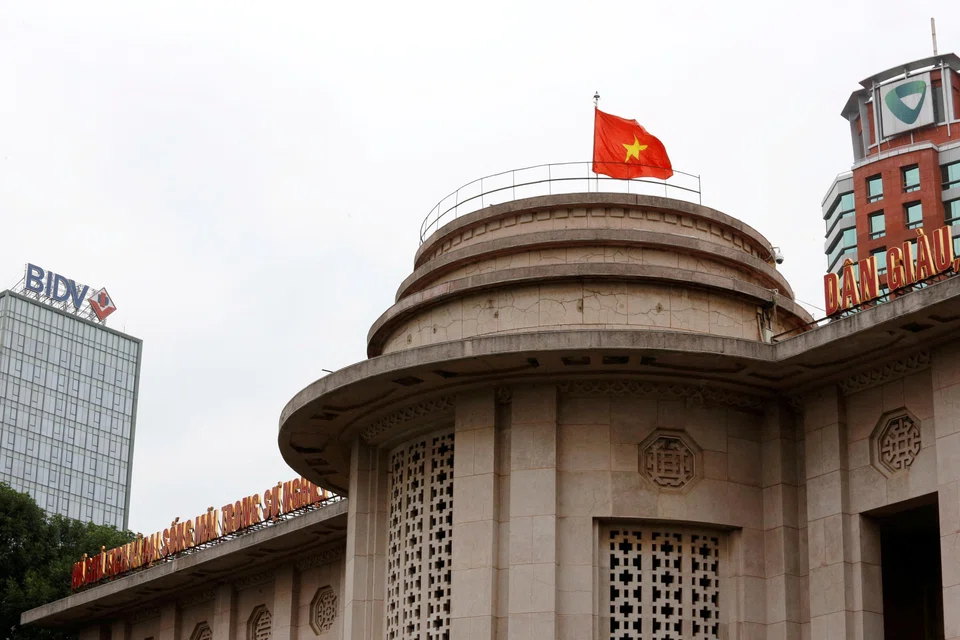
[HANOI] Vietnam’s central bank said it is prepared to intervene to ensure stability in the foreign-exchange market, vowing to also contain inflation and improve liquidity issues facing the banking system.
The dong faces pressure “from complex, unpredictable global developments and domestic challenges”, Pham Chi Quang, the head of monetary policy for the State Bank of Vietnam (SBV), said at a quarterly briefing in Hanoi.
“In this context, the State Bank manages the dong’s exchange rate flexibly to help absorb external shocks, while coordinating other monetary policies to stabilise the local foreign-exchange market.”
The central bank has the critical task of ensuring the government can meet a goal of 10 per cent growth in 2026 without overheating the economy or fuelling bad loans.
Vietnam’s parliament on Apr 7 tapped Pham Duc An, 56, former head of the nation’s biggest agricultural lender, as the head of SBV.
The new prime minister and vice-chairwoman of the National Assembly are both ex-governors.
Vietnam has achieved staggering levels of growth in the past decade, emerging as a key exporter of everything, from shoes to machine parts.
However, tariffs and the energy shock emanating from the Middle East are threatening its success.
At the same briefing, Pham Thanh Ha, the deputy governor of SBV, said: “Escalating geopolitical tensions, especially in the Middle East, have unsettled global markets – putting pressure on monetary policy in open emerging economies such as Vietnam.”



The dong is little changed against the US dollar in 2026, but the central bank has seen outflows in the past, not least as individuals buy gold as a hedge against currency losses and inflation.
Ha said: “Gold prices remained highly volatile in the first three months of 2026, driven by escalating geopolitical tensions, military conflicts and intensifying global strategic competition.”
He noted the central bank will monitor developments and act where needed to strengthen management and stabilise the gold market.
In addition, he said, the central bank will manage the money supply in a manner that will ensure sufficient liquidity in the banking system.
“Credit growth must go hand-in-hand with safe lending,” he noted, adding it must also be balanced in relation to deposit growth.
Fitch Ratings in April said Vietnam’s banks face margin pressures, as they compete for market share and see deposits grow more slowly than loans.
It warned that “an expansion of the SBV’s 2026 credit-growth quota could intensify deposit competition and further compress margins”.
Loans rose 3.18 per cent in the first three months of 2026, and the central bank is maintaining its 15 per cent credit-growth target for this year, though an adjustment is possible. BLOOMBERG
Decoding Asia newsletter: your guide to navigating Asia in a new global order. Sign up here to get Decoding Asia newsletter. Delivered to your inbox. Free.
Share with us your feedback on BT's products and services
TRENDING NOW

DBS, OCBC, UOB rout lops billions off STI as inflation, rate concerns spook investors

Grab CEO’s wife Chloe Tong on life with Anthony Tan and finding her purpose

OCBC sheds S$8 billion in value as shares close nearly 6% down; analysts cautious on banks

Deal between tycoon friends sparks scrutiny of Philippine power sector

