



What will power South-east Asia in the coming year? 5 trends to watch in 2026
Trade and tariff issues to remain critical, as foreign and domestic investments drive the region forward

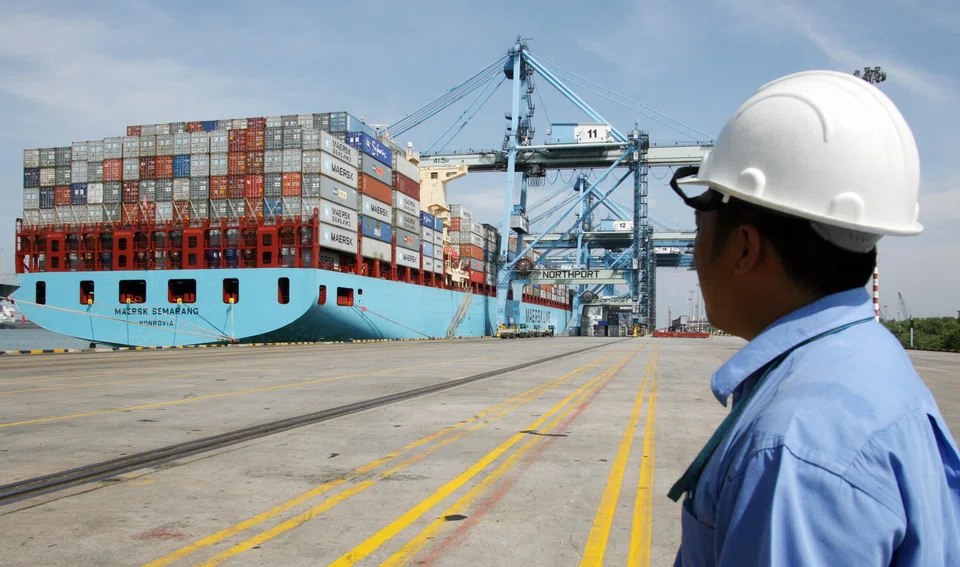
[SINGAPORE] Fears of a major trade slowdown in 2025 following a barrage of US tariffs turned out to be less destructive than expected, as South-east Asia’s growth remained relatively resilient.
Front-loaded shipments, electronics exports and foreign direct investment (FDI) turned out to be the engines behind the region’s resilience this year. This was even as domestic spending and consumer confidence struggled in some economies.
Still, uncertainty remains ever-present in South-east Asia. The Business Times looks at five engines that could power the region in the new year.
1. Trade resilience amid tariff troubles
South-east Asian states have been relatively less successful in their negotiations with the US compared to most of Asia. Only Malaysia and Cambodia have signed formal trade agreements with the US, though Indonesia is set to finalise a deal in the coming weeks.
Meanwhile, high tariffs of around 20 per cent imposed on Indonesia, Thailand, Vietnam, Malaysia, the Philippines and Cambodia will continue to have an impact on the region’s trade.
“For most Asean nations, the latest tariff rates remain largely unchanged from (those announced in) August, thereby reducing the tariff gap versus China,” noted Deepali Bhargava, chief economist for the Asia-Pacific at ING.
However, tariff exemptions in key sectors – particularly semiconductors and electronics – have been crucial to the region’s trade resilience.
US President Donald Trump’s rolling back of tariffs on about 200 food items in November, as inflation concerns in the US mounted, will provide an uplift to the region’s agriculture exports – particularly Indonesia’s, Bhargava said.
She added: “Thailand, the Philippines and Vietnam should experience positive spillovers, albeit to a lesser extent, as they maintain meaningful exposure to food and agricultural exports.”

But most experts agree that US trade policy, particularly its trade war with China, remains fragile and a notable downside risk for the region’s trade.
“A re-escalation of the US-China tariff war could ripple across Asian manufacturing and tech supply chains,” Maybank noted.
It added that even countries with lower reciprocal tariffs, such as Singapore, could be significantly hit should the US impose fresh tariffs on key sectors like semiconductors and pharmaceuticals.
2. Domestic growth
Besides external trade, many of the region’s growth drivers in the new year will come from its domestic economies.
Such a development proved challenging for some in 2025, as border tensions in Thailand and public protests in the Philippines and Indonesia stymied confidence.
But weak household spending could pick up in 2026 as lower inflation and the delayed impact of rate cuts benefit consumers, Bhargava said.
For some South-east Asian economies that have been dovish on monetary policy since late 2024, domestic demand is likely to be supported by further easing, noted Maybank economists.
With markets likely to price in three projected cuts by the US Federal Reserve, Maybank expects central banks in Indonesia and the Philippines to cut benchmark rates by 75 basis points each, and Thailand to lower rates by another 25 basis points following its rate cut last week.
Still, the recovery will depend on these economies’ ability to shake off ongoing political concerns.
Deutsche Bank economists Vaninder Singh and Joey Chung said in a December report that the Philippines faces a particularly challenging outlook for the coming quarters, as a corruption scandal continues to scupper growth.
With a fall in public spending being the primary factor behind the country’s poor growth in the third quarter of 2025, they noted that private activity is likely to sag further in the year ahead. “The risk is for an even deeper easing cycle.”
They added that for both Indonesia and the Philippines, contracting domestic spending and narrow fiscal space could remain as material drags in the first half of the 2026.
Meanwhile, Thailand resumed its easing cycle last week after surprising analysts by holding its policy rates in October.
“Slowing growth and persistent deflationary pressures will prompt the Bank of Thailand to lower its policy rate to a terminal rate of 1 per cent by the end of 2026,” BMI said in a November report. This is as a border skirmish with Cambodia continues to weigh on confidence.
The conflict, which escalated in December despite a peace deal brokered by Trump in October, could further disrupt the two countries’ economic links, Maybank noted. It also said that trade negotiations with the US could stall with renewed tensions.
Conversely, easing cycles may have come to an end in Malaysia, Singapore and Vietnam, which are expected to maintain their policy stances, Maybank said.
Growth has exceeded 2025 expectations in these countries, but inflation risks could escalate in 2026 as fragmented supply chains, rising energy demand and geopolitical shocks threaten to push prices higher.
3. Can FDI in Asean reach the next level?
As South-east Asia’s economies were struck with heavy US tariffs, many feared that the region would lose its appeal – relative to China – as an alternative investment destination within value chains.
But Macquarie analyst Jayden Vantarakis noted that this does not seem to be playing out. Global supply chains have not abandoned the “China Plus One” strategy and continue to move manufacturing capacity into the region – particularly to Vietnam, Thailand and Indonesia.
Meanwhile, Malaysia is standing out as a relocation destination for higher-value industries.
Most of the region’s economies put up a strong showing in attracting FDI in 2025. Maybank noted: “FDI metrics continued to improve in Malaysia, Vietnam and Thailand in 2025, but slowed in Indonesia and the Philippines.”
The bank projected that these investments will continue their trajectory in 2026, with Indonesia set to experience a turnaround in its FDI woes.
And it is not just the region’s manufacturing sector that is receiving interest from abroad.
South-east Asian governments have increasingly rolled out incentives in high-tech sectors for foreign investment – led by Thailand’s electric vehicles and Malaysia’s semiconductor industries – which could prove crucial to their growth potential in 2026.
A significant chunk of the region’s FDI is being driven by capital expenditure in artificial intelligence (AI)-related investments, largely from the US and China.
“In 2026, America’s six large hyperscalers (plan) to increase capex by about 36 per cent,” Maybank noted.
This has resulted in investments in data centres, AI research and development facilities, and other cloud-related capex across the region. Malaysia and Thailand have emerged as the most prominent beneficiaries of this.
For instance, Maybank highlighted ByteDance’s commitment to invest US$8.8 billion in Thailand over five years. It also cited data centre provider Stack Infrastructure’s planned 220-megawatt campus in Johor, the first phase of which is set to be completed by Q4 2026.
4. The sovereign wealth making this happen
Further, state investment vehicles are stepping up and playing a more active role in driving domestic growth through their sovereign wealth funds.
For instance, observers are closely watching Indonesia’s Danantara for its plan to take a golden share in a possible merger of regional tech giants Grab and GoTo.
Key strategic pursuits within South-east Asia could also receive greater investment from state funds, including Malaysia’s Khazanah, which recently moved to safeguard the country’s economic stake in rare earth refinement.
“Funds in South-east Asia appear to have shifted their strategic focus more towards domestic opportunities,” noted Jamus Lim, an associate professor of economics at the Essec Business School.
The region welcomed two of its newest sovereign wealth funds this year, with Indonesia launching its second state investment fund, Danantara, in early 2025; and the Philippines’ Maharlika Investment Fund making its first investments since its creation in 2023.
Private markets are also gaining momentum as South-east Asian sovereign wealth funds seek to anchor large transactions. For example, Singapore-based investment fund Granite Asia announced in December that its pan-Asia credit fund had secured more than US$350 million from state-backed investors Temasek, Khazanah and the Indonesia Investment Authority.
More of such deals could come in the year ahead, with Asia’s private credit market projected to grow 46 per cent to US$92 billion by 2027.
5. Will private capital make a comeback?
Furthermore, South-east Asia’s long-stagnant private equity and venture capital ecosystem could get a much-needed boost, following the launch of the Asean Private Markets Council in September.
With the region’s private capital space representing just 0.5 per cent of the region’s gross domestic product – far below the global average of 1.5 per cent – a rebound could be on the cards for 2026. Industry players are cautiously optimistic about the year ahead.
“Many regional (private market) players headquartered in Singapore and Indonesia are showing renewed activity, while Vietnam’s ambitious growth targets continue to create compelling opportunities,” Thom Abbott, head of South-east Asia, primary markets, at the London Stock Exchange, told BT.
“From a sector perspective, fintech, healthcare and energy remain areas of strong interest.”
The region’s private equity market has struggled in recent years, as liquidity shortages amid economic uncertainty led to South-east Asia’s deal value dropping by a staggering 35 per cent in the first half of 2025.
But infrastructure support and regional cooperation could spark hope for cross-border solutions within the region’s private markets, Abbott said.
A further pickup in initial public offering activity in the region could also provide hope as exit opportunities for the beleaguered market emerge.
“Importantly, global emerging-market investors are now looking beyond China, and Asean is well-positioned to capture that reallocation of capital,” Abbott noted.
Decoding Asia newsletter: your guide to navigating Asia in a new global order. Sign up here to get Decoding Asia newsletter. Delivered to your inbox. Free.
Copyright SPH Media. All rights reserved.
TRENDING NOW

Once staunchly pro-China, Malaysian Chinese businesses are now distancing themselves from Beijing

Looking beyond looming CEO succession, should UOB potentially pursue a transformative merger?

Could stablecoins be the future of money?

Grab CEO’s wife Chloe Tong on life with Anthony Tan and finding her purpose

