



Slowing trade in 2026 could crimp Asia’s growth momentum, but expect tech run to continue, say economists
High-value investments have surged in South-east Asia, but Chinese overcapacity continues to cast doubt, says ING report

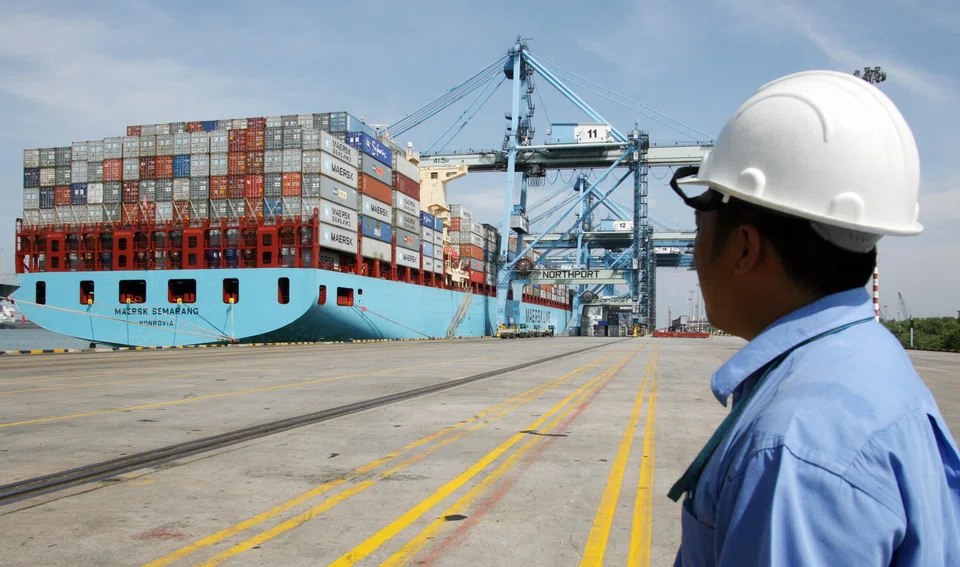
[SINGAPORE] Asia’s growth story in robust exports and investments surprised sceptics in 2025, but the momentum could slow down in the year ahead.
In a report released on Tuesday (Dec 9) by Dutch bank ING, economists projected that Asia’s growth, excluding that of China, would slow to 3.4 per cent in 2026 – down from 4 per cent in the first half of 2025, and 3.6 per cent for the full year.
Much of this decline will be caused by slowing global trade amid US tariffs, the report said. Citing projections by the World Trade Organization, the report noted that global trade volume would slow from 2.4 per cent in 2025 to just 0.5 per cent in 2026.
China and India are set to experience cyclical slowdowns, but the report forecast that Japan and South Korea would buck regional trends, as large fiscal stimulus packages soften the impact of slowing exports.
Tech-led investment to remain strong
Deepali Bhargava, head of Asia-Pacific research at ING, suggested that strong investment in the tech sector is unlikely to slow down in Asia.
Within Asia, artificial intelligence (AI) drove global trade growth up by more than 20 per cent in the first half of 2025, even as non-AI goods suffered from “persistent weakness” in investment.
“AI-related demand is likely to stay resilient, supported by ongoing supply chain diversification toward Asia and sustained investment in advanced computing infrastructure,” she said, referring to the year ahead. “These structural trends should continue to provide a tailwind for technology exporters, even as cyclical factors normalise.”
China’s high-tech sector logged notable development, said ING’s chief Greater China economist Lynn Song in the report.
“Increased sanctions targeting Chinese companies have strengthened the tech self-reliance drive, spurring the creation of domestic champions,” he said.


But the country’s rapid technological developments have also raised concerns over a growing AI bubble, he added.
He noted that the Chinese government recently expressed fears over excessive investment by local governments in high-tech sectors including AI, computing power and new energy.
“This may raise the risk of over-competition and poor resource allocation, especially as banks are called upon to support the national strategy,” said Song.
Bhargava said she expects tech investment to continue to benefit South-east Asian economies, after the supply-chain shifts of 2025 led to increased foreign investment in high-value sectors in the region.
These included investment flows into semiconductors and related high-tech components, as well as electric vehicle production, she said in the report.
With more than 20 per cent of global semiconductor assembly, testing and packaging occurring in South-east Asia, the report noted that countries such as Malaysia, Vietnam and Singapore have attracted substantial investment flows from abroad.
“They are leveraging their established infrastructures, skilled workforces and proximity to major supply chains,” added Bhargava.
Consumer confidence remains doubtful
Meanwhile, weak consumption across Asia – particularly in domestically-focused economies such as Thailand and the Philippines – is likely to recover going into the new year, noted Bhargava.
Lower inflation and the lagged impact of rate cuts are likely to modestly boost consumption within Asia, she said.
“Yet, persistently weak consumer confidence is likely to cap the upside,” said Bhargava.
This is particularly likely in the Philippines, where a domestic corruption scandal could keep wage growth and consumer sentiment muted in early 2026.
In Indonesia, employment struggles could weigh on consumption, as excess capacity in Chinese manufacturing continues to wreak havoc on the country’s retail and manufacturing sectors. Layoffs in the country surged 32 per cent in 2025 to reach 42,000.
China’s impact on South-east Asian economies is unlikely to stop there, as the offloading of cheap goods in the region continues to deepen price competition and cast uncertainty across regional outlooks.
“(China’s) export price index has fallen 15 per cent since 2022, pushing down prices across Asia,” the report noted.
“Car prices fell in Thailand, and smartphone prices in Vietnam also declined,” noted Bhargava. “This deflationary impulse has weighed on margins and investment appetite across the region.”
She noted that if external demand and global growth slows beyond expectations, this overcapacity could worsen disinflationary pressures across Asia.
“This scenario would likely bring policy easing back into focus for several economies in the region,” said Bhargava in the report. ING currently expects rate cuts in India, Indonesia, the Philippines, Taiwan and China in the year ahead.
Nevertheless, the deepening of trade and supply chain ties between Europe and Asia’s economies is likely to open doors in key sectors within the region – including manufacturing, sustainability and infrastructure.
“Asia and Europe are already working together on clean energy, transport and telecom – areas which the European Union brings deep expertise and advanced technology,” the report noted.
Decoding Asia newsletter: your guide to navigating Asia in a new global order. Sign up here to get Decoding Asia newsletter. Delivered to your inbox. Free.
Copyright SPH Media. All rights reserved.
TRENDING NOW

Once staunchly pro-China, Malaysian Chinese businesses are now distancing themselves from Beijing

Looking beyond looming CEO succession, should UOB potentially pursue a transformative merger?

Could stablecoins be the future of money?

Grab CEO’s wife Chloe Tong on life with Anthony Tan and finding her purpose

