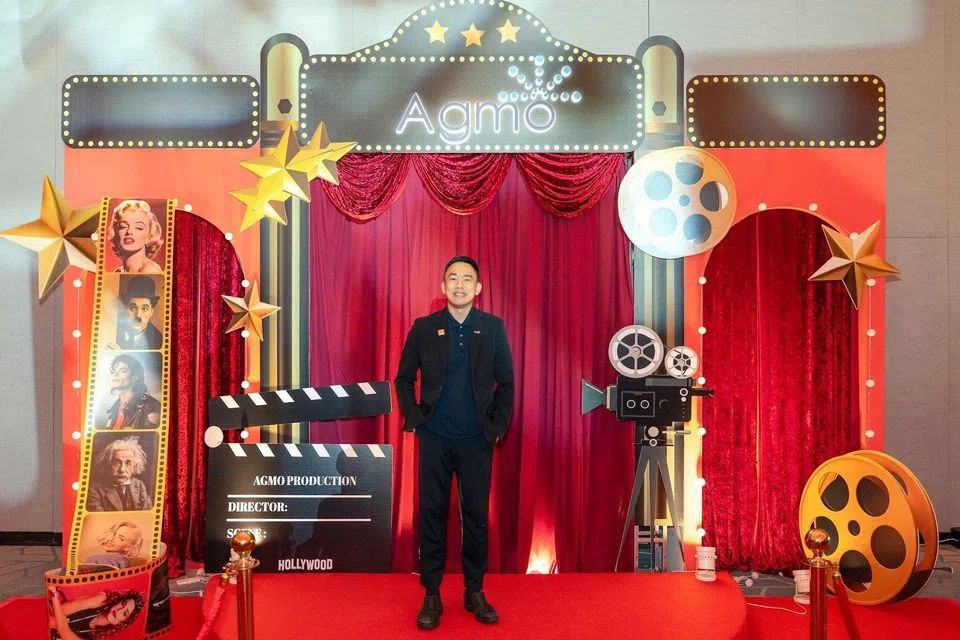
Why Tan Aik Keong of digital solutions specialist Agmo wants to make himself less indispensable
The tech entrepreneur says leadership is about building an organisation that can thrive without him
The strategies and stories that shape today’s leaders
[KUALA LUMPUR] For years, Tan Aik Keong thought being a good leader meant having all the answers.
As Agmo, the digital solutions specialist he co-founded, grew from a small tech startup into a listed company, the instinct for the 41-year-old tech entrepreneur to personally solve technical problems became counterproductive.
“In the early days, I believed being a good leader meant having the answers, getting involved in everything and solving problems quickly,” said Tan, Agmo’s CEO.
Eventually, he realised that approach had made him a bottleneck.
Agmo’s prospectus for its 2022 debut on Bursa Malaysia’s ACE Market identified that dependence explicitly, saying that the group’s continued success and growth depended on Tan for strategic direction and business development, and on co-founders Low Kang Wen and Tham Chin Seng to implement its operational strategies.
The disclosure reflected something Tan had already begun to recognise: Too much knowledge and decision-making remained concentrated among the founders.
That realisation pushed him to switch from problem-solving, to transferring knowledge and empowering his team.
It is a lesson that has become more important given the pace of change in the age of artificial intelligence.
For Tan, who was born and raised in bustling Jalan Ipoh, one of the oldest roads in Kuala Lumpur, Malaysia, the challenge now is to learn quickly, identify what matters and shorten the learning curve for the people around him.
He deemed a recent episode particularly satisfying when he scored 822 out of 1,000 in a Claude certification assessment, while an AI workshop student he had helped train scored 972.
“I feel very proud,” he said. “This is the part that I really want to do.”
His approach is to enter a new domain himself, identify what knowledge is essential, and then turn what he has learnt into a structure or process that others can follow.
The appetite for such knowledge is growing.
Tan recently posted on LinkedIn about a 60-seat meet-up in Selangor on AI automation platform n8n. The places were snapped up in just over an hour, with more than 100 people on the waiting list – without any marketing spend.
Registrants ranged from startup founders, small-business owners and students, to employees of multinational automotive, consulting and logistics companies.
But Tan was quick to add that enthusiasm does not necessarily translate into deployment.
Agmo designs, builds and operates customised digital platforms for companies and government agencies. It counts national telecommunications company TM, sovereign wealth fund Khazanah Nasional and the Malaysian Bar as clients.
The group, which transferred to Bursa Malaysia’s main market in April, has expanded from its roots in mobile and Web application development into areas including AI, cloud management, application support and proprietary digital platforms.
Its revenue more than doubled from RM16.5 million (US$4.1 million) in FY2022 to RM38 million in FY2026.
Tan said that AI services for government, property developers and the agriculture sector are gaining commercial traction, while its Document AI offering is seeing interest from financial institutions.
“AI helps us open more doors to corporates where we historically haven’t had access,” he said.
Tan’s ambitions now extend beyond Agmo. He co-founded Konsortium AI Negara, served as chief editor of its Malaysia AI Report, helped map the country’s AI ecosystem and is one of two Malaysian ambassadors for n8n.
From engineer to entrepreneur
Tan’s own learning curve began long before Agmo became a listed technology group.
He has known co-founder Low since they were about 14, later attending university together, and he met Tham when both were R&D engineers at the same company.
The three eventually ventured into business together.
The venture began with RM300,000 in funding, which was won through MyEG’s Make The Pitch competition in 2012. The money lasted about 15 months, as salaries, computers, hosting, software licences and other expenses ate into the capital.
Their first consumer venture, Masatu, a social app built around unlockable digital “time capsules”, struggled to generate sufficient revenue, forcing the company to pivot towards business-to-business work.
At one point in 2013, Tan recalled, Agmo had just enough cash left for roughly one more month of salaries.
“That was a time that forced me to turn from an engineer to an entrepreneur,” he said.
He had to learn cash flow, profit and loss, and the economics of keeping a business alive.
The experience also shaped a philosophy that has followed him through successive technology waves: Move before everything is certain.
His mantra expanded from “start small, think big”, to “try fast, fail fast. If not you, then who? If not now, then when?”.
Learning faster
Tan believes speed matters even more in AI, where new tools and models can emerge within weeks.
His unconventional rule is: “Say yes first, then figure out how.”
That does not mean promising the impossible, he stressed. It means having strong fundamentals and being willing to enter unfamiliar territory before every answer is known.
“If we had waited until we were fully ready for every new technology wave, we would probably always have been too late,” he said.
“For me, entrepreneurship is often about committing slightly ahead of your capabilities – and then growing fast enough to catch up with your ambition.”
With senior managers, Tan prefers to set goals, provide authority and resources, and measure results rather than dictate every step.
He regards them more as partners than employees, and hopes that some will eventually become capable of leading Agmo subsidiaries themselves.
“Today, I measure leadership less by how much I personally accomplish,” he said, “and more by how much the organisation can accomplish without depending on me.”
Looking east
He sees potential in Sabah and Sarawak, where demand for technology and AI-related services is emerging, but stressed that Agmo still needs to validate the market before committing to a larger presence.
Agmo already has two clients in Sabah, including work on the Yono financial super app, while Tan said local AI-community leaders in both Sabah and Sarawak have approached the group about bringing its workshops and community programmes there.
If the opportunity proves viable, he wants Agmo not merely to sell into East Malaysia, but also to hire and develop talent there.
“That’s really meaningful,” Tan said, adding that this is part of a wider goal of keeping Malaysian technology talent at home, by building companies and opportunities that let people build careers in their own states rather than having to move elsewhere.
Three questions with Tan Aik Keong, group CEO, Agmo
Q: Was there a pivotal moment in your career or personal life that changed your approach to leadership?
One pivotal moment was when Agmo transitioned from being a small team of founders who could personally solve almost every problem into an organisation with hundreds of people.
I realised that my job was no longer to be the best problem-solver in the room. It was to build people who could solve problems better than me.
Q: What is one piece of “unconventional wisdom” you swear by, but which most business schools would tell you is wrong?
“Say yes first, then figure out how.”
Q: When you feel burnout creeping in, what is your non-business-related “panic button” activity or routine that reliably resets your focus?
I love hiking, pickleball and playing e-sports, especially Dota. Pickleball lets me meet and play with different people. It gives me a chance to chill and reset.
TRENDING NOW
Grab CEO’s wife Chloe Tong on life with Anthony Tan and finding her purpose
HDB reviewing ‘jumbo’ flat scheme after Telok Blangah unit listed for sale at S$2.18m
He built the Vingroup empire. Now South-east Asia’s richest man is handing some key roles to his sons
Singapore judge raises doubts iron ore trader Radiant World is owed US$1 billion