



World Bank slashes Manila’s growth outlook as Middle East conflict threatens remittances, reserves
The Philippines enters its most rigorous stress test since the pandemic
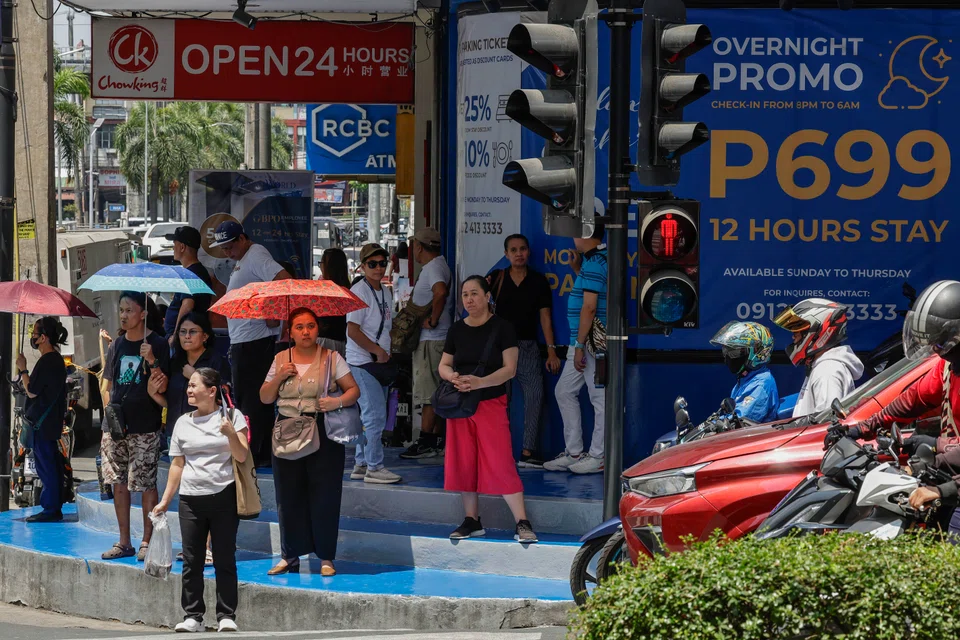
[MANILA] The World Bank has issued a stark recalibration of the Philippines’ economic trajectory after slashing its 2026 growth forecast to 3.7 per cent from 5.3 per cent, a move that signals the country’s acute vulnerability to the deepening Middle East conflict.
The multilateral lender flagged the geopolitical crisis as the primary threat to the Philippines’ consumption-led economy, but more factors are starting to indicate that the country is entering its most rigorous stress test since the pandemic.
The World Bank’s revised projection is the lowest in contrast to the International Monetary Fund’s 5.6 per cent and the Asian Development Bank’s recently announced 4.4 per cent estimates.
The assessment, however, aligns with the domestic outlook. Arsenio Balisacan, secretary of the Philippines’ Department of Economy, Planning and Development (DEPDev), warned gross domestic product growth would likely miss the government’s target – pegged between 5 and 6 per cent – if global oil prices continued to soar.
Under a scenario where oil sustains at US$150 a barrel, Balisacan believes growth could crater to 3.5 per cent and trigger a drawn-out period of stagflation for a country that imports 90 per cent of its oil supply from the Middle East.
Impact on labour migrants and remittances
Apart from the oil price shock, factors such as a possible decline in overseas Filipino worker remittances from the Middle East would likely contribute to the slowdown.
The country is “exposed to the conflict not only through energy and fertiliser imports but also through remittances”, World Bank senior economist Ergys Islamaj said, noting that 18 per cent of remittances in 2025 came from the Gulf and that a long conflict will hurt the economy further.
The Philippines’ Department of Migrant Workers said half of the total overseas Filipino worker population, or about two million workers, are employed in the Middle East. The region has the world’s highest concentration of Filipino migrant workers.
“Any escalation that destabilises Gulf economies, disrupts shipping lanes, or threatens urban labour markets directly endangers Filipino jobs, remittances and household consumption back home,” said Alicor Panao, associate professor at the University of the Philippines, in an analysis for the Philippine Daily Inquirer.
Remittance by overseas Filipino workers from the Middle East hit about US$6.5 billion in 2025, based on data from the Bangko Sentral ng Pilipinas (BSP).
DEPDev, however, estimates that with the ongoing tension and repatriation of workers, the Philippines stands to lose 109 billion pesos (S$2.3 billion) or about US$1.8 billion in remittances from the region in 2026.
Overall, as many as 340,000 workers abroad are also at risk of retrenchment because of the conflict, Balisacan said.
The Middle East is an engine of foreign exchange liquidity for the Philippines. As the South-east Asian nation’s second-largest source of foreign exchange – after exports and the business process outsourcing industry – these inflows serve as a “national savings account” that the BSP uses to maintain economic stability.
Decline in foreign reserves
The Philippines’ gross international reserves (GIR) – which includes foreign‑denominated securities, foreign exchange and reserve assets such as gold – have retreated to US$107.5 billion as at end-March 2026, down from February’s record-high of US$113.3 billion, based on preliminary data from the BSP.
The decline was driven by the government’s debt repayment obligations, as well as market volatility hurting the valuation of the central bank’s foreign investments and gold holdings.
Despite the retreat, the GIR level still “provides a robust external liquidity buffer, equivalent to 7.1 months’ worth of imports of goods and payments of services and primary income or nearly double the international adequacy benchmark of three months”, the BSP said.
It also covers about 3.9 times the country’s short-term external debt based on residual maturity.
Currency volatility
Amid warnings of dampened expansion, the BSP is also managing a weakening currency that reached an all-time low of 60.74 pesos to the US dollar on Mar 31. The peso was trading in the range of 57.51 to 58.15 per US dollar in the days before the Feb 28 military strikes in Iran.
BSP governor Eli Remolona Jr has taken a measured approach to currency volatility, stating in January that other export-driven economies in Asia will also likely “purposely weaken their currency”.
In an interview with CNBC this week, the governor said: “The depreciation of the peso doesn’t always lead to inflation. It has to depreciate sharply enough for it to be inflationary.”
Remolona added that the BSP is letting market forces determine the level of the peso, which rose to about 59.70 to the US dollar on news of the two-week ceasefire between the US, Israel and Iran.
“Market forces are causing the peso to depreciate over periods of time,” he said. “But some depreciation, I think, is called for and that’s what the market is trying to do. We’ve been facing trade deficits for several years now. Basically, our imports are too cheap and our exports are too expensive.”
However, with March 2026 inflation at a 20-month high of 4.1 per cent, the peso’s purchasing power has weakened. A peso in 2018 is now equivalent to only 75 centavos today, according to data from the Philippine Statistics Authority.
“The peso’s value erodes every month and every year as inflation continues to rise,” said Sonny Africa, executive director of the independent research firm Ibon Foundation.
“Things are definitely going to get worse,” he said. “Even if the actual conflict stops, prices won’t immediately go back to normal or to the way they were.”






