

Asian stocks weather bond storm, oil retreats slightly
Brent crude is down 1.2% to US$105.3 a barrel
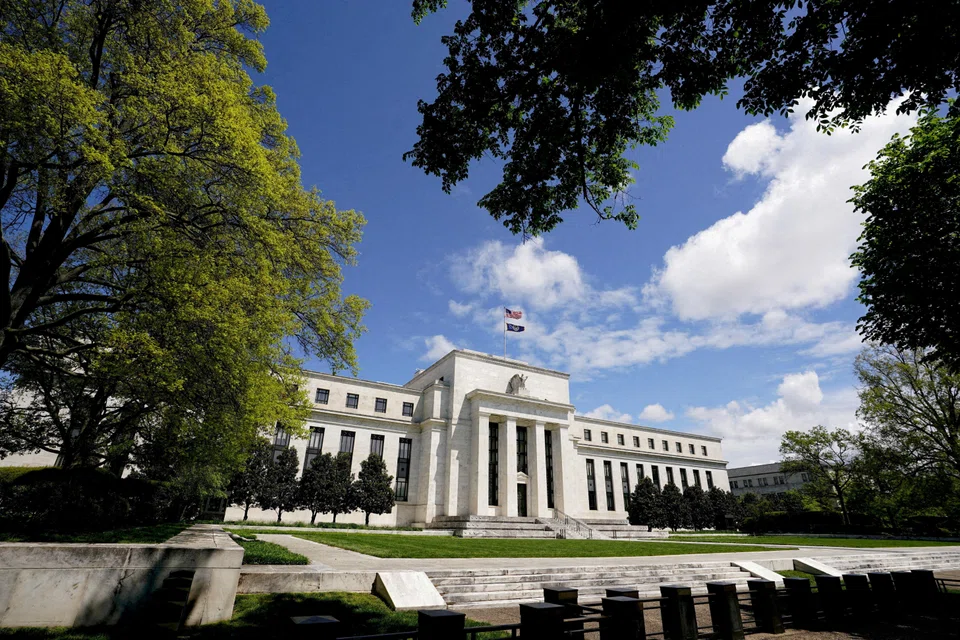
[SYDNEY] Asian shares held their nerve on Friday (Sep 25), as a relentless bond sell-off pushed longer dated US yields to two-decade highs, raising borrowing costs worldwide and threatening lofty equity valuations.
European bourses are set for a higher open, with pan-region stock futures up 0.6 per cent as oil prices retreated a little.
Brent crude eased 1.2 per cent to US$105.3 a barrel, after climbing 3 per cent overnight, as Iranian President Masoud Pezeshkian said it was up to the US to choose when the war will end.
Still, the return of oil above US$100 a barrel has fuelled inflation fears, bolstering bets on multiple US Federal Reserve rate hikes after its first move in more than three years, and putting the greenback on track for a 1 per cent weekly gain.
Chinese President Xi Jinping is in Washington for talks with US President Donald Trump, though beneath the fanfare, there has been scant evidence of breakthroughs on thorny issues over artificial intelligence, trade, Taiwan or the war with Iran.
MSCI’s broadest index of Asia-Pacific shares outside Japan slipped 0.1 per cent, with most markets including Chinese mainland, Taiwan and South Korea closed for a holiday.
Japan’s Nikkei rose 1.3 per cent, while Australia’s resources-heavy shares fell 0.4 per cent. Hong Kong’s Hang Seng index skidded 1.4 per cent.
Nasdaq futures rose 0.3 per cent and S&P 500 futures inched up 0.1 per cent.
Risk assets are under threat from a dramatic sell-off in global bonds, as inflation worries and fiscal strains push investors to demand ever-higher returns particularly on long-dated debt.

“The world’s bond markets are screaming, and ignoring it could prove very expensive,” said Nigel Green, CEO of deVere Group, a financial advisory firm.
“Once risk-free rates sit above 5 per cent in the world’s largest economy, every asset on the planet has to justify its price against that. Equities, property, private credit, emerging market debt – nothing’s immune.”
The benchmark 10-year Treasury yield rose one basis point (bp) to 5.1751 per cent, having surged 20 bps in just two days to a new 19-year peak of 5.2251 per cent. That was the biggest two-day gain since April 2025, when Trump’s “Liberation Day” tariffs spooked markets.
Thirty-year US bond yields were steady at 5.4671 per cent, having surged 16 bps over the past two days to hit 5.5016 per cent, the highest since 2004. That lifted US mortgage rates to 7 per cent, hamstringing the housing market.
Asian bonds extended the global sell-off, with Japan’s 10-year government bond yields hitting a top of 3.115 per cent, the highest since 1996, while five-year yields climbed to a record high of 2.41 per cent.
Australia’s 10-year government bond yields rose two bps to 5.394 per cent.
Global hiking cycle reaches Scandinavia
There was no respite at the short end of the Treasury curve either.
Fed funds futures now imply a 73 per cent chance of another rate hike in October, up from about 53 per cent earlier this week, and more than 90 bps of tightening still to come this cycle, equivalent to almost four quarter-point hikes.
The US 2-year yields were steady at 4.8993 per cent, having jumped 16 bps this week to hover near a two-year high.
The Fed’s return to rate hikes on Sep 16 is rippling across global markets.
As inflation pressures intensify, smaller central banks are shifting to a more hawkish stance, with Norway’s Norges Bank raising rates on Thursday, and Sweden’s Riksbank signalling it is likely to follow suit by the year end.
Mexico’s Banxico held rates steady, but dropped its previous guidance for a prolonged pause.
That is keeping the US dollar firm, having risen 1 per cent this week to 101.22 against its major peers, about the highest since late July.
The dollar, however, lost 0.4 per cent to 158.23 yen, retreating from a three-week peak, after Japan Finance Minister Satsuki Katayama said Trump raised concern about yen weakness, during a summit with Japanese Prime Minister Sanae Takaichi earlier this week. REUTERS
Decoding Asia newsletter: your guide to navigating Asia in a new global order. Sign up here to get Decoding Asia newsletter. Delivered to your inbox. Free.
Share with us your feedback on BT's products and services
TRENDING NOW

Once staunchly pro-China, Malaysian Chinese businesses are now distancing themselves from Beijing

Looking beyond looming CEO succession, should UOB potentially pursue a transformative merger?

Could stablecoins be the future of money?

Grab CEO’s wife Chloe Tong on life with Anthony Tan and finding her purpose

