

Australia household spending posts lacklustre bounce in January as rate hike looms
Markets are betting the Reserve Bank of Australia will leave interest rates steady at 3.85 per cent this month
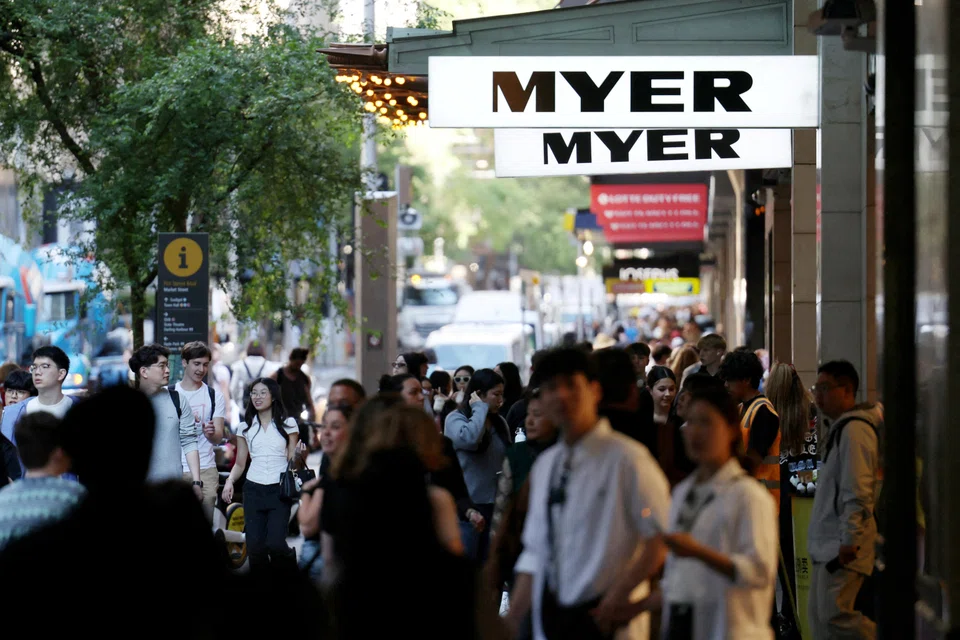
[SYDNEY] Australian household spending bounced in January but that was not enough to offset the previous month’s fall as consumers stayed cautious with rate hikes looming, data showed on Thursday.
Data from the Australian Bureau of Statistics showed its monthly household spending indicator (MHSI) rose in January to A$78.98 billion. Analysts had generally looked for a rise of around 0.4 per cent, following a 0.5 per cent fall in December.
The annual pace of spending growth slowed to 4.6 per cent, the lowest since May last year, from 5 per cent in December.
“Following exceptional growth in Q4, consumers tightened their belts at the start of 2026,” said Harry McAuley, economist for Oxford Economics Australia, adding that households prioritised essentials such as medical visits and vehicle servicing over retail shopping and travel.
“We expect to see the impact of the latest rate hike beginning to flow through in the February and March MHSI prints.”
The still patchy recovery in consumer spending is one reason that markets bet the Reserve Bank of Australia would leave rates steady at 3.85 per cent this month, having hiked just in February to reverse one of the three cuts last year as inflation surged.
The economy expanded at a solid pace of 0.8 per cent last quarter, lifting annual growth to 2.6 per cent, the highest in almost three years. That was way above the economy’s potential growth rate of 2 per cent, but masked some weakness in consumer spending.
Still, with headline inflation running at 3.8 per cent, above the target band of 2 per cent to 3 per cent, while the jobless rate stayed low at 4.1 per cent, markets are fully pricing in a rate hike in May.
Thursday’s data showed spending on goods fell 0.3 per cent as consumers pulled back on buying motor vehicles, while spending on services rose 1 per cent, driven by offerings such as digital streaming.


Discretionary spending was just up 0.1 per cent in the month. REUTERS
Decoding Asia newsletter: your guide to navigating Asia in a new global order. Sign up here to get Decoding Asia newsletter. Delivered to your inbox. Free.
Share with us your feedback on BT's products and services






