

BBC did not provide ‘convincing response’ as raids at Indian office continue
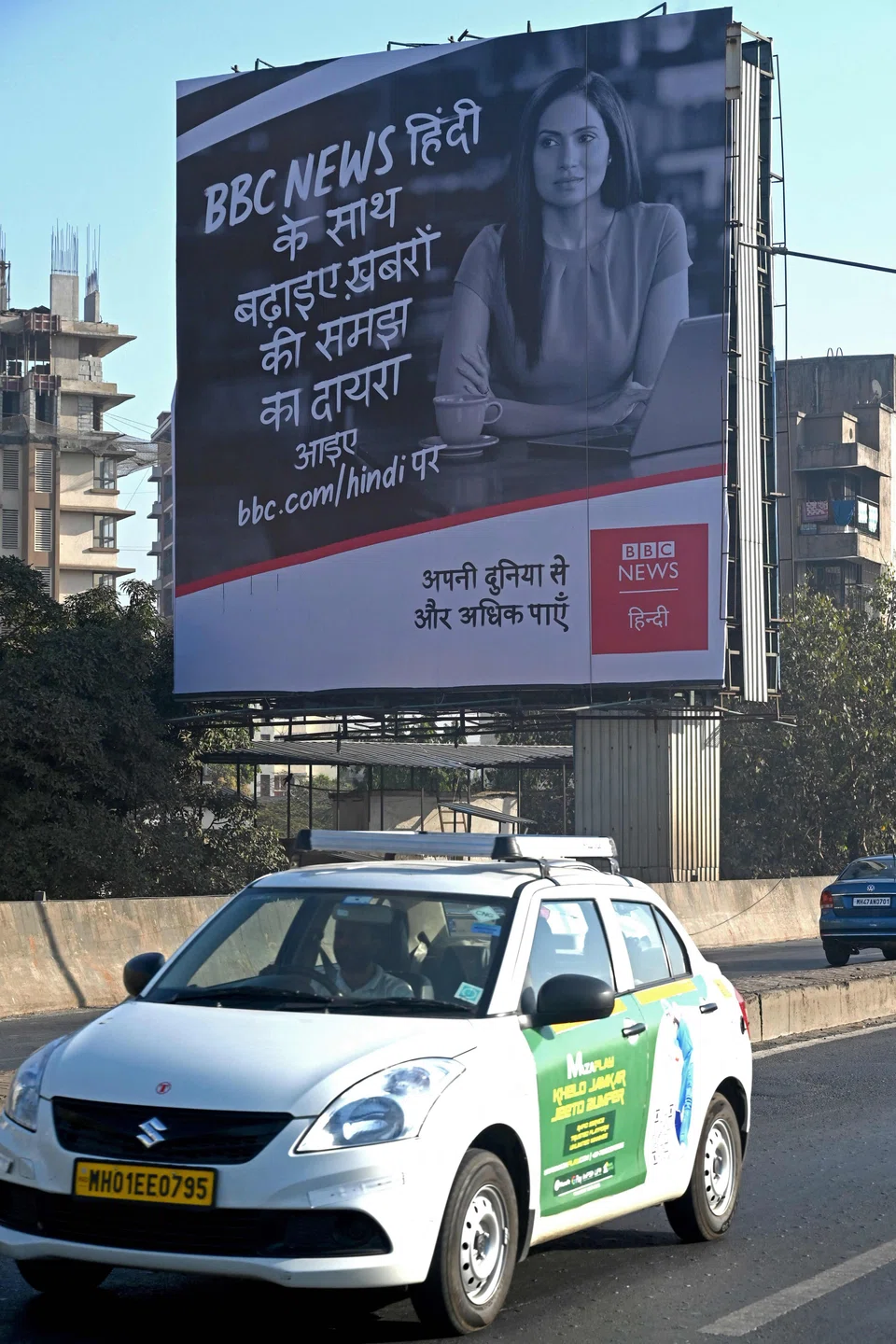
INDIAN tax department raids at BBC offices entered a second day on Wednesday (Feb 15), journalists at the broadcaster told AFP, in an action rights groups linked to critical coverage of Prime Minister Narendra Modi.
But a senior Indian government official said the BBC did not provide a “convincing response” to Indian tax authorities in the past and the current survey on the organisation was connected to transfer pricing rules and diversion of profits.
The income tax survey was not vindictive or “done out of a sense of pique”, Kanchan Gupta, Senior Adviser at the Ministry of Information & Broadcasting, told Times Now news channel.
According to Indian media reports quoting unnamed government sources, the broadcaster was in “deliberate non-compliance” with its regulations.
A spokesman for Modi’s ruling party accused the British outlet of engaging in “anti-India propaganda” after the raids began.
Press freedom in the world’s biggest democracy has suffered during Modi’s tenure, rights activists say.
The search comes weeks after the BBC aired a documentary on his actions during sectarian riots in 2002 that left at least 1,000 people dead, mostly minority Muslims.
Officers entered the New Delhi and Mumbai offices of the British media outlet on Tuesday morning, confiscating phones and accessing computer terminals.
Authorities were questioning individual staff members on Wednesday after allowing editorial staff to leave the previous evening.

“They are questioning the administrative managers after scanning all the digital devices,” a journalist at the broadcaster told AFP, requesting anonymity because they were not authorised to speak to the media.
The BBC asked staff to work from home and only key persons were allowed to return to the office, which has been sealed to unauthorised visitors since Tuesday.
In a brief statement Tuesday, the broadcaster said it was “fully cooperating” with authorities.
“We hope to have this situation resolved as soon as possible,” it added.
But the Committee to Protect Journalists said the timing of the raid just weeks after the documentary aired “smacked of intimidation”.
“Indian authorities have used tax investigations as a pretext to target critical news outlets before,” the watchdog’s Beh Lih Yi said in a statement.
India has fallen 10 spots to 150 out of 180 countries in the World Press Freedom Index, compiled by Reporters Without Borders, since Modi took office in 2014.
Other media outlets, international rights groups and foreign charities have found themselves subjected to scrutiny by India’s tax authorities and financial crimes investigators.
Amnesty International announced it was halting operations in India after the government froze its bank accounts in 2020, following raids on its offices.
In 2021, Indian tax authorities raided a prominent newspaper and a TV channel that had been critical of the government’s handling of the coronavirus pandemic, triggering accusations of intimidation.
The BBC documentary examined the 2002 riots in Gujarat, where Modi was chief minister at the time.
They began after 59 Hindu pilgrims were killed in a fire on a train. Thirty-one Muslims were convicted of criminal conspiracy and murder over that incident.
The documentary cited a previously classified British foreign ministry report quoting unnamed sources saying that Modi met senior police officers and “ordered them not to intervene” in the anti-Muslim violence that followed.
A special investigative team appointed by India’s Supreme Court to probe the roles of Modi and others in the violence said in 2012 it did not find any evidence to prosecute him. AFP, REUTERS
Decoding Asia newsletter: your guide to navigating Asia in a new global order. Sign up here to get Decoding Asia newsletter. Delivered to your inbox. Free.
Share with us your feedback on BT's products and services
TRENDING NOW

World’s largest offshore wind platform by Seatrium consortium on track to be completed by 2028

Is stamp collecting enjoying an analogue revival or are its best days over?

GovTech retrenches another 38 staff in second round of layoffs

MBS adjusted property Ebitda falls 20.6% in Q3 with fewer high-roller visits, weaker hold

