

Beyond Iran, an arc of instability looms in West Asia
Bizarre and cruelly timed as this strike was, US interventions in Asia have a dismal record, from the Vietnam War down
THE Western Asian states of Pakistan, Afghanistan, Iran and Iraq have been a global migraine for decades.
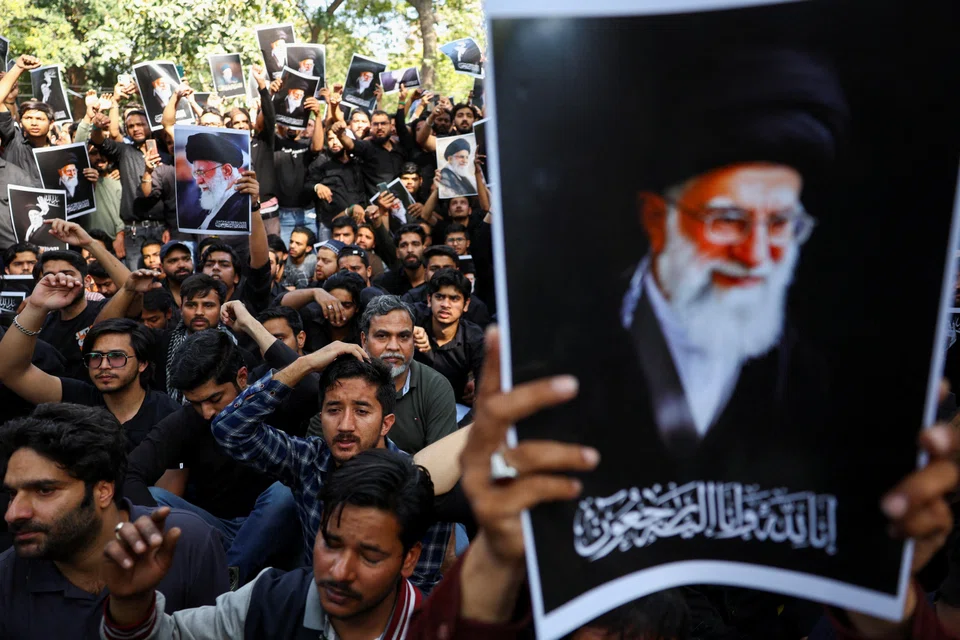
If history is a guide, the mob attacks on Mar 1 on US diplomatic facilities in Baghdad and Karachi, as well as the street protests in India’s Srinagar, all indicate that matters in this arc of instability are poised to worsen after the US-Israeli strike on Iran.
The attack was carried out days after US President Donald Trump convened a Board of Peace meeting and while Muslims marking the fasting month were fixed on prayer, which makes it particularly fraught.
Bizarre and cruelly timed as this strike was, US interventions in Asia have a dismal record, from the Vietnam War down.
In the late 1980s and early 1990s, the US Central Intelligence Agency used Saudi funding to arm and train the Taliban-led insurgents from camps inside Pakistan. The US intervention to overthrow the Soviet occupation of Afghanistan ultimately led to the 9/11 strikes on the United States.
In Pakistan, which willingly collaborated in the US effort, it led to a continuing domestic insurgency as sections of the Taliban turned on the Pakistani state once the Soviets were forced out of Afghanistan.
Today, Pakistan is the scene of regular terrorist violence – some blamed on the Tehreek-i-Taliban Pakistan, while some are attributed to Balochi insurgents operating in the nation’s largest province by territory, Balochistan.
In Iraq, the ouster and execution of strongman Saddam Hussein led to the fragmentation of the state, and the emergence of ISIS.
Similarly, the strikes on Iran and the assassination of its supreme ruler will have their own fallout.
SEE ALSO


The world will be asking why, if indeed the US strike on Iran’s nuclear facilities last June had destroyed Iran’s nuclear apparatus, a negotiated deal with Tehran was not enough for the US.
Only days ago, Oman’s Foreign Minister Sayyid Badr bin Hamad al-Busaidi had said that a “peace deal is within our reach” after Iran agreed to most of the demands placed upon it, including guarantees that it would not stockpile nuclear material.
Iran is majority Shi’ite Muslim but significant Shi’ite populations also exist where Sunni Muslims are the majority, including in Saudi Arabia, Pakistan and India. Besides, the sense of outrage transcends the Muslim community.
Neither is Trump’s call for Iranians to seize the moment and effect a regime change likely to be received with enthusiasm. The large-scale outpouring of grief in Iran is not artificial.
Repressive as his regime was, the late Supreme Leader Ali Khamenei was not some terrorist figure like Osama bin Laden, hiding out in a large house in a Pakistan garrison town after orchestrating the 9/11 attacks. He was a national leader functioning in public view.
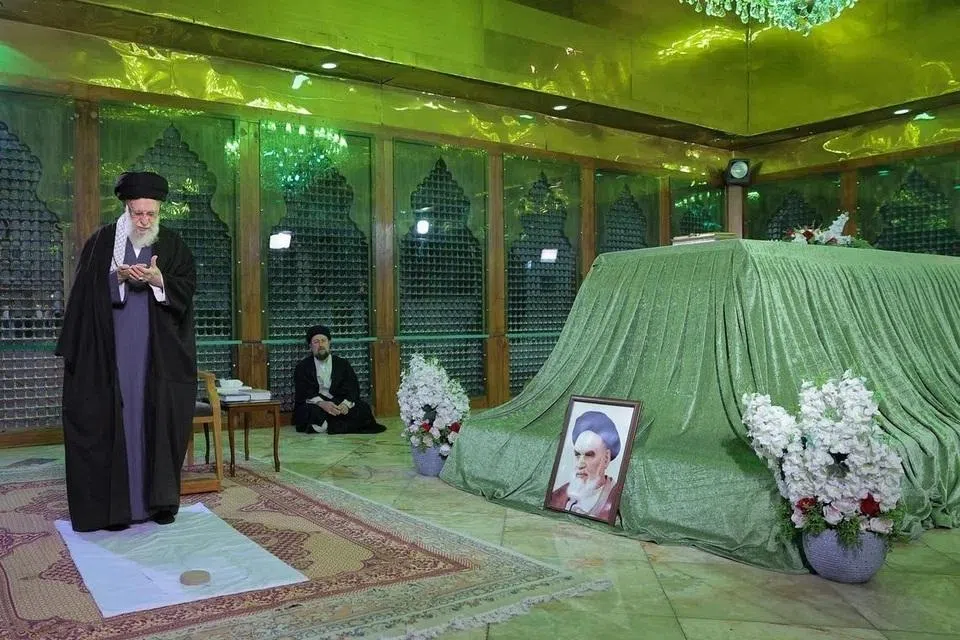
Indeed, weeks ago, as though anticipating what was to come, Ayatollah Khamenei had visited the gravesite of the man who led Iran’s Islamic Revolution: his predecessor, Ayatollah Ruhollah Khomeini. It was as though he sought Ayatollah Khomeini’s blessings for the path he had embarked on.
And unlike Osama, whose body was buried at sea, Ayatollah Khamenei’s passing is a matter of national mourning, his gravesite likely turned into a national monument as he gains a martyr’s halo, never mind the harsh rule he presided over.
What is more, military scholars know that the removal of a supreme arbiter usually does not produce an orderly successor so much as a contest over authority, interpretation and survival.
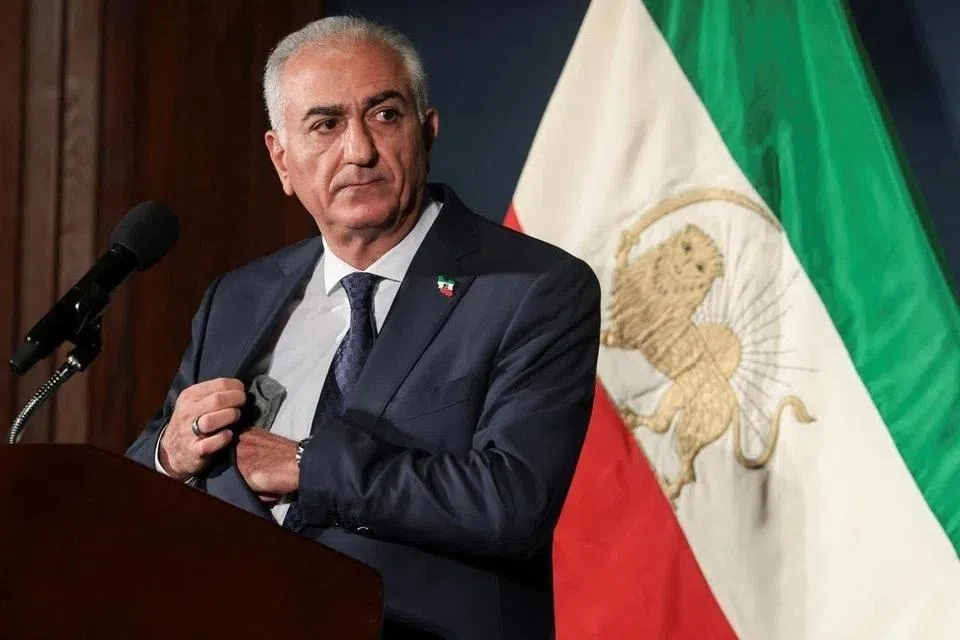
Reza Pahlavi, the late Shah of Iran’s son who lives a life of exile in the US, has neither the charisma nor the clout to effectively rule Iran. It would be fanciful for Washington to think he can do the job.
What lies ahead, therefore, is not orderly transition but chaos in Iran, and possibly, elsewhere.
If only the troubles would stop in the West Asian region. It may not, and here is why we in South-east Asia need to be on guard.
To Iran’s east is Pakistan – whose army chief was feted with a White House visit just a few months ago. Pakistan and Iran have tried to mend fences lately, determined to look past the dip in ties caused by Tehran’s January 2024 strike against Balochi rebels sheltering within Pakistan’s borders.
Islamabad, aside from its struggle with the Taliban, has also been afflicted by a prolonged Baloch insurgency – some of which it blames on Israel-India coordination.
As the only Muslim-majority nation with a nuclear arsenal, Pakistan has always known that Israel keeps a wary eye on it. The joint strike on Iran’s nuclear facilities is thus also a warning to Pakistan, whose nuclear arsenal is viewed with unease by leaders of both Israel and the US.
Pakistan’s foreign office, which issued a statement after the June 2025 attacks on Iran saying that Tehran had a “legitimate right to defend itself” under the charter of the UN, adopted a nuanced line this time, emphasising the need for restraint on all sides.
There have been other developments that widen the arc of instability into South Asia. Over the past week, Pakistan launched a series of strikes on Taliban-controlled Afghanistan, which it described as an “open war”. Islamabad said it was merely attacking Taliban camps near the border that are used to stage hits on its territory.
To complicate matters, Pakistan and Saudi Arabia signed a mutual defence treaty in September 2025, institutionalising already close defence ties. Iran’s counterattack has targeted US military facilities in Saudi Arabia, drawing Riyadh into the war.
With Pakistan’s archrival India having squarely aligned itself with Israel – the two share a tight defence relationship and Prime Minister Narendra Modi last week travelled to Tel Aviv and addressed the Knesset just days before Israel struck Iran – the geopolitical picture that presents is a muddled one of fragmented goals and anything-but-neat alignments.
These are situations that presage turbulence, and Asia needs to be ready for it. THE STRAITS TIMES
Decoding Asia newsletter: your guide to navigating Asia in a new global order. Sign up here to get Decoding Asia newsletter. Delivered to your inbox. Free.
Share with us your feedback on BT's products and services
TRENDING NOW

DBS, OCBC, UOB rout lops billions off STI as inflation, rate concerns spook investors

Grab CEO’s wife Chloe Tong on life with Anthony Tan and finding her purpose

OCBC sheds S$8 billion in value as shares close nearly 6% down; analysts cautious on banks

Deal between tycoon friends sparks scrutiny of Philippine power sector

