

Bond market’s big short bet gets wakeup call as AI trade wobbles
This threatens to wrong-foot investors who are heavily positioned for 2026’s bond slump to deepen
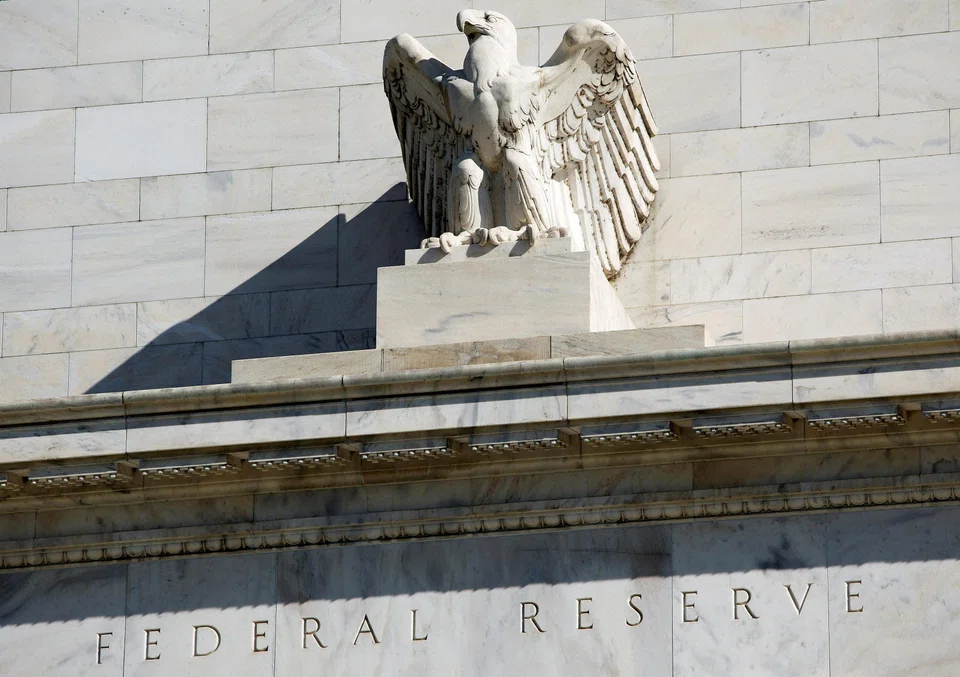
[NEW YORK] US Treasuries are showing tentative signs of reclaiming their traditional role as a haven – threatening to wrong-foot investors who are heavily positioned for 2026’s bond slump to deepen.
As concerns mount across markets over the outlook for leading artificial intelligence firms and the potential impact on the broader economy, 10-year yields fell about 17 basis points last week while the Nasdaq 100 Index tumbled 5.5 per cent.
The previous time yields and the tech benchmark dropped that much in the same week was during the April 2025 tariff turmoil.
The bond rally was notable after months when Treasuries largely failed to provide their customary protection during periods when stocks were struggling.
Hot inflation, a resilient economy and a flood of government and corporate borrowing – including to finance the AI boom – combined to push 10-year US yields up the past seven months, to their highest levels in more than two decades.
The latest wobble in stocks upset that trend in part because investors were sitting on unusually aggressive bearish Treasuries bets, raising the prospect of short-covering and heightening the two-way risk in the bond market even as inflation stays solid.
“To paraphrase Mark Twain, rumours of the death of US Treasuries are greatly exaggerated,” said James Athey, a portfolio manager at Marlborough Investment Management.
Of course, it is tough to conclude that the AI boom, which has added trillions of dollars to stock-market valuations, is coming to an end.
Previous bouts of volatility have proved short-lived.


But concerns over signs of slowing revenue growth at Anthropic and the sinking debt prices of AI cloud-computing provider CoreWeave are raising questions about whether cracks are emerging in a trade that helped drive the bond rout.
Massive AI investment has boosted the economy, while surging demand for computer chips added to inflationary pressures.
“Demand shock”
“An AI-led downturn would be a lot closer to a more traditional negative demand shock” and a catalyst for disinflation, Afonso Borges, a fixed-income strategist at Julius Baer, wrote in a report.
In that kind of episode, he said, “intermediate Treasuries should again serve as an effective portfolio hedge”.
Against that backdrop, the firm recommends an overweight duration stance in the intermediate area.
Borges pointed out that 10-year Treasuries consistently delivered positive returns during equity drawdowns between 2000 and 2020.
The deluge of corporate issuance to finance AI infrastructure has increased competition for capital, another headwind for Treasuries.
If expectations for AI investment fade, those forces could begin to work in reverse.
Investment-grade companies – led by megacap tech firms – have sold about US$1.7 trillion of bonds in 2026, up some 29 per cent from this time in 2025.
“If investors are seeing their AI-linked bonds losing value, they will be less interested in buying new bonds,” said John Briggs, head of US rates strategy at Natixis North America.
“So that’s taken an arrow out of the AI issuance quiver in the short term, and the result is more buying of the Treasury long end as there’s less worry around crowding out.”
Trader positioning could also amplify the bond strength if the AI trade extends its weakness.
The gains in Treasuries drew fuel from investors known as commodity trading advisers exiting bearish futures positions, after they entered last week at extremely short levels.
Haven relief
The haven flows helped relieve pressure on bonds from persistent inflation.
Hotter-than-expected consumer-price figures last week initially prompted traders to boost bets the US Federal Reserve will lift interest rates in October, pushing the probability to about 50 per cent at one point.
But as the stock sell-off intensified, the perceived chances of an October hike diminished.
They dwindled further after Fed chairman Kevin Warsh, appearing at the International Monetary Fund’s annual meetings in Bangkok, made no remarks on monetary policy or his economic outlook, apart from reiterating that the Fed will deliver price stability.
Traders still see the central bank tightening once by end-2026 and again in 2027.
Given those expectations, Standard Bank’s Steven Barrow called the recent bond rally a “red herring”.
The firm’s head of G-10 strategy pointed to the inflation risk ahead and a structural trend towards equity ownership and away from sovereign bonds.
A Friday surge in oil prices, which have soared amid the Iran war and fanned inflation concerns, also showed how easily bonds’ role as a hedging instrument can be upended.
Both Treasuries and stocks weakened in parallel around midday as crude jumped amid doubts about US President Donald Trump’s deal to release more Russian diesel into global markets.
Looking forward, the uncertainty stemming from the lack of forward guidance coming from Warsh – a core principle of his monetary policy approach – leaves the market more vulnerable to large price swings, said Masahiko Loo, a Tokyo-based senior fixed-income strategist at State Street Investment Management.
However, for longer-term investors, “the picture looks different”, Loo said. BLOOMBERG
Decoding Asia newsletter: your guide to navigating Asia in a new global order. Sign up here to get Decoding Asia newsletter. Delivered to your inbox. Free.
Share with us your feedback on BT's products and services
TRENDING NOW

Far East Organization’s The Serra Residences sells less than a quarter of units released at average S$3,460 psf

Philippine power giant First Gen rebuffs foreign offers, plans up to US$2.6 billion in expansion

Once staunchly pro-China, Malaysian Chinese businesses are now distancing themselves from Beijing

Is stagflation returning? That mostly depends on the Iran war

