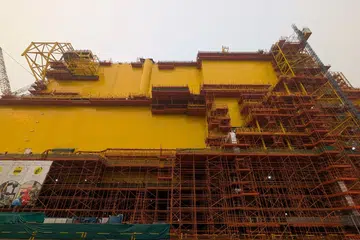
Cambodia, Thailand have agreed terms on new ceasefire. Will it hold?
The immediate ceasefire took effect from noon local time on Dec 27
[BANGKOK] Cambodia and Thailand have inked a fresh ceasefire agreement aimed at ending a fractious cycle of deadly clashes along their shared border that lasted for nearly three weeks.
But given the high level of distrust between the two sides, it remains to be seen if the truce will hold.
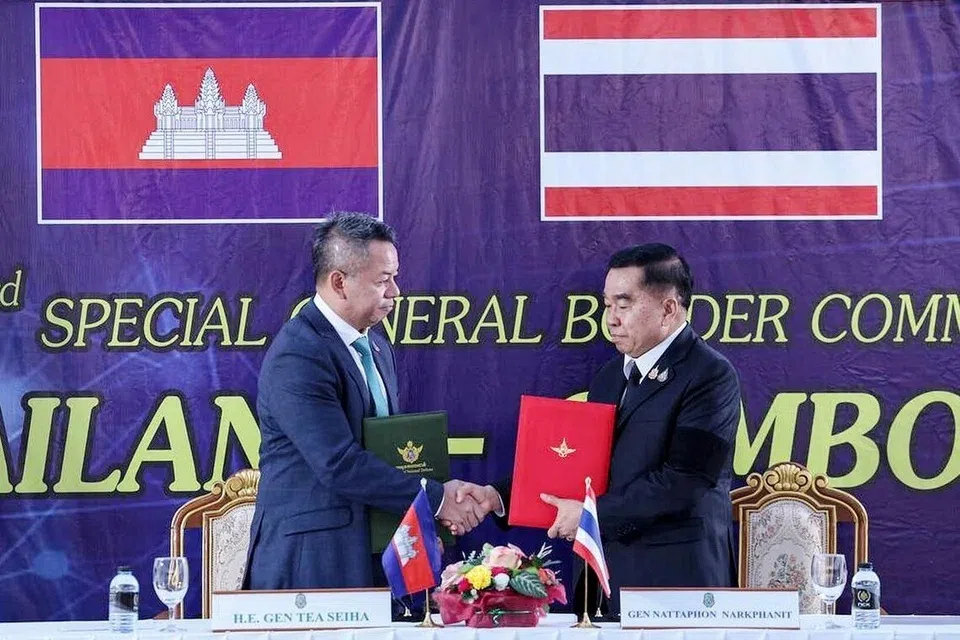
The immediate ceasefire, signed by Cambodian Defence Minister Tea Seiha and his Thai counterpart Natthaphon Narkphanit, took effect from noon local time (1 pm Singapore time) on Dec 27.
It mandates that neither side fires any weapons, and there will be no movement or reinforcement of troops along the border.
“Both sides agree to maintain current troop deployments without further movement.
“There shall be no troop movement, including patrol towards the other side’s positions or troops,” said a joint statement from the two defence ministers.
If the ceasefire holds for 72 hours, Thailand has also agreed to repatriate 18 Cambodian soldiers it has detained since July, after an earlier border conflict that lasted for five days.
The return of the soldiers, a key demand from Phnom Penh, was agreed during a peace pact brokered by the US in Kuala Lumpur in October. But those plans were shelved when Bangkok suspended the peace deal in November after accusing Cambodia of planting fresh landmines that have maimed Thai soldiers.
Full-blown hostilities reignited on Dec 8. Each side blames the other for firing first in an exchange of gunfire.
At least 101 people have been killed and more than a million have been displaced on both sides in the ensuing 20 days, though Thailand’s official death toll includes civilians who have died “indirectly” from the conflict, while Cambodia has not disclosed its military casualties.
Under the latest agreement, Cambodia has also agreed to key Thai demands to resume demining operations and joint cooperation targeting online scams and human trafficking. An Asean observer team (AOT) will monitor the implementation of the ceasefire.
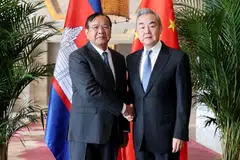
Cambodian Foreign Minister Prak Sokhonn and his Thai counterpart Sihasak Phuangketkeow, meanwhile, will hold a trilateral meeting with Chinese Foreign Minister Wang Yi in China’s Yunnan province on Dec 28 and 29 to discuss the situation.
In contrast to its previously low-key approach, China has recently taken on a more pronounced mediation role between Cambodia and Thailand, dispatching special envoy Deng Xijun to both countries from Dec 18 to 23, in what Beijing termed “shuttle diplomacy”.
“This ceasefire will pave the way for displaced people living along the border to return to their homes and resume their work, including farming,” said Tea Seiha.
“It will also allow families with children to send them back to schools in border areas.”
Malaysian Prime Minister Anwar Ibrahim said he welcomed the decision to halt fighting and that it reflected a shared recognition that restraint was required, “above all in the interest of civilians”.
“As Malaysia hands over the Asean chair to the Philippines at midnight on Jan 1, 2026, we will support all efforts to ensure that these undertakings are honoured and that Asean’s prestige and credibility as a region of peace are preserved,” he added.
Cambodia and Thailand had remained locked in intense combat even while they engaged in ceasefire talks, which began on Dec 24 through the existing bilateral General Border Committee (GBC), with Thailand appearing eager to assert its aerial dominance up until the final hours before the truce was declared on Dec 27.
Cambodia’s Defence Ministry said Thailand launched three separate fighter jet sorties within 30 minutes on the morning of Dec 27, dropping bombs on the eastern part of Anlong Veng in Oddar Meanchey province, and two villages in Banteay Meanchey province.
And on the previous day, the Cambodian ministry said Thai F-16 fighter jets made their deepest foray into the country yet, with an afternoon bombing raid reaching 100km from the border into Siem Reap province, roughly 50km from the kingdom’s iconic Angkor Wat temple complex.
The ministry also said Thai F-16s dropped 40 bombs on a village in the north-western province of Banteay Meanchey on the morning of Dec 26.
A key distinction that has set this most recent conflict apart from the previous round of fighting in July has been Thai Prime Minister Anutin Charnvirakul’s vocal support for the Royal Thai Army.
Anutin, of the conservative Bhumjaithai Party, replaced Paetongtarn Shinawatra, of the centrist Pheu Thai Party, as prime minister in September after she was ousted from office over her handling of the border tensions.
Ahead of a general election on Feb 8, 2026, Anutin’s tough-talking approach towards the Cambodia issue has become a key plank of his election pitch.
Given full authority over border security matters, Thai military leaders made it clear that their aim was to “cripple” Cambodia’s military capabilities along the border for the long haul, bombing places the army said were arms depots, fuel storage sites and military installations inside Cambodia.
When asked on Dec 25 whether Thai forces had succeeded in their mission, Army Chief of Staff Chaiyapruek Duangprapat said the Thai army had regained about 90 per cent of the area considered Thai sovereign territory, but Cambodia still possessed heavy weaponry positioned deeper inside its territory.
“I won’t discuss details, but I think we have satisfactorily reached our targets,” he said.
The tensions between Thailand and Cambodia stem from disputes over poorly defined borders that have flared periodically for over a century.
Both countries have routinely traded accusations of the other firing first, while invoking self-defence as justification for retaliating.
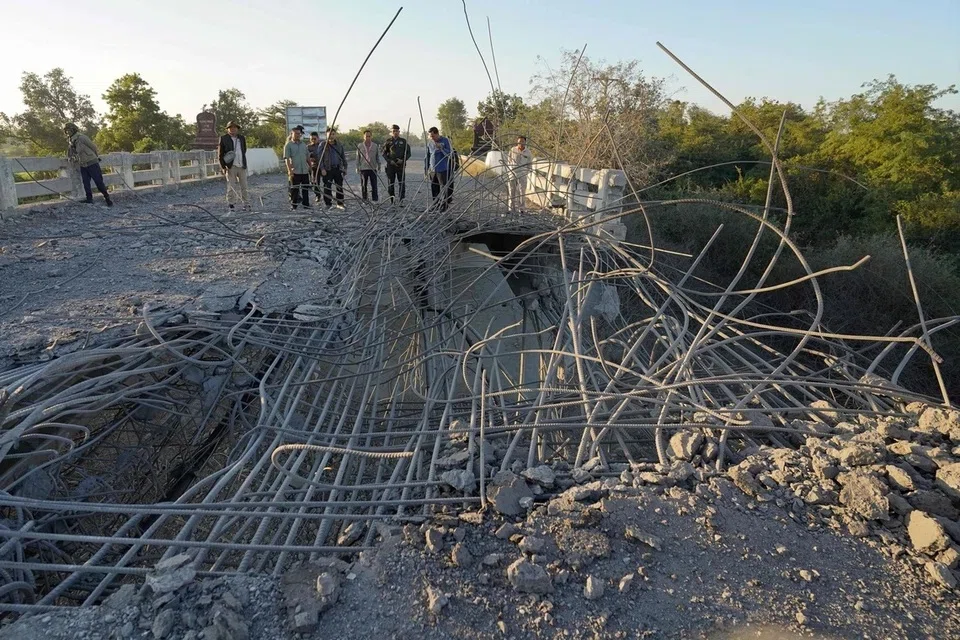
But analysts say such has been the Thai military’s overwhelming superiority, especially in the air, that the regular reports of aerial bombings of casino compounds, bridges and villages – as well as the toppling of a Hindu statue – have become increasingly difficult to justify, even if they are legitimate military targets as Thailand claims.
“From the outsiders’ perspective, you know, you see Cambodia calling for a ceasefire, whereas the Thai side just keeps bombing them. And just the level of asymmetry, I guess, doesn’t give Thailand a good look internationally,” said Tita Sanglee, a security expert at the ISEAS – Yusof Ishak Institute.
“The cost of continuing to fight outweighs the benefit, from the Thai military’s perspective,” Sanglee added, referring to the military, economic and diplomatic cost of the conflict so far.
“They have made acceptable tactical gains, occupying strategic points along the border.”
Natthaphon tacitly acknowledged that “other factors” such as the kingdom’s economy and international image had factored into the decision to halt the protracted fighting.
But, highlighting the level of distrust between the two sides, he said the initial three days of the ceasefire would prove to be a test for the “other party’s sincerity”.
“It is not an act of trust, nor an unconditional acceptance, but a timeframe to tangibly prove whether Cambodia can truly cease the use of weapons, provocations and threats in the area,” he said. THE STRAITS TIMES
Decoding Asia newsletter: your guide to navigating Asia in a new global order. Sign up here to get Decoding Asia newsletter. Delivered to your inbox. Free.
Share with us your feedback on BT's products and services