Like the captain of a storm-tossed ship, Fed chair Powell signals land is finally in sight
He is upbeat on strong economic activity, a good labour market and inflation coming down
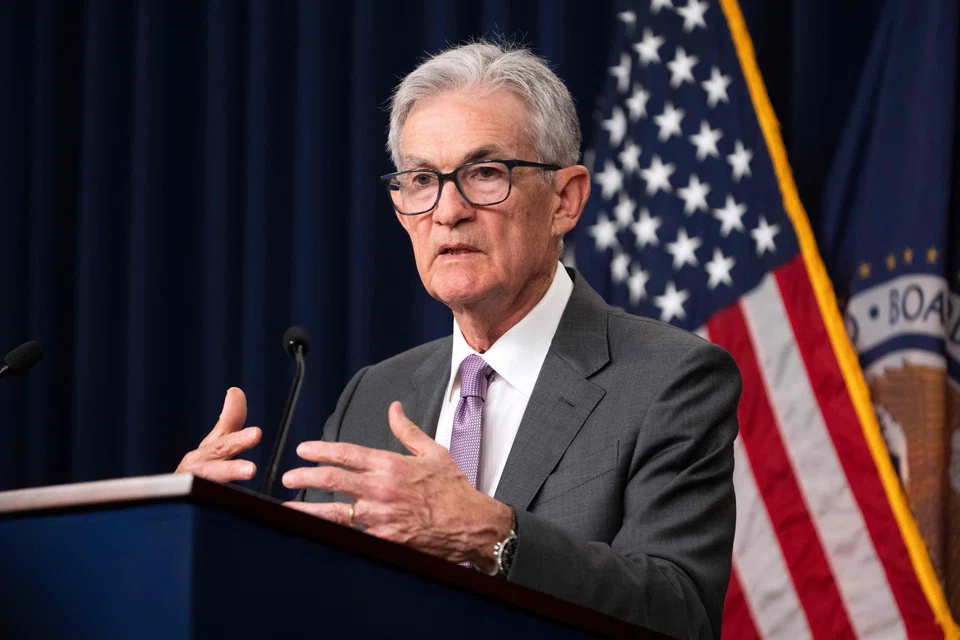
US FEDERAL Reserve chairman Jerome Powell praised the central bank’s success in quelling inflation without bringing on a recession, and on Wednesday (Jul 31) he appeared to be in the mood to celebrate with a rate cut.
The Fed hinted that it is prepared to cut rates in September even though voting members of the rate-setting committee viewed the economy as relatively strong.
Generally, the central bank begins a rate-cutting cycle only when it fears a recession must be staved off. During an upbeat press conference, Powell spoke a bit like the captain of a storm-tossed ship, with land finally in sight.
The soft landing had not happened yet. The economic safe harbour of rate cuts is still a ways off, but, he mused, an economic horizon that had looked so grim a year ago now looks promising. His Fed, he pointed out, had navigated through uncharted waters, and appears to have steered the economy away from the rocks of inflation.
As anticipated, the Fed left benchmark rates unchanged in a range between 5.25 and 5.5 per cent. The wording in the official July statement was subtle but significant.
“The committee judges that the risks to achieving its employment and inflation goals continue to move into better balance,” the statement said.
In other words, the Fed was effectively saying that the dreaded rate-hiking inflation war is over, and that the glorious unemployment-fighting rate-cut cycle is set to begin.
Bill Adams, chief economist at Comerica Bank, cited this as the “most important change” in the statement. While the Fed’s June statement highlighted inflation risks, the latest one this week cited employment and inflation goals which “continue to move into better balance”.
In his post-meeting conference, Powell was more explicit in his rate outlook.
“A rate cut could be on the table in September, if data comes in as the Fed expects,” he said. “What we’re seeing is strong economic activity, a good labour market, and inflation coming down. It’s what you would want to see.”
It was as if Powell was reading from remarks prepared by the bronze Wall Street bull statue. Almost every time he answered a question, the Dow Jones Industrial Average went up by another 50 points. The current labour market was unlikely to be a source of “inflationary pressures”, reassured Powell.
The Dow surged again. Wage growth, after all, was viewed by many strategists as the last impediment to the Fed’s rate-cut plans.
During the press conference, Powell also bridled at the suggestion made by former president Donald Trump recently that the Fed was supporting the Democratic administration by preparing to cut rates shortly before the election. Politics never enters central bankers’ minds when they are assessing policy options, Powell said.
It was a bold philosophical stance to take, but it was also yet another reassurance that nothing – not even the heady political season – was going to get in the way of a September rate cut.
Some on Wall Street are already in a Goldilocks mood. Scott Nuttall, co-chief executive of investment firm KKR, said 2024 appears to be a “sweet-spot” year when all the stars are aligning for a lucrative yield from the buyout firm’s dealmaking activities.
“It’s welcome by Wall Street but it should also be welcomed by Main Street because that is, I think, one of the underlying things driving the Fed,” said Oliver Pursche, senior vice-president at financial advisory Wealthspire.
“We know that inflation in particular has impacted lower- and middle-income households, and we see that in credit card delinquencies and late payments.”
Some Wall Street brokerages said the Fed left itself just enough rhetorical room to delay rate cuts.
“The main message from the July FOMC (Federal Open Market Committee) meeting seems to be that the Fed is getting closer to a rate cut, but needs more evidence,” said economists at brokerage Bank of America Global Research.
Others interpreted the Goldilocks statements as indicating the economy would not need rate cuts in the foreseeable future.
“There is no reason for them to act now, and there may be no reason to act in September either,” said Scott Helfstein, head of investment strategy at money management firm Global X.
A close listen will show that Powell made a strong argument that while the data was still not supportive of a cut, it is clearly trending in that direction. He suggested that the Fed anticipated more economic softening, and would monitor the data carefully for signs of impending recession. He sounded relieved that the Fed would be fighting an economic slowdown rather than another bout of inflation.
“Things like the GDP report and, frankly, softening in labour market conditions, give you more confidence that the economy’s not overheating… It looks like an economy that’s normalising,” said Powell.