

China on cusp of US$1 trillion trade surplus as exports surge
Shipments abroad soar 36% in September from a year earlier and imports jump 31%
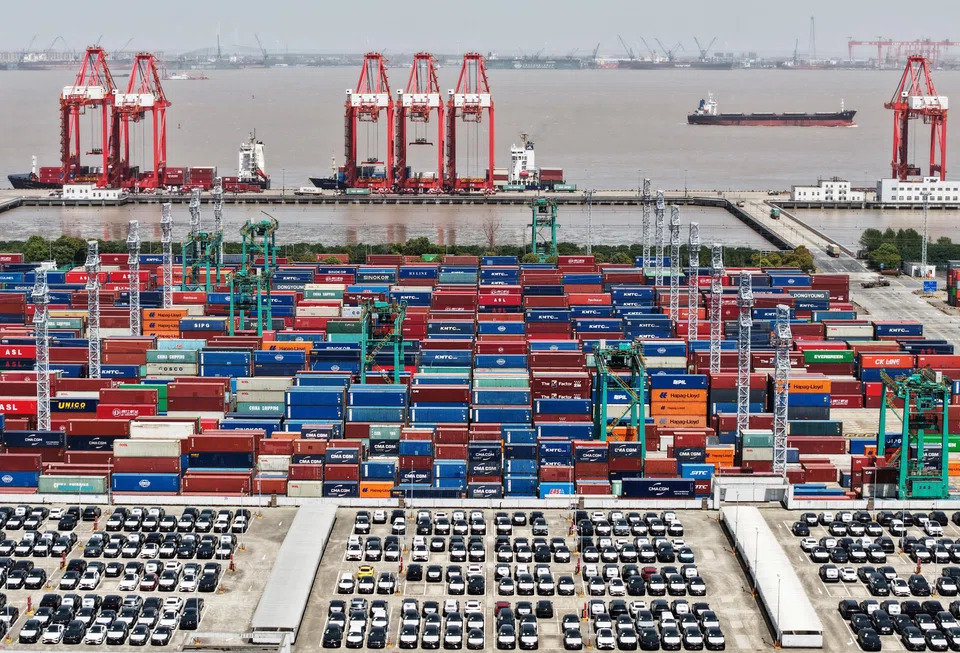
[BEIJING] China’s trade surplus ballooned to US$938 billion for the first nine months, keeping it on pace to exceed 2025’s record as export growth surged faster than expected in September.
The country’s export growth surged the most since February to drive global trade imbalances to new highs, with its surplus in the first nine months of the year on track to exceed the US$1.2 trillion record set in 2025.
Shipments abroad soared 36 per cent last month from a year earlier and imports jumped 31 per cent, data released by China’s General Administration of Customs showed on Wednesday (Oct 14).
As a result, the trade surplus for September widened to almost US$134 billion, exceeding every forecast in a Bloomberg survey of economists.
The year-to-date measure of the difference between what China exports and what it imports is already at US$938 billion – almost 8 per cent more than during the same period last year.
Surging prices for chips and commodities like oil and metals have inflated China’s trade figures, with exports and imports rising less in volume terms.
Prices at the factory gate exceeded most estimates and jumped 5 per cent in September from a year earlier, reaching their fastest since 2022, according to data published by the National Bureau of Statistics on Wednesday.
“China’s September trade data delivered another upside surprise,” said Zhou Hao, chief economist at Guotai Junan. The size of the monthly trade surplus “underscores the continued strength of China’s external sector despite lingering concerns over domestic demand”.
China’s lopsided trade relations with the world have grown even more extreme since the tariff war started by US President Donald Trump over a year ago, especially as global demand exploded for artificial-intelligence services and inputs like chips.

Shipments of high-tech products soared almost 64 per cent in September, which Bloomberg Economics estimates contributed around half of China’s total export growth.
Facing higher barriers in the US, Chinese companies have sought out new markets abroad, with the International Monetary Fund estimating that emerging and advanced Asian economies absorbed about half of the diverted trade, followed by the EU with near one-fifth.
After years of exporting disinflation to the rest of the world, higher input costs have led to an abrupt jump in Chinese export prices, with their gains accelerating in August to 15 per cent from a year earlier – the most since 2022.
The prices of imports surged even faster, however, and rose almost 30 per cent, the fastest increase in data going back two decades.
At the same time, businesses in China are struggling to pass on their growing raw material expenses to buyers, adding pressure on margins as industrial profits rise at the weakest pace this year. Despite a sharp upswing in producer inflation last month, the consumer price index (CPI) undershot estimates with an increase of 0.9 per cent, while the core CPI rose 1 per cent for a second straight month.
As domestic demand stagnates, the booming exports are also generating more pushback from China’s largest trade partners. After months of standoff with the EU, Brussels and Beijing have agreed to cap imports of hybrid cars from China, according to the bloc, though China describes the deal as ensuring “export space and steady growth” for its carmakers.
China reported a record trade surplus of US$34.8 billion with the EU in September, which was before the two sides announced the outcome of their talks. The imbalance was almost 21 per cent higher than in the same month a year ago.
The number of countries running trade deficits above 3 per cent of their gross domestic product with China more than tripled since 2005 to 82 last year, according to economists at Goldman Sachs Group, who estimate that most of them are low-income emerging economies.
Apart from the EU, Beijing’s other major trading partners saw unprecedented shipments from China last month in value terms. Record-high exports were bought by Australia, South Korea, Taiwan, Russia and the South-east Asian nations in the Asean group.
Sales to the US grew 40 per cent, the fastest in more than five years, as it ramps up purchases of capital goods needed for the buildout of AI infrastructure. That caused China’s trade surplus with the world’s biggest economy to swell to US$34 billion, the highest since January 2025. BLOOMBERG
Decoding Asia newsletter: your guide to navigating Asia in a new global order. Sign up here to get Decoding Asia newsletter. Delivered to your inbox. Free.
Share with us your feedback on BT's products and services
TRENDING NOW

Once staunchly pro-China, Malaysian Chinese businesses are now distancing themselves from Beijing

Looking beyond looming CEO succession, should UOB potentially pursue a transformative merger?

Could stablecoins be the future of money?

Grab CEO’s wife Chloe Tong on life with Anthony Tan and finding her purpose

