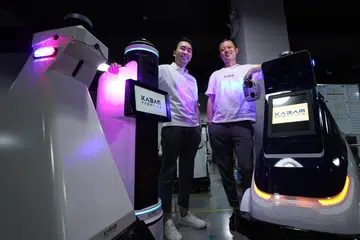
China omits job goal for first time in decades as AI spreads
The country faces challenges in shielding its workforce from AI displacement while chasing technological supremacy
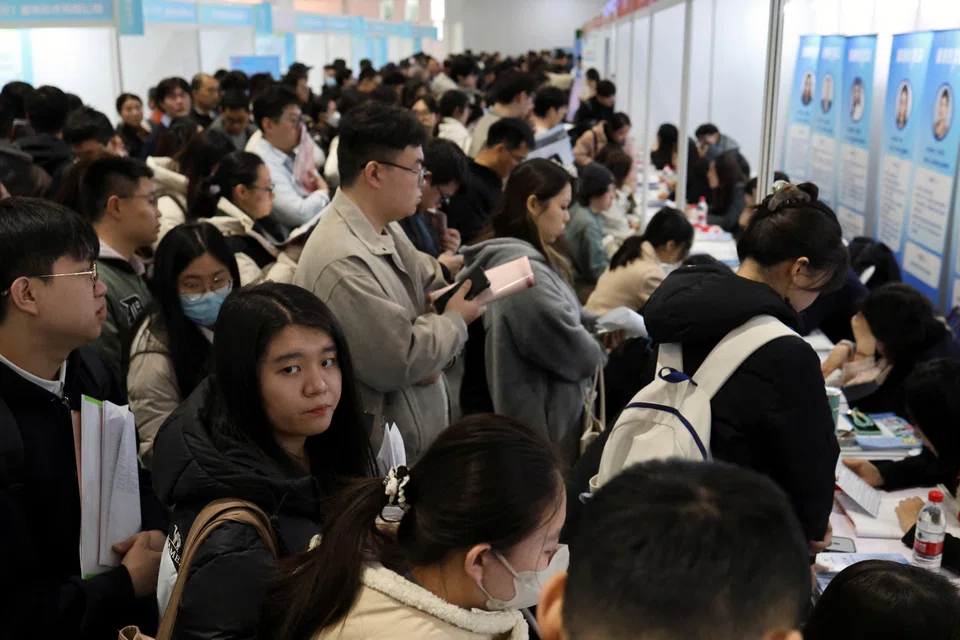
CHINA dropped a numerical target for urban job creation over the next five years for the first time in decades, in an apparent nod to rising uncertainty over employment as artificial intelligence spreads through the economy.
The government will instead keep new urban jobs at a “considerable scale” from 2026 to 2030, according to a five-year plan released on Thursday (Jul 9) by the Ministry of Human Resources and Social Security.
Annual targets will be set flexibly based on each year’s conditions, it said.
The move marks the first time since at least the 1990s that a headline number for new urban jobs has been left out of the country’s medium-term economic plan.
The omission highlights China’s challenge in shielding its vast workforce from AI displacement while chasing technological supremacy against the US and other rivals.
The government will “comprehensively address the impact of changes in the external environment and the development of new technologies such as AI on employment,” according to the plan.
Industrial transformation and demographic shifts also pose “new challenges to economic development and social governance”, it said.
In its annual government work report in March, China targeted more than 12 million new urban jobs for the year alongside an economic growth goal of 4.5 per cent to 5 per cent, its most modest expansion target since 1991.
The official measure of new urban jobs does not take into account those who become unemployed, and is therefore different from the net change in employment.
SEE ALSO



Employment has long been a top priority for Beijing, which sees it as central to social stability. Officials have traditionally set the annual growth target with an eye on generating enough jobs.
The official target for new urban jobs over the past five years was more than 55 million, compared with 40 million set for the 1996 to 2000 period, when comparable numbers started.
The ministry said it would address the employment impact of a shifting external environment – a likely reference to export strains from rising trade barriers – and emerging technologies.
It pledged stronger measures to promote hiring and entrepreneurship in response to AI advances. BLOOMBERG
Decoding Asia newsletter: your guide to navigating Asia in a new global order. Sign up here to get Decoding Asia newsletter. Delivered to your inbox. Free.
Share with us your feedback on BT's products and services