China plans mechanism to evaluate AI impacts on job market
This underscores its challenge to balance AI advancement and protect its workforce of more than 700 million

[BEIJING] China is planning a mechanism to assess the impact of artificial intelligence on the job market.
This highlights Beijing’s growing concerns over disruptions to the livelihood of its citizens from the technology.
The nation will research the establishment of a survey system on the implications of AI on employment, conduct analysis on impacts and continuously track how the technology is creating and replacing jobs over the next five years, said the State Council on Wednesday (Jun 17).
The measures underscore Beijing’s challenge around balancing AI advancement and protecting its workforce of more than 700 million, the largest in the world.
A surge in unemployment could threaten social stability, a core political priority for the Communist Party. Unlike the previous five-year plan, the State Council – effectively China’s Cabinet – did not specify the number of new jobs to be added in urban areas by 2030.
Beijing is planning to improve monitoring of employment in key provinces, cities and companies based on the announcement, without elaborating.
The authorities will seek to leverage areas such as industrial electricity usage, social insurance and mobile payment data to measure the job market.
The rapid development of AI is arriving at a precarious moment for China’s job market, with a prolonged property downturn and deflationary pressure eroding company profits and weakening the ability to hire or raise salaries.
The Ministry of Human Resources and Social Security said this year that it would roll out measures to address the impact of AI on employment.
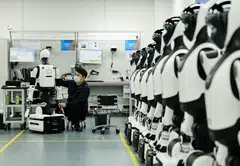


It has expanded vocational training in recent years, and will implement a campaign to enhance workers’ skills in fields such as electric vehicles, healthcare, advanced manufacturing, along with AI, said state media.
As formal employment opportunities dwindled and factory automation increases, more people are being pushed into unstable gig work such as food and package delivery.
The number of people in flexible employment is projected to expand to 320 million this year, according to a domestic think tank, making up nearly half of the entire workforce.
In its announcement, the State Council said that it will explore the creation of new jobs related to AI, and use the technology to make traditional industries more efficient and safer, especially those that suffer from labour shortages or face dangerous conditions.
It will also urge platform companies to improve algorithm transparency, ensure wage payments and draft labour regulations. BLOOMBERG
Decoding Asia newsletter: your guide to navigating Asia in a new global order. Sign up here to get Decoding Asia newsletter. Delivered to your inbox. Free.
Share with us your feedback on BT's products and services