

China seen holding rates unchanged as uneven economic recovery persists
Alongside surprisingly resilient exports, domestic demand is worsening amid a multi-year property downturn
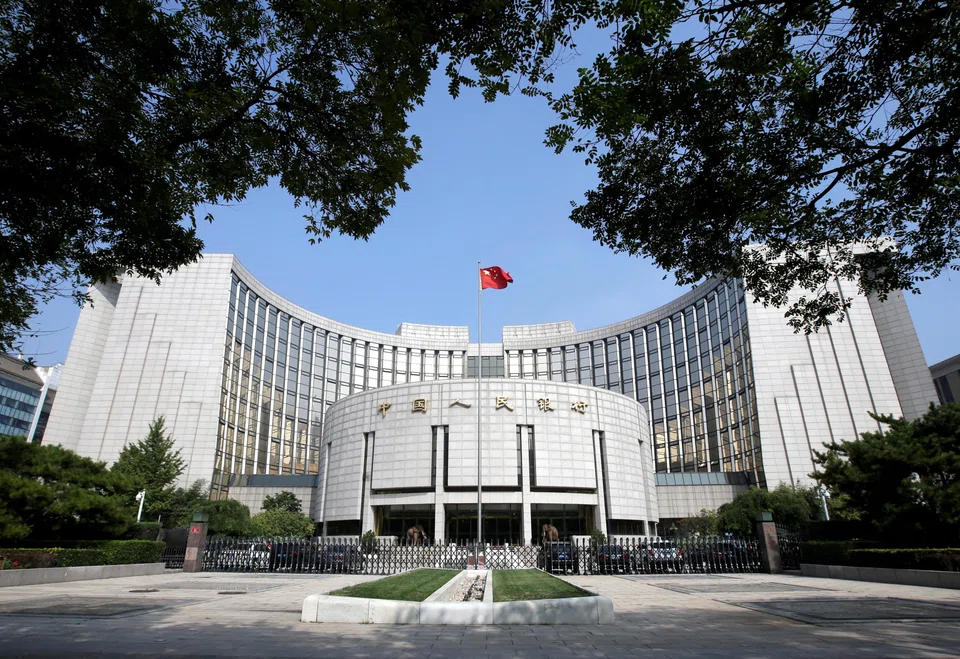
[SHANGHAI] China is expected to keep benchmark lending rates unchanged for a 13th consecutive month in June, a Reuters survey showed, as a K-shaped divergence in the broad economy persists.
The loan prime rate (LPR), normally charged to banks’ most credit-worthy clients, is calculated each month after 20 designated commercial banks submit proposed rates to the People’s Bank of China (PBOC).
In a Reuters survey of 30 market participants conducted this week, all respondents predicted that at the next review on Jun 22, the one-year and five-year LPRs would remain steady at 3 per cent and 3.5 per cent, respectively.
The strong consensus around steady LPR fixings comes as recent economic data underscores a two-speed growth pattern in the world’s second-largest economy.
While factories are buoyed by surprisingly resilient exports, domestic demand is worsening amid a multi-year property downturn.
Henry Hao, senior China economist at German bank Commerzbank, said: “Despite the imbalance between robust factory supply and deteriorating domestic demand, Beijing is showing patience.
“With housing wealth effects still muted and the labour market recovering slowly, policymakers appear reluctant to unleash domestic stimulus, signalling that the economy will likely continue its uneven, export-reliant trajectory without significant near-term intervention until Q3.”
At the same time, the central bank appears to be deepening its control over short-term money markets, tying overnight borrowing costs more closely to its seven-day reverse repo rate, which acts as the primary policy rate.
PBOC governor Pan Gongsheng told the annual Lujiazui Forum on Wednesday that the central bank will increase the variety of overnight reverse repo operations, and optimise operations for its temporary overnight repo and reverse repo agreements to better manage short-term liquidity conditions.


“The tweak doesn’t amount to an outright easing step,” Citi analysts said in a note.
“We still expect a symbolic 10 basis-point rate cut in the second half of this year, with risks skewed to earlier, given the weak domestic demand.” REUTERS
Decoding Asia newsletter: your guide to navigating Asia in a new global order. Sign up here to get Decoding Asia newsletter. Delivered to your inbox. Free.
Share with us your feedback on BT's products and services
TRENDING NOW

LTA proposes combining car COE categories, adding rebate-surcharge system

StarHub to acquire MyRepublic’s mobile business amid ongoing telco consolidation

DBS, OCBC, UOB rout lops billions off STI as inflation, rate concerns spook investors

Grab CEO’s wife Chloe Tong on life with Anthony Tan and finding her purpose

