

China set to boost economy, stabilise housing market as slowdown threatens growth target
The authorities will ‘put in place a package of practical and effective additional policies’

[BEIJING] China has given its strongest signal yet that it will move with greater urgency to counter a deepening slowdown, as the government promised to introduce new measures to support the economy and study policies to stabilise the reeling property market.
The authorities will “put in place a package of practical and effective additional policies” as they seek to “strengthen counter-cyclical adjustments” to achieve 2026’s economic and social development goals, according to a statement issued after a Monday (Sep 28) meeting of the State Council, China’s Cabinet chaired by Premier Li Qiang.
It added that unused local government bond quota left from previous years will be tapped and highlighted plans to increase the central bank’s re-lending allowance to encourage credit for innovation and technological upgrades, alongside loans to small companies and the agriculture sector.
Policymakers will also study fresh measures to stabilise the property market, promote employment and boost household income.
The comments appear to mark a shift in Beijing’s thinking and reflect growing concern over the cooling momentum of the world’s second-largest economy, as domestic demand stays stubbornly subdued.
Growth has likely weakened further below the lower end of the government’s annual target of 4.5 to 5 per cent in the third quarter after reaching 4.3 per cent in the previous three months, with consumption flat-lining and investment falling into a deeper slump.
“This signals that there will be likely more policy support roll-out in the weeks ahead to support the short and long term growth targets,” said Lynn Song, chief economist for Greater China at ING Bank.
The magnitude of any policies to aid the housing market as well as jobs and wages will be key to watch, Song added. “If we see substantive measures to firm up the stabilisation signs that we’ve seen recently in the property market, it would be the most impactful for the economy.”
In the statement on Monday, officials also reiterated a call for faster implementation of existing policies, pledging to push for the early start of construction on a major project known as the Six Networks, expedite the approval of investment initiatives, and roll out discounted loans to spur investment and consumption.
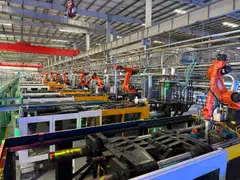

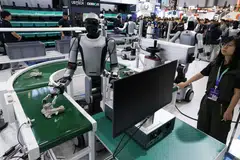

Consumption growth in the country missed expectations again in August and softened to near zero. Business confidence has been sluggish as well, with manufacturers, property developers and infrastructure builders accelerating cutbacks in capital spending as government expenditure continued to drop.
“The underlying growth momentum does not appear strong enough on its own to deliver the annual target, implying that additional policy support will be needed in the fourth quarter,” said Jacqueline Rong, chief China economist at BNP Paribas. “The purpose of such measures would be to bridge the gap between underlying growth and the 4.5 per cent goal. That suggests the stimulus does not need to be large, since the gap itself is likely modest.”
With concerns mounting over local government debt and fading benefits from a programme of consumer subsidies, authorities have so far refrained from adding major stimulus to try to bolster domestic demand.
Instead, they are targeting supply-side issues, ramping up efforts to tackle industrial overcapacity and cut-throat price competition, which have been thinning margins.
Policymakers also plan to adopt and adjust monetary policy tools, and to increase relending facilities for innovation and technical upgrades, according to the State Council statement. September is a key window for Beijing to decide whether it should step up stimulus, Bloomberg Economics recently wrote.
“The new stimulus will be mostly about fiscal policy,” said Larry Hu, head of China economics at Macquarie Group. “The goal will be to make the economy accelerate somewhat in the rest of this year compared with the past few months, in order to achieve the 4.5 to 5 per cent growth target for this year.” BLOOMBERG
Decoding Asia newsletter: your guide to navigating Asia in a new global order. Sign up here to get Decoding Asia newsletter. Delivered to your inbox. Free.
Share with us your feedback on BT's products and services
TRENDING NOW

Once staunchly pro-China, Malaysian Chinese businesses are now distancing themselves from Beijing

Looking beyond looming CEO succession, should UOB potentially pursue a transformative merger?

Could stablecoins be the future of money?

Grab CEO’s wife Chloe Tong on life with Anthony Tan and finding her purpose

